
Review · Blood sugar
GlucoTrust review: eight named ingredients, zero published doses
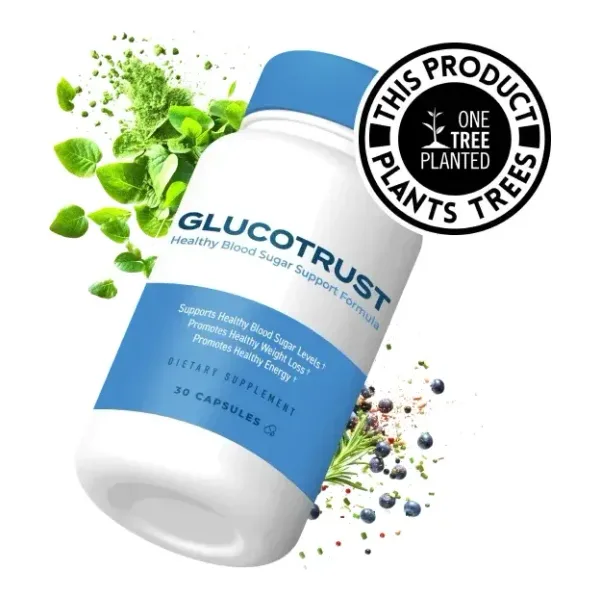
GlucoTrust is a one-capsule supplement sold for healthy blood sugar, sleep and appetite. Several of its ingredients have real research behind them. The problem is that the seller never tells you how much of any of them is in the capsule.
Our verdict: 1.9 / 5
| Ingredient evidence | 2.5 | Gymnema and chromium have small but real human glucose data; zinc and biotin are modest; cinnamon is mixed; juniper and manganese have none |
|---|---|---|
| Dosing vs. research | 1 | No amount is published for any ingredient, so nothing can be compared with the trials |
| Label transparency | 1 | No Supplement Facts panel on the sales page or in the affiliate kit; "15 herbs" and the sleep ingredients are never named |
| Value and refund terms | 3 | $49 to $69 per bottle, one-time payment; 60-day refund, though one line on the page says 180 days |
Worth considering if your doctor is comfortable with you adding a gymnema and chromium product, you are not on blood pressure or glucose-lowering medication that would make the unknown amounts a concern, and you want a simple once-a-day capsule with a refund window behind it.
Probably skip it if you want to know what dose you are taking, you have high blood pressure or take a diuretic (the formula contains licorice), or you are counting on the sleep and craving effects the sales page describes. We could not tie those to any named ingredient.
Before anything else: GlucoTrust is a dietary supplement. It does not replace diabetes care, and you should never change or stop a medication without your doctor. If you take insulin or any glucose-lowering drug, talk to your doctor before adding any blood sugar supplement.
Smallest order $69, from $49 per bottle, 60-day refund policy from the seller
See the current GlucoTrust packages, shipping and refund termsOpens the seller's page. It may start with a long video or letter; the packages and refund terms are usually further down. We may earn a commission.
Came here for GlucoTrust? The highest-rated blood sugar label we checked is GlucoBerry, 3.6 out of 5.
What GlucoTrust is
GlucoTrust is a capsule supplement sold through Digistore24 on the getglucotrust.co website. Each bottle holds 30 capsules. The vendor's own product sheet for affiliates says the serving is one capsule a day and recommends taking it for at least 90 days; the brand's other sales page adds that the capsule goes with a glass of water before bed. It is a one-time purchase, and the Digistore24 order forms we checked showed no recurring billing.
The sales page is narrated by "James Walker." The brand's ClickBank version of the same page states that James Walker is a fictionalized character and a pen name. The Digistore24 page we reviewed omits that line, so we mention it here.
The pitch covers healthy blood sugar, fewer cravings and deeper sleep, which the page links to cortisol and leptin.
The label problem
We looked for a Supplement Facts panel on the sales page, the brand's second sales site, and the affiliate page with its product sheet and image kit. None of them shows one. The bottle images show only the front of the label. The vendor names eight ingredients in its text and lists no amounts for any of them.
Third-party websites print versions of a GlucoTrust label that disagree with each other, so we used none of them. Ask the seller for the full Supplement Facts panel before ordering. The missing doses are the single biggest reason for our low score.
The formula next to the research
For each named ingredient we looked for human trials on blood sugar markers and noted the amounts that were studied.
| Ingredient | GlucoTrust per day | Amount in trials | What the trials found |
|---|---|---|---|
| Gymnema sylvestre | Not disclosed | 600 mg/day of extract [3] [4] | Mixed: better glucose tolerance in one small trial, no insulin change in another |
| Chromium | Not disclosed | Often over 200 mcg/day [5] | Modest HbA1c and fasting glucose changes in adults with diabetes |
| Biotin | Not disclosed | 2 mg/day with 600 mcg chromium [7] | Small effect, mostly studied together with chromium |
| Zinc | Not disclosed | Varied across 14 trials [9] | Small drop in fasting glucose, no change in insulin |
| Cinnamon | Not disclosed | 120 mg to 6 g/day [10] [11] | Conflicting; Cochrane found insufficient evidence |
| Licorice root | Not disclosed | No glucose trial found | Raises blood pressure at regular intake [12] |
| Manganese | Not disclosed | No human glucose trial found | Cannot be compared |
| Juniper berries | Not disclosed | No human glucose trial found | Cannot be compared |
Gymnema: the featured ingredient, with a thin evidence base
Gymnema is a climbing plant from India whose leaves temporarily dull the taste of sweetness. It is the first ingredient the sales page names. A 2021 meta-analysis pooled 10 studies with 419 adults with type 2 diabetes and reported lower fasting glucose, after-meal glucose and HbA1c, but it compared people with their own starting values rather than with a placebo group, and the results varied enormously between studies [1]. A 2023 meta-analysis limited to six randomized trials also found lower fasting blood sugar, while warning that the studies were of low quality [2].
The two cleanest trials we found both used 300 mg twice a day. In 30 adults with impaired glucose tolerance, the gymnema group's two-hour glucose test result fell from 9.1 to 7.8 mmol/L and HbA1c from 5.8% to 5.4% [3]. In 24 adults aged 30 to 60 with metabolic syndrome, 12 weeks of the same dose lowered body weight slightly but did not change insulin secretion, insulin sensitivity or the metabolic syndrome components [4]. The human data are small and point in different directions, and without a label dose we cannot tell whether GlucoTrust is near 600 mg.
Chromium and biotin: the most studied pair
Chromium is the ingredient with the deepest research in this category. A 2014 review of 25 randomized trials in people with diabetes found an average HbA1c reduction of 0.55 percentage points, with the clearest effects above 200 mcg a day and no more side effects than placebo [5]. A 2020 review of 28 trials reported a 19 mg/dL average fall in fasting glucose, though the trials disagreed widely with one another [6].
Biotin is mostly studied alongside chromium. In a 90-day trial of 447 overweight adults with type 2 diabetes already on oral medication, 600 mcg of chromium plus 2 mg of biotin lowered HbA1c by 0.54 percentage points, a significantly larger change than on placebo, and fasting glucose by 9.8 mg/dL versus almost no change on placebo [7]. A meta-analysis of five biotin trials suggested lower fasting glucose, but the confidence interval for that result included zero [8]. Most of this research involved people already diagnosed with diabetes.
Zinc and manganese
A meta-analysis of 14 placebo-controlled zinc trials with 3,978 people found a small fall in fasting glucose (0.19 mmol/L, about 3 mg/dL) and no change in insulin levels [9]. That last point matters, because the sales page says zinc "can stimulate insulin production." The pooled trials did not show that. For manganese, which the page also says stimulates insulin production, we found no human trial of manganese supplements on blood sugar at all.
Cinnamon: a familiar spice with conflicting results
Cinnamon has been tested many times. One meta-analysis of 10 trials (543 people with type 2 diabetes, 120 mg to 6 g a day for 4 to 18 weeks) found lower fasting glucose but no significant change in HbA1c [10]. The Cochrane review of 10 trials, at an average of 2 g a day, concluded there was insufficient evidence to support cinnamon for diabetes [11]. One capsule shared with seven other ingredients is unlikely to hold gram amounts.
Licorice and juniper
The sales page presents licorice root as an appetite and weight aid. We found no trial of licorice on blood sugar. What the research does show is a downside: a meta-analysis of 18 studies found that regular intake of at least 100 mg a day of glycyrrhizic acid, licorice's active compound, raised systolic blood pressure by about 5 mmHg and lowered blood potassium [12]. A separate review lists older age and diuretic use as risk factors for this effect [13]. We do not know how much licorice GlucoTrust contains, or in what form, so we cannot say the risk applies; it is still an odd choice for a product sold to men over 50. For juniper berries we found only lab and animal work, no human glucose data.
What the marketing claims, and what we could verify
- "Supports healthy blood sugar levels." Partly supported for chromium and gymnema at studied doses. Unverifiable for GlucoTrust itself, because no doses are published and we found no trial of the finished formula.
- Sleep, cortisol and leptin. The general idea has some basis: in a trial of 12 healthy young men, two nights of restricted sleep lowered leptin by 18% and raised hunger by 24% [17]. But the page never names the "sleep-enhancing ingredients," and none of the eight named ingredients is a known sleep aid. We could not connect this claim to anything in the capsule.
- "A blend of 15 herbs." Never named anywhere we looked, so it cannot be checked.
- Zinc and manganese "stimulate insulin production." Not supported by the human data we found [9].
- Small inconsistencies. The page calls the product a "powder" in one place although it is a capsule, and its refund section says the 60-day window is "sixty full months." These look like copy errors, but they do not build confidence.
How GlucoTrust compares with other blood sugar formulas we reviewed
Every one of the eight ingredients GlucoTrust names also appears on the label of Triple Blood Balance, which adds vitamins, magnesium, vanadium and several more herbs and at least prints amounts for its minerals. GlucoTrust shares gymnema, cinnamon and juniper with Gluco Extend and CelluCare, and chromium plus gymnema with the liquid formulas Sugar Defender and GlucoTonic. GlucoFlush is a different formula built around digestive herbs. None is identical, but GlucoTrust is a familiar mix, and like most of them it hides its amounts.
Price, packages and refund policy
One bottle is a 30-day supply. Prices on the seller's page when we checked:
- 6 bottles: $49 each ($294 total), free US shipping, three digital guides included. About $1.63 a day.
- 3 bottles: $59 each ($177 total), free US shipping, three digital guides included.
- 1 bottle: $69 plus $9 shipping.
The package boxes, the terms page and the refund page all state a 60-day money-back policy. One line near the bottom of the sales page says 180 days; we treat 60 days as the policy, since that is what the refund page commits to. The refund page also says you pay return shipping. A six-bottle order runs past the refund window, so if you are unsure, a three-bottle order keeps more of your purchase inside it.
GlucoTrust packages on the seller's site
6 bottles, 180-day supply
$49/bottle
$294 total · Free US shipping
Lowest price per bottle
Includes 3 digital guides
Check the 6-bottle price3 bottles, 90-day supply
$59/bottle
$177 total · Free US shipping
Includes 3 digital guides
Check the 3-bottle priceButtons open the seller's GlucoTrust website, where you choose your supply and complete the order. Prices as listed on the seller's site on October 23, 2026; the price shown at checkout is final.Orders are covered by a 60-day refund policy from the seller (see their terms). We may earn a commission.
Safety and medication interactions
- Glucose-lowering drugs. Gymnema, chromium and cinnamon are all studied for lowering glucose. Adding them to insulin, sulfonylureas such as glipizide or glyburide, or other glucose-lowering drugs could add to the effect. A review of herb and diabetes drug interactions describes this as a real but poorly studied risk [15]. If you take such medication, involve your doctor, check your glucose more often at first, and know the signs of low blood sugar.
- Blood pressure and potassium. Licorice can raise blood pressure and lower potassium [12], with higher risk in older adults and people on diuretics [13]. Ask your doctor if you take blood pressure medication, a diuretic or heart medication.
- Liver. There is at least one published case of liver injury linked to gymnema [14]. Stop and see a doctor if you notice dark urine, yellowing skin or unusual fatigue.
- Lab tests. Biotin can distort some blood tests, including certain thyroid and heart tests [16]. Tell your doctor and the lab you take a biotin-containing supplement before any blood draw.
Results vary from person to person. Talk to your doctor before starting GlucoTrust, especially if you take any prescription medication, and get medical care for new or worsening symptoms such as unusual thirst, frequent urination, blurred vision or slow-healing sores.
What we liked and what gave us pause
Liked
- Gymnema and chromium, the two named ingredients with the most human glucose research
- One capsule a day
- One-time payment, no subscription
- $49 per bottle on the largest package
Gave us pause
- No dose published for any ingredient
- Licorice in a product sold to an older audience
- Unnamed "15 herbs" and sleep ingredients
- Conflicting refund wording on the sales page
- No published trial of the full formula
Frequently asked questions
Where can I buy GlucoTrust?
Through the seller's website, with checkout handled by Digistore24. The vendor does not allow sales on Amazon, eBay or other retail sites, so listings there may not be genuine or covered by the refund policy.
Can GlucoTrust replace my diabetes medication?
No. It is a dietary supplement. The vendor's own materials say it is not meant to replace prescription medication. Do not stop or change a prescription without your doctor.
How long before I notice anything?
Results vary. The trials of these ingredients lasted from a few weeks to about four months, and they measured lab values. The only reliable way to see whether anything changes for you is to track your readings with your doctor.
Is it a subscription?
No. The order forms we checked showed a single payment with no recurring charge.
Want to read the seller's page yourself? The link below opens the GlucoTrust website, where you can see the full presentation and the current prices. Ask for the Supplement Facts panel before you order.
See GlucoTrust prices and packagesHow we reviewed GlucoTrust
We read both GlucoTrust sales pages, the terms, shipping and refund pages, the vendor's affiliate page and its product sheet, and the Digistore24 order forms (without placing an order). We searched PubMed for human trials and reviews of each named ingredient on blood sugar markers and for safety and interaction data, and compared those findings with the claims on the sales page. We did not test the product, and nobody at Stark Verve is a medical professional. Read our editorial policy to learn how we choose and update reviews. Stark Verve earns a commission if you buy through our links; that never changes what we write about the evidence.
References
- Devangan S, et al. The effect of Gymnema sylvestre supplementation on glycemic control in type 2 diabetes patients: a systematic review and meta-analysis. Phytother Res. 2021;35(12):6802-12. PMID 34467577
- Zamani M, et al. The effects of Gymnema sylvestre supplementation on lipid profile, glycemic control, blood pressure, and anthropometric indices in adults: a systematic review and meta-analysis. Phytother Res. 2023;37(3):949-64. PMID 36580574
- Gaytán Martínez LA, et al. Effect of Gymnema sylvestre administration on glycemic control, insulin secretion, and insulin sensitivity in patients with impaired glucose tolerance. J Med Food. 2021;24(1):28-32. PMID 32460589
- Zuñiga LY, González-Ortiz M, Martínez-Abundis E. Effect of Gymnema sylvestre administration on metabolic syndrome, insulin sensitivity, and insulin secretion. J Med Food. 2017;20(8):750-4. PMID 28459647
- Suksomboon N, Poolsup N, Yuwanakorn A. Systematic review and meta-analysis of the efficacy and safety of chromium supplementation in diabetes. J Clin Pharm Ther. 2014;39(3):292-306. PMID 24635480
- Asbaghi O, et al. Effects of chromium supplementation on glycemic control in patients with type 2 diabetes: a systematic review and meta-analysis of randomized controlled trials. Pharmacol Res. 2020;161:105098. PMID 32730903
- Albarracin CA, et al. Chromium picolinate and biotin combination improves glucose metabolism in treated, uncontrolled overweight to obese patients with type 2 diabetes. Diabetes Metab Res Rev. 2008;24(1):41-51. PMID 17506119
- Zhang Y, et al. Influence of biotin intervention on glycemic control and lipid profile in patients with type 2 diabetes mellitus: a systematic review and meta-analysis. Front Nutr. 2022;9:1046800. PMID 36386951
- Capdor J, et al. Zinc and glycemic control: a meta-analysis of randomised placebo controlled supplementation trials in humans. J Trace Elem Med Biol. 2013;27(2):137-42. PMID 23137858
- Allen RW, et al. Cinnamon use in type 2 diabetes: an updated systematic review and meta-analysis. Ann Fam Med. 2013;11(5):452-9. PMID 24019277
- Leach MJ, Kumar S. Cinnamon for diabetes mellitus. Cochrane Database Syst Rev. 2012;(9):CD007170. PMID 22972104
- Penninkilampi R, Eslick EM, Eslick GD. The association between consistent licorice ingestion, hypertension and hypokalaemia: a systematic review and meta-analysis. J Hum Hypertens. 2017;31(11):699-707. PMID 28660884
- Yoshino T, et al. Clinical risk factors of licorice-induced pseudoaldosteronism based on glycyrrhizin-metabolite concentrations: a narrative review. Front Nutr. 2021;8:719197. PMID 34604277
- Shiyovich A, Sztarkier I, Nesher L. Toxic hepatitis induced by Gymnema sylvestre, a natural remedy for type 2 diabetes mellitus. Am J Med Sci. 2010;340(6):514-7. PMID 20856101
- Gupta RC, et al. Interactions between antidiabetic drugs and herbs: an overview of mechanisms of action and clinical implications. Diabetol Metab Syndr. 2017;9:59. PMID 28770011
- Li D, et al. AACC guidance document on biotin interference in laboratory tests. J Appl Lab Med. 2020;5(3):575-87. PMID 32445355
- Spiegel K, et al. Sleep curtailment in healthy young men is associated with decreased leptin levels, elevated ghrelin levels, and increased hunger and appetite. Ann Intern Med. 2004;141(11):846-50. PMID 15583226