
Review · Blood sugar
Gluco Extend review: we traced the juniper berry numbers to their source
Gluco Extend is a capsule sold online as blood sugar support. Its sales letter rests on striking results from a juniper berry study. We found that study, read it, and then checked the other eleven ingredients against human research.
Our verdict: 2 / 5
| Ingredient evidence | 2.5 | Berberine and cinnamon have human trial support; the featured juniper berry has none |
|---|---|---|
| Dosing vs. research | 1 | No dose is published for any of the 12 ingredients, so nothing can be compared |
| Label transparency | 1 | No Supplement Facts panel online; two official pages list different ingredients |
| Value and refund terms | 3.5 | $49 to $79 per bottle, one-time payment, 180-day refund policy with inconsistent wording |
Worth considering if your doctor has said a botanical supplement is reasonable for you, you are comfortable not knowing how much of each ingredient you are taking, and you want a long refund window while you try it.
Probably skip it if you take any glucose-lowering medication, you want doses you can check against research, or the sales page's juniper results were the reason you were interested. Those results were measured in mice and cells.
Before anything else: Gluco Extend is a dietary supplement. It does not replace medication, diet advice or monitoring from your doctor, and you should never stop or change a prescription on your own.
Smallest order $158, from $49 per bottle, 180-day refund policy from the seller
See the current Gluco Extend packages, shipping and refund termsOpens the seller's page. It may start with a long video or letter; the packages and refund terms are usually further down. We may earn a commission.
Came here for Gluco Extend? The highest-rated blood sugar label we checked is GlucoBerry, 3.6 out of 5.
What Gluco Extend is
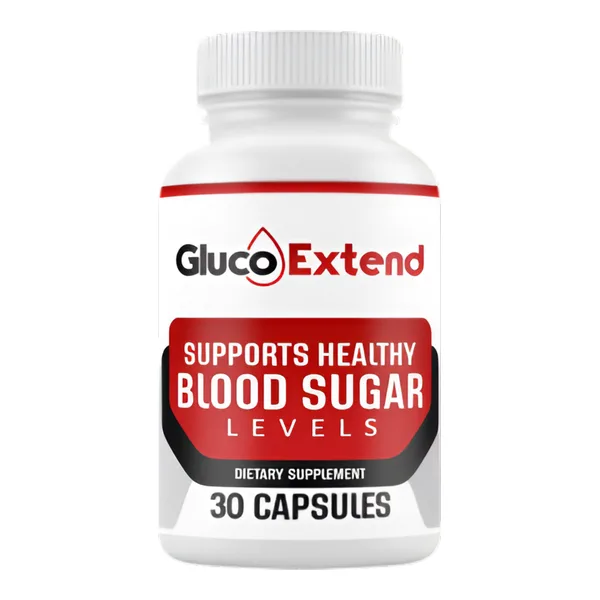
Gluco Extend is a capsule supplement sold through ClickBank from the website goglucoextend.com. Each bottle holds 30 capsules and is sold as a 30-day supply. The sales pages we read do not state a serving size; they tell buyers to follow the product label, which is not shown online. The company behind it is identified only as GlucoExtend.
Visitors arriving from an affiliate link are sent to a long text sales letter narrated by a man presented as a retired physician assistant. It frames blood sugar trouble around AMPK, an energy-sensing enzyme it calls a "master switch," and introduces juniper berry as the key to it, backed by eleven supporting botanicals. We could not verify the narrator's identity or the clinical experiences described, so we leave them aside and focus on what can be checked.
The headline numbers: where they come from
The sales letter highlights three results attributed to juniper berry research: a 39% drop in blood sugar, 21% weight loss, and a doubling of a metabolic marker, described as tested on people with diabetes. The page cites its sources, and one of them leads to the study behind those figures [1].
That paper, from the University of Mississippi, was published in 2023. It tested a methanol extract of juniper berries in cell cultures and in mice fed a high-fat diet. The 39% fall in fasting glucose was measured in mice given 12.5 mg of extract per kilogram of body weight. The 21% lower body weight was also in mice, at 25 mg/kg. The 90% rise in glucose uptake was in muscle cells in a dish, and the twofold change was in the expression of a gene called Sirt1. No people were studied.
We also searched PubMed for any human trial of juniper berry on blood sugar and found none. So the ingredient the formula is built around has no published human evidence for this purpose, and the most prominent numbers on the page describe animal and cell results. That is the single most important finding of this review.
The formula next to the research
Here is where Gluco Extend becomes hard to evaluate. The sales letter names twelve ingredients but no amounts, and we found no Supplement Facts panel anywhere on the site. The main product page lists a shorter set (including a "bean extract" and a "leaf extract" not named more specifically) and describes a proprietary blend. Those two official pages do not match, which is itself a finding.
| Ingredient | Gluco Extend per day | What human research used | How it compares |
|---|---|---|---|
| Juniper berry extract | Not disclosed | No human trial found; mouse and cell data only [1] | Cannot be compared |
| Berberine HCl | Not disclosed | 1.5 g/day in a 3-month trial [2] | Unknown; likely far less in one capsule |
| Cinnamon bark | Not disclosed | 24 trials, varying doses [5] | Unknown |
| Gymnema sylvestre | Not disclosed | 600 mg/day [7] | Unknown |
| Banaba leaf | Not disclosed | 1,000 mg/day for 12 weeks [8] | Unknown |
| Olive leaf extract | Not disclosed | 51 mg oleuropein/day for 12 weeks [10] | Unknown; extract strength not stated |
| Pine bark extract | Not disclosed | 100 mg/day of Pycnogenol for 12 weeks [12] | Unknown; brand not stated |
| Turmeric, cocoa, bitter melon | Not disclosed | Mixed or limited human data [13] [14] [9] | Unknown |
| Eleuthero, butcher's broom | Not disclosed | Reports of raised blood sugar [15] [16] | A concern more than a benefit |
A rough reality check helps. If a bottle of 30 capsules is a month's supply, the daily serving is probably one capsule. Common capsule sizes hold well under the 1.5 grams of berberine used in the main berberine trial on its own, and Gluco Extend shares that space with eleven other ingredients. We cannot prove the amounts are low, but the company has not given readers any way to check.
Berberine: the best-supported ingredient
Berberine is a plant alkaloid with the most human data in this formula. In a three-month pilot study, 36 adults with newly diagnosed type 2 diabetes took 0.5 g of berberine or metformin three times a day; A1C in the berberine group fell from 9.5% to 7.5%, a result similar to metformin. About a third of participants reported temporary digestive side effects [2]. A meta-analysis of 28 trials with 2,313 participants found modest average reductions in fasting glucose, after-meal glucose and A1C compared with controls, and noted the effect looked weaker in people over 60 [3]. That last detail matters for our readers.
Cinnamon, gymnema and banaba: modest, small studies
An updated meta-analysis of 24 randomized trials in people with type 2 diabetes found cinnamon lowered fasting glucose and A1C compared with control groups, though doses and forms varied widely [5]. Gymnema's meta-analysis of 10 studies (419 participants) reported improvements, but it compared results with each person's own baseline instead of a placebo group, and the studies disagreed sharply [6]. A placebo-controlled trial in 30 adults with impaired glucose tolerance found lower two-hour glucose and A1C in the group taking 300 mg twice daily [7]. Fasting glucose fell slightly in the group taking banaba at 500 mg twice daily in a 24-person, 12-week trial of adults with metabolic syndrome [8].
Olive leaf, pine bark, turmeric and cocoa: mixed results
Olive leaf polyphenols improved insulin sensitivity by 15% versus placebo in 46 overweight middle-aged men over 12 weeks [10], but a 24-week pilot in adults with type 2 diabetes found no significant change in A1C [11]. Pycnogenol, a branded pine bark extract, lowered glucose versus placebo in 77 people who continued their usual diabetes treatment [12]; Gluco Extend does not say whether it uses that extract. A nine-month trial in 240 adults with prediabetes found fewer progressed to type 2 diabetes on a curcumin extract than on placebo [13], and a meta-analysis of 19 cocoa flavanol trials found small improvements in insulin sensitivity markers at intakes ranging from 166 to 2,110 mg a day [14]. For bitter melon, a Cochrane review of four trials found no significant difference from placebo in glycemic control and called the evidence insufficient [9].
Eleuthero and butcher's broom: two odd choices
Two ingredients point the wrong way. In a crossover study of eight ginseng types taken before a glucose drink, Siberian ginseng (eleuthero) raised blood sugar after the drink compared with placebo in healthy adults [15]. And a published case report describes a woman with diabetes who developed ketoacidosis, a dangerous complication, five days after starting butcher's broom for ankle swelling [16]. One case proves little, and the amounts in Gluco Extend may be small, but neither ingredient has human evidence of supporting healthy blood sugar.
What the marketing claims and what we could verify
- Juniper results "in diabetics": not verified. The cited study was in mice and cells [1].
- Prestigious university research behind juniper: not verified. The study we traced came from the University of Mississippi.
- Every ingredient shown to activate AMPK: the sources the page cites for this are mostly cell or animal studies. Human trials exist for some ingredients; they measured glucose and A1C, and none we found measured AMPK.
- Zero side effects: not supported. Berberine caused digestive upset in about a third of participants in one trial [2].
- An informal group of 57 users: no published data, so we cannot assess it.
Price, packages and refund policy
Prices on the official site when we checked:
- 6 bottles: $49 each ($294 total), free US shipping, two digital guides and a newsletter. About $1.63 a day.
- 3 bottles: $69 each ($207 total), free US shipping, same digital extras.
- 2 bottles: $79 each ($158 total), plus shipping. There is no single-bottle option.
Payment is one-time, with no subscription according to the site. Every package carries a 180-day refund policy. The wording varies by page: the text sales letter promises a full refund for any reason, while the main page FAQ talks about returning what you have not used, and its guarantee box mentions "brain health," which looks like text carried over from another product. We would read ClickBank's and the seller's terms before ordering and keep the bottles and packaging in case you need them.
Gluco Extend packages on the official site
6 bottles, 180-day supply
$49/bottle
$294 total · Free US shipping
Lowest price per bottle
Includes 2 digital guides and a newsletter from the seller
Check the 6-bottle price3 bottles, 90-day supply
$69/bottle
$207 total · Free US shipping
Includes 2 digital guides and a newsletter from the seller
Check the 3-bottle priceButtons open the seller's Gluco Extend website, where you choose your supply and complete the order. Prices as listed on the seller's site on October 23, 2026; the price shown at checkout is final.Orders are covered by a 180-day refund policy from the seller (see their terms). We may earn a commission.
Safety and medications
This is the section that matters most for men over 50, many of whom already take metformin, a sulfonylurea, insulin or other glucose-lowering drugs.
- Stacking with diabetes medication: the berberine meta-analysis found that berberine combined with glucose-lowering drugs lowered glucose more than either alone [3], and the pine bark trial saw added glucose lowering on top of standard treatment [12]. Added effects can mean a risk of blood sugar dropping too low. If you take any such medication, talk to your doctor first and expect to check your glucose more often.
- Other drug interactions: in healthy men, two weeks of berberine (300 mg three times a day) reduced the activity of liver enzymes CYP2D6, CYP2C9 and CYP3A4, which process many common prescriptions [4]. Ask your pharmacist to check your medication list.
- Ingredients that may raise glucose: eleuthero and butcher's broom, as described above [15] [16].
- Digestive effects: berberine commonly causes temporary stomach upset [2].
Because doses are not disclosed, neither you nor your doctor can judge how strong any of these effects might be. Results vary. Symptoms such as unusual thirst, frequent urination, blurred vision, shakiness or confusion deserve prompt medical care.
What we liked and what gave us pause
Liked
- Includes berberine and cinnamon, which have the strongest human research in this category
- Several ingredients with small but positive placebo-controlled trials
- One-time payment, no subscription
- 180-day refund window
Gave us pause
- Headline juniper figures come from mice and cell cultures
- No doses and no Supplement Facts panel online
- Two official pages list different ingredients
- Eleuthero and butcher's broom have reports of raising blood sugar
- Inconsistent refund wording
Frequently asked questions
Where can I buy Gluco Extend?
On the official website, with checkout handled by ClickBank. The site says it is the only place to buy it, so third-party listings may not be covered by the refund policy.
Can Gluco Extend replace my diabetes medication?
No. It is a dietary supplement and is not intended to diagnose or treat any disease. Do not stop or change a prescription without your doctor.
How many capsules a day?
The sales pages do not say. Bottles hold 30 capsules sold as a 30-day supply. Follow the label on the bottle you receive and show it to your doctor.
How long before I notice anything?
Results vary. The human trials of these ingredients ran from 12 weeks to nine months. Track your numbers with your doctor rather than relying on how you feel.
Want to read the official page yourself? The link below opens the Gluco Extend website, where you can see the full presentation and the current packages.
Visit the official Gluco Extend websiteHow we reviewed Gluco Extend
We read both versions of the official sales page, looked for a Supplement Facts label (none is published), followed the page's own citations to find the source of its headline numbers, and searched PubMed for human trials of each listed ingredient on blood sugar markers and for interaction data. We did not test the product on people, and nobody at Stark Verve is a medical professional. Read our editorial policy to learn how we choose and update reviews. Stark Verve earns a commission if you buy through our links; that never changes what we write about the evidence.
References
- Chae HS, et al. Juniper berries regulate diabetes and obesity markers through modulating PPARα, PPARγ, and LXR: in vitro and in vivo effects. J Med Food. 2023;26(5):307-318. PMID 37186895
- Yin J, Xing H, Ye J. Efficacy of berberine in patients with type 2 diabetes mellitus. Metabolism. 2008;57(5):712-7. PMID 18442638
- Liang Y, et al. Effects of berberine on blood glucose in patients with type 2 diabetes mellitus: a systematic literature review and a meta-analysis. Endocr J. 2019;66(1):51-63. PMID 30393248
- Guo Y, et al. Repeated administration of berberine inhibits cytochromes P450 in humans. Eur J Clin Pharmacol. 2012;68(2):213-7. PMID 21870106
- Moridpour AH, et al. The effect of cinnamon supplementation on glycemic control in patients with type 2 diabetes mellitus: an updated systematic review and dose-response meta-analysis of randomized controlled trials. Phytother Res. 2024;38(1):117-130. PMID 37818728
- Devangan S, et al. The effect of Gymnema sylvestre supplementation on glycemic control in type 2 diabetes patients: a systematic review and meta-analysis. Phytother Res. 2021;35(12):6802-6812. PMID 34467577
- Gaytán Martínez LA, et al. Effect of Gymnema sylvestre administration on glycemic control, insulin secretion, and insulin sensitivity in patients with impaired glucose tolerance. J Med Food. 2021;24(1):28-32. PMID 32460589
- López-Murillo LD, et al. Effect of banaba (Lagerstroemia speciosa) on metabolic syndrome, insulin sensitivity, and insulin secretion. J Med Food. 2022;25(2):177-182. PMID 34726501
- Ooi CP, Yassin Z, Hamid TA. Momordica charantia for type 2 diabetes mellitus. Cochrane Database Syst Rev. 2012;(8):CD007845. PMID 22895968
- de Bock M, et al. Olive (Olea europaea L.) leaf polyphenols improve insulin sensitivity in middle-aged overweight men: a randomized, placebo-controlled, crossover trial. PLoS One. 2013;8(3):e57622. PMID 23516412
- Leach MJ, et al. Efficacy and safety of olive leaf extract (Olea europaea L.) for glycaemic control in adults with type 2 diabetes mellitus (ESOLED): a pilot randomised controlled trial. Complement Ther Clin Pract. 2025;59:101949. PMID 39818111
- Liu X, et al. Antidiabetic effect of Pycnogenol French maritime pine bark extract in patients with diabetes type II. Life Sci. 2004;75(21):2505-13. PMID 15363656
- Chuengsamarn S, et al. Curcumin extract for prevention of type 2 diabetes. Diabetes Care. 2012;35(11):2121-7. PMID 22773702
- Lin X, et al. Cocoa flavanol intake and biomarkers for cardiometabolic health: a systematic review and meta-analysis of randomized controlled trials. J Nutr. 2016;146(11):2325-2333. PMID 27683874
- Sievenpiper JL, et al. Decreasing, null and increasing effects of eight popular types of ginseng on acute postprandial glycemic indices in healthy humans: the role of ginsenosides. J Am Coll Nutr. 2004;23(3):248-58. PMID 15190050
- Sadarmin PP, Timperley J. An unusual case of Butcher's Broom precipitating diabetic ketoacidosis. J Emerg Med. 2013;45(3):e63-5. PMID 23849361