
Review · Blood sugar
Sugar Defender review: what the label and the research actually show
Sugar Defender is a liquid supplement sold as support for healthy blood sugar levels. We read its label, looked up the trials behind its key ingredients and compared the doses. The ingredient list is long. The amounts are the problem.
Our verdict: 1.9 / 5
| Ingredient evidence | 2.5 | Chromium, gymnema and ginseng have human glucose research of mixed quality; most other ingredients were studied for weight or energy, if at all |
|---|---|---|
| Dosing vs. research | 1 | Chromium is about 300 times below the lowest common study dose; the whole 200 mg blend weighs less than a single trial dose of several ingredients |
| Label transparency | 1.5 | Twenty-two ingredients hidden in a proprietary blend; label and sales page disagree on the daily amount |
| Value and refund terms | 2.5 | $49 to $79 per bottle; 60-day refund, but the policy page adds conditions the sales page leaves out |
Worth considering if your doctor has told you your blood sugar is in the normal range, you prefer a liquid to capsules, and you understand that you are buying a small amount of many ingredients rather than a research dose of any one of them.
Probably skip it if you want a formula whose doses line up with the trials, if you take any glucose-lowering medicine, or if you are hoping a supplement can stand in for medical care. Single-ingredient gymnema or chromium products with disclosed doses match the research far more closely.
Smallest order $158, from $49 per bottle, 60-day refund policy from the seller
See the current Sugar Defender packages, shipping and refund termsOpens the seller's page. It may start with a long video or letter; the packages and refund terms are usually further down. We may earn a commission.
Came here for Sugar Defender? The highest-rated blood sugar label we checked is GlucoBerry, 3.6 out of 5.
What Sugar Defender is
Sugar Defender is a dropper bottle of liquid (60 mL) sold online under the name Sugar Defender Research. The label lists the distributor as sugardefender.com in Aurora, Colorado. Depending on which version of the sales page you land on, the footer names ClickBank or BuyGoods as the retailer; our link goes through ClickBank. It is sold as a one-time purchase, with no subscription, in 2, 3 and 6-bottle packages.
The marketing says it supports healthy blood sugar levels, natural energy and a "fat-burning metabolism", and promises weight loss alongside. The sales page shows eight featured ingredients, the home page talks about "24 proven ingredients", and the label we transcribed lists 23 (chromium plus 22 in the blend). We take the label as the source of truth.
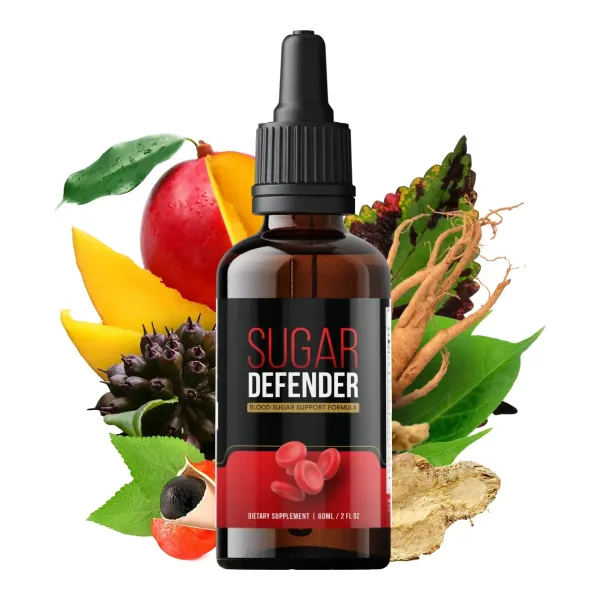
The seller does not allow affiliates to reproduce its images, so we describe the label in words. You can see the full label on the official Sugar Defender website.
What the label discloses, and what it hides
Only one amount on the label is specific: 0.7 micrograms of chromium per 1 mL serving. Everything else sits in a 200 mg "Proprietary Herbal Blend" of 22 items: maca, grape seed, guarana, African mango, eleuthero, astragalus, green tea, gymnema, coleus, capsicum, grapefruit seed, Panax ginseng, raspberry ketones, six amino acids (glutamine, tyrosine, arginine, beta-alanine, ornithine and tryptophan), GABA, L-carnitine and a licorice compound called monoammonium glycyrrhizinate. Other ingredients are water, citrus extract, flavors, stevia and xylitol.
A proprietary blend hides how much of any herb you get, but arithmetic helps: 200 mg shared by 22 ingredients averages about 9 mg each.
There is also a dosing conflict. The label says 1 mL a day, so one bottle lasts 60 days. The sales page FAQ says "two full droppers" each morning, and its package math (one bottle per 30 days) only works at about 2 mL a day. Buyers deserve one clear answer.
The formula next to the research
Here is how a 1 mL serving compares with the amounts used in published studies of the ingredients that matter most for the marketing.
| Ingredient | Sugar Defender per 1 mL | Amount in studies | How it compares |
|---|---|---|---|
| Chromium (picolinate) | 0.7 mcg | 200 to 1,000 mcg/day [1] [2] | About 300 to 1,400 times lower |
| Gymnema sylvestre | Undisclosed, under 200 mg | 600 mg/day [4] | At most a third, likely far less |
| Panax ginseng | Undisclosed, under 200 mg | 100 to 200 mg/day [7] | Possible only if the blend were almost all ginseng |
| Eleuthero | Undisclosed, under 200 mg | 800 mg/day [9] | At most a quarter |
| Coleus forskohlii | Undisclosed, under 200 mg | 500 mg/day of a 10% extract [10] | Less than half at most |
| African mango | Undisclosed, under 200 mg | Trials too flawed to set a benchmark [11] | Cannot be compared |
| The other 16 items | Undisclosed | No glucose trial we could match | Cannot be compared |
Chromium: the one stated dose, and it is tiny
Chromium is the most studied mineral in this area. In a four-month trial of 180 adults being treated for type 2 diabetes, 1,000 mcg a day of chromium picolinate produced lower HbA1c and fasting glucose than placebo, and 200 mcg a day lowered HbA1c by month four [1]. A 2014 meta-analysis of 25 randomized trials in people with diabetes found modest average improvements in HbA1c and fasting glucose, and suggested glycemic control may improve with more than 200 mcg a day [2]. A 2016 review by scientists at the NIH Office of Dietary Supplements was more cautious: only a few of 20 trials reached clinically meaningful targets, and the authors judged the overall evidence weak [3].
Sugar Defender's 0.7 mcg is about 2% of the Daily Value and roughly 300 times less than the lowest common study dose; at two droppers a day, still about 140 times less. We would not count on the chromium here.
Gymnema: some supportive research, unknown amount
In a small double-blind trial, 30 adults with impaired glucose tolerance took 300 mg twice a day or placebo; the gymnema group had lower two-hour glucose test results and HbA1c at the end [4]. A 2021 meta-analysis of 10 studies (419 people with type 2 diabetes) reported improvements in glucose measures, but it compared results with each person's own starting values rather than with placebo, which tends to overstate effects [5]. Sugar Defender does not say how much gymnema it contains, and the full blend is a third of the trial dose.
Panax ginseng: modest effects in the research
A meta-analysis of 16 randomized trials of at least 30 days, in people with and without diabetes, found ginseng lowered fasting blood glucose by an average of 0.31 mmol/L (about 5.6 mg/dL) compared with control, with no significant change in HbA1c or insulin [6]. An eight-week trial in 36 adults with newly diagnosed type 2 diabetes used 100 or 200 mg a day [7], and single 200 mg doses changed glucose readings in healthy young adults within hours [8]. That acute effect is one reason ginseng belongs in the medication conversation above. How much the bottle contains is impossible to tell.
The weight and energy ingredients
Eleuthero was tested at 800 mg a day for eight weeks in nine recreationally trained young men, measuring endurance [9]. Coleus forskohlii was tested at 250 mg of a 10% extract twice daily for 12 weeks in 30 overweight men, measuring body composition [10]. For African mango, a systematic review found only three small trials, all with reporting flaws, and concluded it could not be recommended as a weight-loss aid [11]. Guarana adds caffeine, and raspberry ketones, the amino acids and GABA have no glucose trials we could match to this product.
What the marketing claims vs. what we could verify
- "Supports healthy blood sugar levels." A supplement can only claim to support levels already within the normal range. Some ingredients have glucose research, none at doses we can confirm in this bottle, and the formula itself has no published trial.
- Weight loss and "fat-burning metabolism." We found no human study of Sugar Defender on body weight; the weight-related ingredients have small or flawed trials at much higher amounts.
- The reference list. Of about 20 studies listed, several concern lifestyle change in people with diabetes and involve no supplement. The ingredient studies, such as the 1,000 mcg chromium trial, used doses far above the label.
- Feature badges. One version of the page says chromium "controls blood glucose levels"; another says it "lowers blood pressure". We could support neither claim for 0.7 mcg of chromium.
- Absorption under the tongue. The FAQ says holding the liquid there "maximizes absorption". We found no published research on this formula's absorption.
- Ratings and customer stories. We could not verify the "4.98 out of 5" rating. Some customer stories on the page mention cutting back prescription medication; nobody should change medication based on a supplement or a stranger's story.
Price, packages and refund policy
The sales page sells each bottle as a 30-day supply. Prices on the official site when we checked:
- 6 bottles: $49 each ($294 total), free US shipping, two e-books included. About $1.63 a day at the sales page's pace.
- 3 bottles: $69 each ($207 total), free US shipping, two e-books included. About $2.30 a day.
- 2 bottles: $79 each ($158 total), plus shipping, no e-books.
At the label's 1 mL a day, each bottle lasts twice as long. Either way, the active amounts are small by any trial standard.
The sales page promises a 60-day money-back guarantee covering even empty bottles, minus shipping and handling. The separate return policy page adds conditions: request a return authorization by email within 60 days, ship the product back at your own cost within 14 days of receiving the authorization, and include proof of purchase. It also has generic wording about sale items that sits awkwardly next to the guarantee. Read both pages and keep your order emails.
Sugar Defender packages on the official site
6 bottles, 180-day supply
$49/bottle
$294 total · Free US shipping
Lowest price per bottle
Includes 2 digital e-books from the seller
Check the 6-bottle price3 bottles, 90-day supply
$69/bottle
$207 total · Free US shipping
Includes 2 digital e-books from the seller
Check the 3-bottle priceButtons open the seller's Sugar Defender website, where you choose your supply and complete the order. Prices as listed on the seller's site on October 23, 2026; the price shown at checkout is final.Orders are covered by a 60-day refund policy from the seller (see their terms). We may earn a commission.
Safety
The most important safety point is the one at the top of this page. Reviews written for clinicians and pharmacists note that gymnema and chromium may have additive effects with glucose-lowering medicines and can contribute to low blood sugar [13], and that ginseng and gymnema show interactions with metformin in laboratory and animal work, with very little human data either way [12]. A 2025 umbrella review of herbal medicines for type 2 diabetes advised careful monitoring for low blood sugar whenever herbs are combined with these drugs [14]. Signs of low blood sugar include shakiness, sweating, a fast heartbeat, confusion and sudden hunger; if they appear, treat them as your doctor has advised and get medical help if needed.
A few other points. Guarana contains caffeine, which matters if you are sensitive to it or take other stimulants. Licorice compounds raised blood pressure in a two-week study at 290 to 370 mg of glycyrrhizin a day [15]; the entire Sugar Defender blend weighs less than that, so this is probably minor, but worth mentioning to your doctor if you have high blood pressure. The label itself warns against use in pregnancy or nursing and asks anyone on medication to consult a physician first. Results vary from person to person, and new or worsening symptoms deserve medical care.
What we liked and what gave us pause
Liked
- Includes gymnema, ginseng and chromium, the ingredients with the most glucose research
- Every ingredient is named on the label
- One-time purchase with no subscription
- A 60-day refund window
Gave us pause
- Chromium at about 1/300th of the lowest common study dose
- A 200 mg proprietary blend split across 22 ingredients
- Label and sales page disagree on how much to take
- Marketing and a bonus e-book aimed at people with diabetes, the group that most needs medical supervision
- Refund terms on the policy page are stricter than the sales page suggests
Frequently asked questions
Can Sugar Defender replace my diabetes medication?
No. It is a dietary supplement, and nothing in the research we reviewed supports using it in place of prescribed treatment. Never stop or change a medication without your doctor.
Is it safe to take with metformin or insulin?
Ask your doctor first. Some of its botanicals may add to the effect of glucose-lowering drugs, and the label does not tell you how much of them you are getting.
How much should I take?
The label says 1 mL a day; the sales page says two droppers. We cannot settle that for you. If you try it, follow the label and tell your doctor what you are taking.
Where is it sold?
Only through the official website. The seller tells affiliates not to sell it on Amazon, eBay or other retail sites, so listings there may not be genuine or covered by the refund policy.
Want to look at the official page yourself? The link below opens the Sugar Defender website, where you can read the full label and the refund terms before choosing a package.
Visit the official Sugar Defender websiteHow we reviewed Sugar Defender
We read the official sales page, its FAQ, the return and shipping policies and the Supplement Facts label, which we transcribed from the image the seller publishes. We searched PubMed for human trials and systematic reviews of the ingredients that matter for blood glucose and for the claims on the sales page, then compared the amounts used in those studies with the label. We also looked for published research on the full formula and found none. We did not test the product on people, and nobody at Stark Verve is a medical professional. Read our editorial policy to learn how we choose and update reviews. Stark Verve earns a commission if you buy through our links; that never changes what we write about the evidence.
References
- Anderson RA, et al. Elevated intakes of supplemental chromium improve glucose and insulin variables in individuals with type 2 diabetes. Diabetes. 1997;46(11):1786-91. PMID 9356027
- Suksomboon N, Poolsup N, Yuwanakorn A. Systematic review and meta-analysis of the efficacy and safety of chromium supplementation in diabetes. J Clin Pharm Ther. 2014;39(3):292-306. PMID 24635480
- Costello RB, Dwyer JT, Bailey RL. Chromium supplements for glycemic control in type 2 diabetes: limited evidence of effectiveness. Nutr Rev. 2016;74(7):455-68. PMID 27261273
- Gaytán Martínez LA, et al. Effect of Gymnema sylvestre administration on glycemic control, insulin secretion, and insulin sensitivity in patients with impaired glucose tolerance. J Med Food. 2021;24(1):28-32. PMID 32460589
- Devangan S, et al. The effect of Gymnema sylvestre supplementation on glycemic control in type 2 diabetes patients: a systematic review and meta-analysis. Phytother Res. 2021;35(12):6802-6812. PMID 34467577
- Shishtar E, et al. The effect of ginseng (the genus Panax) on glycemic control: a systematic review and meta-analysis of randomized controlled clinical trials. PLoS One. 2014;9(9):e107391. PMID 25265315
- Sotaniemi EA, Haapakoski E, Rautio A. Ginseng therapy in non-insulin-dependent diabetic patients. Diabetes Care. 1995;18(10):1373-5. PMID 8721940
- Reay JL, Kennedy DO, Scholey AB. Single doses of Panax ginseng (G115) reduce blood glucose levels and improve cognitive performance during sustained mental activity. J Psychopharmacol. 2005;19(4):357-65. PMID 15982990
- Kuo J, et al. The effect of eight weeks of supplementation with Eleutherococcus senticosus on endurance capacity and metabolism in human. Chin J Physiol. 2010;53(2):105-11. PMID 21793317
- Godard MP, Johnson BA, Richmond SR. Body composition and hormonal adaptations associated with forskolin consumption in overweight and obese men. Obes Res. 2005;13(8):1335-43. PMID 16129715
- Onakpoya I, et al. The efficacy of Irvingia gabonensis supplementation in the management of overweight and obesity: a systematic review of randomized controlled trials. J Diet Suppl. 2013;10(1):29-38. PMID 23419021
- Gupta RC, et al. Interactions between antidiabetic drugs and herbs: an overview of mechanisms of action and clinical implications. Diabetol Metab Syndr. 2017;9:59. PMID 28770011
- Necyk C, Zubach-Cassano L. Natural health products and diabetes: a practical review. Can J Diabetes. 2017;41(6):642-647. PMID 28826695
- Li E, et al. The efficacy and safety of herbal medicines for glycaemic control and insulin resistance in individuals with type 2 diabetes: an umbrella review. BMC Complement Med Ther. 2025;25(1):341. PMID 41029669
- Hautaniemi EJ, et al. Voluntary liquorice ingestion increases blood pressure via increased volume load, elevated peripheral arterial resistance, and decreased aortic compliance. Sci Rep. 2017;7(1):10947. PMID 28887501