
Review · Blood sugar
Triple Blood Balance review: one capsule, three promises, very little room
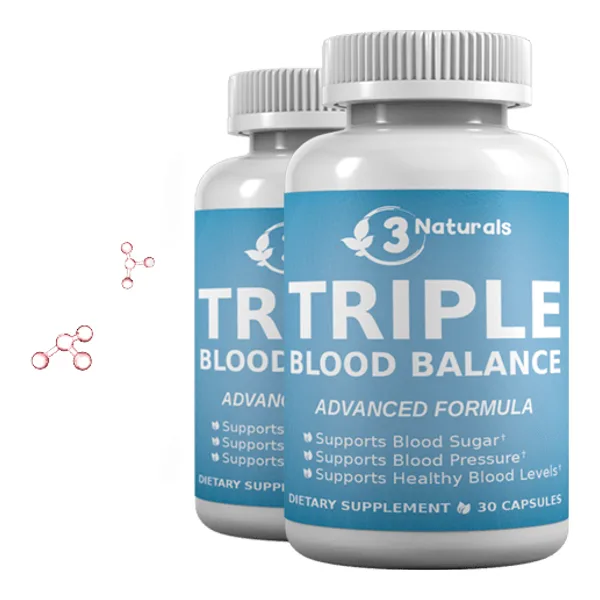
Triple Blood Balance from Triple Naturals says it supports healthy blood sugar, blood pressure and cholesterol. We read the label line by line and compared it with the human research. The idea is broad. The capsule is small, and the label leaves the key amounts blank.
Our verdict: 1.8 / 5
| Ingredient evidence | 2 | Chromium, mulberry leaf and gymnema have some human data; guggul, bitter melon and vanadium do not hold up; licorice works against the blood pressure goal |
|---|---|---|
| Dosing vs. research | 1 | Chromium and magnesium sit well below study doses; the 12-ingredient blend has no stated weight |
| Label transparency | 1.5 | Label is published, but the blend and vanadium carry no amounts, and the sales page names berberine, which the label omits |
| Value and refund terms | 2.5 | $49 to $69 per bottle; 60-day refund policy that excludes shipping; optional subscription |
Worth considering if you want a simple once-a-day capsule with a modest chromium and magnesium top-up, you take no prescription medication, and your doctor has no objection.
Probably skip it if you take medication for blood sugar, blood pressure or cholesterol, if you want to know how much of each herb you are swallowing, or if blood pressure is your main concern, since the formula includes licorice root.
Before anything else: blood sugar, blood pressure and cholesterol numbers are measured in a doctor's office or with a home meter, and they are managed with your doctor. A supplement does not replace any of that, and nobody should change a prescription because they started one.
Smallest order $69, from $49 per bottle, 60-day refund policy from the seller
See the current Triple Blood Balance packages, shipping and refund termsOpens the seller's page. It may start with a long video or letter; the packages and refund terms are usually further down. We may earn a commission.
Came here for Triple Blood Balance? The highest-rated blood sugar label we checked is GlucoBerry, 3.6 out of 5.
What Triple Blood Balance is
Triple Blood Balance is a capsule supplement sold by Triple Naturals, a Las Vegas brand whose label says it distributes the product. Orders are processed by BuyGoods, a third-party retailer. The label calls for one capsule a day with food, and each bottle holds 30 capsules. Triple Naturals also lists it in its own online store.
The sales page frames it as a "triple action" formula for blood sugar, blood pressure and cholesterol, with an extra nod to weight management. It spotlights six ingredients: white mulberry leaf, juniper berry, biotin with chromium, berberine, bitter melon and cinnamon. To see prices, the page first asks for your name, email, phone and address in a shipping form.
What the label actually lists
Triple Naturals publishes the Supplement Facts panel on its references page. We transcribed it rather than copying the image. Per capsule:
- Vitamins and minerals with doses: vitamin C 50 mg, vitamin E 15 mg, biotin 300 mcg, magnesium (as oxide) 125 mg, zinc (as oxide) 7.5 mg, manganese 1 mg, chromium 76 mcg.
- Without an amount: vanadium (as vanadyl sulfate), and a "proprietary blend" of guggul resin, bitter melon, licorice root, cinnamon bark, Gymnema sylvestre, alpha lipoic acid, banaba leaf, yarrow flower, juniper berry, white mulberry leaf, L-taurine and cayenne.
Two things stand out. First, the blend has no total weight at all. Many proprietary blends at least state a combined figure; this one does not, so we cannot even estimate an average per herb. Second, a single capsule also has to carry about 125 mg of elemental magnesium as magnesium oxide, plus the other nutrients. That leaves limited room for twelve botanicals, while several of the trials below used 600 mg to several grams a day of a single herb.
There is also a mismatch. Berberine is one of the six ingredients pictured on the sales page, but it does not appear anywhere on the label. We treated the label as the authority and did not credit the product with berberine.
The formula next to the research
For each ingredient that plausibly relates to the marketed benefits, we looked for human trials or systematic reviews on PubMed and compared the study amount with the label.
| Ingredient | Per capsule | Amount in studies | How it compares |
|---|---|---|---|
| Chromium | 76 mcg | Benefit mainly above 200 mcg/day [1] | Roughly a third of that |
| Magnesium | 125 mg (oxide) | Median 368 mg/day; about 300 mg/day appeared sufficient [12] | Well under half |
| White mulberry leaf | Not disclosed | 12 trials, various preparations [2] | Cannot be compared |
| Gymnema sylvestre | Not disclosed | 300 mg twice daily [3] | Cannot be compared |
| Banaba leaf | Not disclosed | 32 to 48 mg/day of an extract with 1% corosolic acid [5] | Cannot be compared; standardization not stated |
| Cinnamon bark | Not disclosed | Mean about 2 g/day [7] | Very unlikely to fit in a shared capsule |
| Guggul resin | Not disclosed | 2,160 to 6,000 mg/day [11] [10] | Very unlikely to fit in a shared capsule |
| Vanadium | Not disclosed | No rigorous trial found [9] | No reference point |
Chromium and magnesium: the only doses we can check
A meta-analysis of 25 randomized trials in adults with diabetes found that chromium supplements were linked with an average HbA1c 0.55 points lower than placebo and lower fasting glucose, and noted that glycemic effects may need more than 200 mcg a day [1]. Triple Blood Balance provides 76 mcg. That is a sensible nutritional amount, but it sits below the range where the pooled benefit showed up.
Magnesium is the formula's only ingredient with good evidence on blood pressure itself. Across 34 double-blind trials with 2,028 adults, magnesium at a median 368 mg a day for about three months lowered systolic pressure by 2.0 mm Hg and diastolic by 1.8 mm Hg versus placebo, with roughly 300 mg a day appearing sufficient [12]. At 125 mg, the capsule delivers well under half of that.
Mulberry leaf, gymnema and banaba: some support, unknown amounts
White mulberry leaf has the most consistent data among the herbs. A 2023 meta-analysis of 12 trials (615 adults) found small reductions in fasting glucose and HbA1c, with larger effects in people whose fasting glucose was already elevated and in trials lasting eight weeks or more [2]. In a small trial of 30 adults with impaired glucose tolerance, gymnema at 300 mg twice a day lowered two-hour glucose and HbA1c compared with placebo [3]. Banaba's best-known study gave adults with type 2 diabetes 32 or 48 mg a day of a standardized extract for two weeks and reported lower blood glucose, but it was very short and small [5]. Alpha lipoic acid also shows modest effects on glucose markers in pooled trials of people with metabolic conditions [4]. Because the label gives no amount for any of these, we cannot say whether the capsule is anywhere near those doses.
Bitter melon, cinnamon and vanadium: weak or inconclusive
The Cochrane review of bitter melon found four trials with 479 participants and no significant difference in glucose control versus placebo, with generally high risk of bias [6]. For cinnamon, the Cochrane review of ten trials (577 people) found no significant difference in HbA1c or post-meal glucose [7], while a separate meta-analysis reported lower fasting glucose and lipids but very high variation between studies and no HbA1c change [8]. A systematic review of oral vanadium found no study that met its quality criteria, concluded routine use could not be recommended, and noted frequent stomach side effects [9].
Guggul: the cholesterol ingredient that disappointed
Guggul is the blend's most obvious cholesterol ingredient, and a guggul study is the only human trial on the vendor's own reference list that tests a marketed benefit. That Norwegian trial gave 43 adults 2,160 mg a day for 12 weeks; total cholesterol and HDL fell, but LDL and triglycerides did not change, and ten guggul users reported side effects including stomach discomfort and possible thyroid problems [11]. A larger US trial in JAMA gave 103 adults 1,000 or 2,000 mg three times a day for eight weeks: LDL rose 4 to 5% on guggul while it fell 5% on placebo, and six people on guggul developed a rash [10].
The licorice problem in a blood pressure formula
Licorice root is in the blend. Its natural compound glycyrrhizin is well known for raising blood pressure. A meta-analysis of 18 studies found that regular intake of products with at least 100 mg of glycyrrhizic acid a day raised systolic pressure by about 5.5 mm Hg and lowered blood potassium, with effects rising with dose [13]. The amount of licorice in Triple Blood Balance is not disclosed, and the label does not say whether it is deglycyrrhizinated. It may be small. We still find it a strange choice for a product sold partly on blood pressure support, and it is one more reason the blend amounts matter.
What the marketing says next to what we could verify
- "Over 1,000,000 bottles sold." We found no independent way to check this.
- "The world's most studied ingredients" for blood pressure. Of the listed ingredients, only magnesium has solid trial support for blood pressure, and it is underdosed here. Licorice points the other way.
- Cholesterol support "without the nasty side effects you see with statins." We do not compare supplements with prescription drugs. The guggul trials above do not support a cholesterol effect, and the larger one saw LDL rise.
- The reference list. The vendor's references page cites 11 PubMed entries. Only one is a human trial of a marketed benefit (the guggul study above). Others include a cell study of juniper extract in brain tumor cells [16] and a pharmaceutical paper on how magnesium stearate affects tablet properties [17]. None of them tests Triple Blood Balance.
- Juniper berry is featured on the sales page. We found no human trial on blood sugar, blood pressure or cholesterol.
We also noticed that the vendor's own Terms of Use ask people with diabetes not to take part in its "recommended programs." That wording is about the site's programs, but anyone with a diabetes diagnosis should read it as a cue to speak with their doctor first.
Price, packages and refund policy
One bottle is a 30-day supply. One-time prices on the order page when we checked:
- 6 bottles: $49 each ($294 total), free US shipping. About $1.63 a day.
- 3 bottles: $59 each ($177 total), free US shipping.
- 1 bottle: $69, plus a shipping fee (the shipping policy lists $15.95 for US orders that do not ship free).
"One-time purchase" is preselected. A "Subscribe and Save" option lowers the price ($264 every 6 months, $162 every 3 months or $63 a month) and bills the card automatically until you cancel by phone or email, so read which box is ticked before you pay. The order page also runs countdown timers and a discount pop-up, which we would ignore. The sales page mentions two bonus e-books.
Every order carries a 60-day refund policy. The refund page says the whole order is refunded excluding shipping, and that you start by emailing customer support with your order details. Sixty days is shorter than many competitors offer, and it is about the minimum time over which the glucose trials above measured anything.
Triple Blood Balance packages on the seller's site
6 bottles, 180-day supply
$49/bottle
$294 total · Free US shipping
Lowest price per bottle
Sales page lists 2 bonus e-books with the order
Check the 6-bottle price3 bottles, 90-day supply
$59/bottle
$177 total · Free US shipping
Sales page lists 2 bonus e-books with the order
Check the 3-bottle price1 bottle, 30-day supply
$69/bottle
$69 total · + shipping
Sales page lists 2 bonus e-books with the order
Check the 1-bottle priceButtons open the seller's Triple Blood Balance website, where you choose your supply and complete the order. Prices as listed on the seller's site on October 23, 2026; the price shown at checkout is final.Orders are covered by a 60-day refund policy from the seller (see their terms). We may earn a commission.
Safety and medication interactions
This is the section to read twice. Several ingredients are studied precisely because they may affect blood sugar, blood pressure or how drugs are absorbed, and that cuts both ways if you take medication.
- Blood sugar medicines. Herbal supplements can add to or work against oral diabetes medicines, and these interactions are among the most important for people with chronic conditions [15]. With chromium, gymnema, mulberry, banaba, bitter melon and alpha lipoic acid in one capsule, anyone on glucose-lowering drugs or insulin should talk to their doctor before starting and watch for low blood sugar.
- Blood pressure medicines. In healthy men, a single 1 g dose of gugulipid reduced the absorption of propranolol and diltiazem, two common heart and blood pressure drugs [14]. Licorice can raise blood pressure and lower potassium [13], which the authors flag as particularly relevant for people with existing cardiovascular disease. Ask your doctor if you take diuretics or other heart medicines.
- Thyroid and skin. Guggul trials recorded rashes and possible thyroid problems [11] [10]. Tell your doctor if you take thyroid medication.
- Stomach upset. Vanadium supplements often cause gastrointestinal side effects [9], and the label does not state the vanadium amount.
Because the blend amounts are unknown, you and your doctor cannot judge the dose of any one herb. Bring the bottle to your appointment. Results vary from person to person. New or worsening symptoms such as excessive thirst, blurred vision, headaches, chest pain or dizziness need prompt medical care, whatever you are taking.
What we liked and what gave us pause
Liked
- The Supplement Facts label is published
- Vitamin and mineral doses are stated
- Includes mulberry leaf and gymnema, which have some human glucose data
- One-time purchase is the default; one capsule a day
Gave us pause
- Twelve botanicals with no blend weight
- Chromium and magnesium below study doses
- Licorice and guggul in a product sold on blood pressure and cholesterol
- Berberine promoted but not on the label
- 60-day refund window that excludes shipping
Frequently asked questions
Where can I buy Triple Blood Balance?
On the seller's website, with checkout handled by BuyGoods, and in the Triple Naturals online store. Listings elsewhere may not be covered by the refund policy.
Can it replace my blood pressure, cholesterol or diabetes medication?
No. It is a dietary supplement. Do not stop or change a prescription without talking to your doctor, and tell your doctor before you add it.
Is it a subscription?
Only if you choose "Subscribe and Save" on the order page. One-time purchase is preselected.
How long before I notice anything?
Results vary. In the mulberry meta-analysis, effects were clearer in trials lasting eight weeks or more, and the only way to know what is happening to your numbers is to have them measured.
Want to read the seller's page yourself? The link below opens the Triple Blood Balance website, where you can see the full presentation and the published label.
Visit the Triple Blood Balance websiteHow we reviewed Triple Blood Balance
We read the sales page, the order page, the published Supplement Facts label and the seller's terms, refund and shipping pages. We searched PubMed for human trials and systematic reviews of each relevant ingredient, opened every study we cite, and compared study doses with the label. We also checked each entry on the vendor's own reference list. We did not test the product on people, and nobody at Stark Verve is a medical professional. Read our editorial policy to learn how we choose and update reviews. Stark Verve earns a commission if you buy through our links; that never changes what we write about the evidence.
References
- Suksomboon N, Poolsup N, Yuwanakorn A. Systematic review and meta-analysis of the efficacy and safety of chromium supplementation in diabetes. J Clin Pharm Ther. 2014;39(3):292-306. PMID 24635480
- Cui W, et al. Effect of mulberry leaf or mulberry leaf extract on glycemic traits: a systematic review and meta-analysis. Food Funct. 2023;14(3):1277-1289. PMID 36644880
- Gaytán Martínez LA, et al. Effect of Gymnema sylvestre administration on glycemic control, insulin secretion, and insulin sensitivity in patients with impaired glucose tolerance. J Med Food. 2021;24(1):28-32. PMID 32460589
- Akbari M, et al. The effects of alpha-lipoic acid supplementation on glucose control and lipid profiles among patients with metabolic diseases: a systematic review and meta-analysis of randomized controlled trials. Metabolism. 2018;87:56-69. PMID 29990473
- Judy WV, et al. Antidiabetic activity of a standardized extract (Glucosol) from Lagerstroemia speciosa leaves in Type II diabetics. A dose-dependence study. J Ethnopharmacol. 2003;87(1):115-7. PMID 12787964
- Ooi CP, Yassin Z, Hamid TA. Momordica charantia for type 2 diabetes mellitus. Cochrane Database Syst Rev. 2012;(8):CD007845. PMID 22895968
- Leach MJ, Kumar S. Cinnamon for diabetes mellitus. Cochrane Database Syst Rev. 2012;(9):CD007170. PMID 22972104
- Allen RW, et al. Cinnamon use in type 2 diabetes: an updated systematic review and meta-analysis. Ann Fam Med. 2013;11(5):452-9. PMID 24019277
- Smith DM, Pickering RM, Lewith GT. A systematic review of vanadium oral supplements for glycaemic control in type 2 diabetes mellitus. QJM. 2008;101(5):351-8. PMID 18319296
- Szapary PO, et al. Guggulipid for the treatment of hypercholesterolemia: a randomized controlled trial. JAMA. 2003;290(6):765-72. PMID 12915429
- Nohr LA, Rasmussen LB, Straand J. Resin from the mukul myrrh tree, guggul, can it be used for treating hypercholesterolemia? A randomized, controlled study. Complement Ther Med. 2009;17(1):16-22. PMID 19114224
- Zhang X, et al. Effects of magnesium supplementation on blood pressure: a meta-analysis of randomized double-blind placebo-controlled trials. Hypertension. 2016;68(2):324-33. PMID 27402922
- Penninkilampi R, Eslick EM, Eslick GD. The association between consistent licorice ingestion, hypertension and hypokalaemia: a systematic review and meta-analysis. J Hum Hypertens. 2017;31(11):699-707. PMID 28660884
- Dalvi SS, et al. Effect of gugulipid on bioavailability of diltiazem and propranolol. J Assoc Physicians India. 1994;42(6):454-5. PMID 7852226
- Gardiner P, Phillips R, Shaughnessy AF. Herbal and dietary supplement-drug interactions in patients with chronic illnesses. Am Fam Physician. 2008;77(1):73-8. PMID 18236826
- Tsai, et al. Juniperus communis extract exerts antitumor effects in human glioblastomas through blood-brain barrier. Cell Physiol Biochem. 2018;49(6):2443-2462. PMID 30261501
- Yamamoto K, et al. Effect of magnesium stearate mono- and dihydrate dispersibilities on physical properties of tablets. Chem Pharm Bull (Tokyo). 2017;65(11):1028-1034. PMID 29093289