
Review · Blood sugar
CelluCare review: what is in the capsule and what the trials used
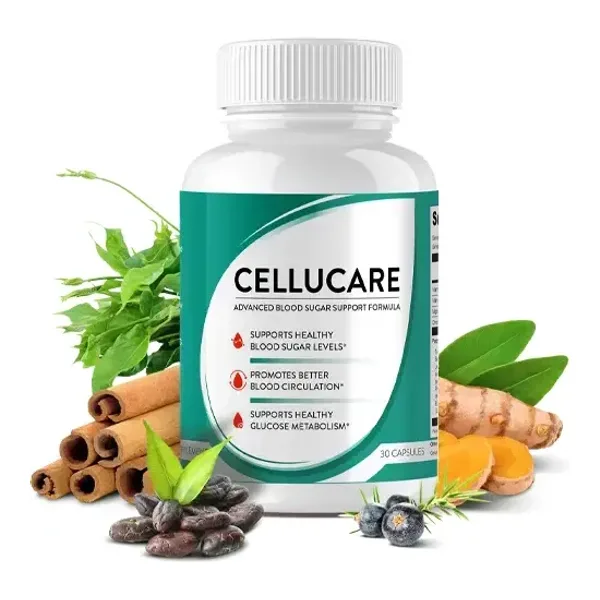
CelluCare is a one-a-day capsule sold as blood sugar support. Its label contains berberine, cinnamon and eleven other botanicals, plus four vitamins and minerals. We transcribed the label, searched PubMed and compared the amounts. The ingredient choices are more research-aware than most in this category; the doses are where it falls apart.
Our verdict: 2.1 / 5
| Ingredient evidence | 2.5 | Berberine and cinnamon have many human glucose trials, mostly small and of low quality; bitter melon, banaba and the circulation herbs have little or none |
|---|---|---|
| Dosing vs. research | 1.5 | The whole 528 mg blend is smaller than a single daily trial dose of berberine or curcumin; chromium and vitamin D sit below the amounts tested |
| Label transparency | 2 | Four nutrients disclosed; 13 botanicals share an undisclosed blend; the sales page omits berberine and its reference list is about memory and the brain |
| Value and refund terms | 2.5 | $49 to $79 a bottle; a 60-day refund window with a return authorization and return shipping at your cost |
Worth considering if a recent test showed normal blood sugar, you take no glucose-lowering or interacting medicine, your doctor is comfortable with berberine, and you understand you are buying a sampler of botanicals at unknown and probably small amounts.
Probably skip it if you take any diabetes medicine or a drug cleared by the liver enzymes berberine affects, if you want doses you can hold up against a trial, or if you are hoping for a substitute for testing and care. A single-ingredient product with a stated dose gives you and your doctor far more to work with.
Smallest order $158, from $49 per bottle, 60-day refund policy from the seller
See the current CelluCare packages, shipping and refund termsOpens the seller's page. It may start with a long video or letter; the packages and refund terms are usually further down. We may earn a commission.
Came here for CelluCare? The highest-rated blood sugar label we checked is GlucoBerry, 3.6 out of 5.
What CelluCare is
CelluCare is a bottle of 30 vegetable capsules, one a day. The label names the distributor as cellucarehq.com in Aurora, Colorado, and the order page footer names ClickBank as the retailer. It is sold through the official website as a one-time purchase in 2, 3 and 6-bottle packages; the FAQ says there are no further charges.
The sales page calls it a "new breakthrough in blood sugar science" and pitches blood sugar support, energy and circulation; the FAQ adds concentration and memory. It names a creator without credentials. We found no published trial of the CelluCare formula.
The seller allows affiliates to use only the banners in its resource folder, so we do not reproduce the label image. We describe it in words; the full label is on the official CelluCare website.
What the label says
The Supplement Facts panel lists one capsule as a serving and gives exact amounts for four nutrients: vitamin C 90 mg (100% of the Daily Value), vitamin D3 25 mcg or 1,000 IU (125%), magnesium as magnesium oxide 20 mg (5%) and chromium as chromium picolinate 100 mcg (286%).
Everything else is in a 528 mg "Proprietary Blend" of 13 botanicals, in this order: turmeric rhizome, cocoa bean extract, berberine HCl, gymnema leaf, cassia cinnamon bark, olive leaf extract, eleuthero root extract, juniper berry, maritime pine bark extract, bitter melon fruit extract, banaba leaf extract, butcher's broom root extract and guggul resin extract. Split evenly, that is about 40 mg each. Labels list blend ingredients from most to least by weight, so turmeric and cocoa probably lead, but the actual amounts are not disclosed.
How it compares with the other blood sugar products we reviewed. The labels of Sugar Defender and GlucoTonic match each other line for line. CelluCare's does not match them. It is a capsule, not a liquid, and shares only gymnema, eleuthero and chromium picolinate with them (100 mcg of chromium here against 0.7 mcg there). Its label also names an Aurora, Colorado distributor and its affiliate terms read the same, but the formula is its own.
The formula next to the research
Here is a daily capsule next to the amounts used in human studies of the ingredients most relevant to the marketing.
| Ingredient | CelluCare per day | Amount in studies | How it compares |
|---|---|---|---|
| Berberine HCl | Undisclosed, under 528 mg | 1,500 mg/day [1] | At most about a third |
| Turmeric | Undisclosed rhizome, curcuminoid content not stated | 1,500 mg/day of curcuminoids [7] | At most about a third by weight, and rhizome is not a curcuminoid extract |
| Cassia cinnamon | Undisclosed, under 528 mg | 120 mg to 6 g/day [4] | Possibly at the low end of the range |
| Bitter melon | Undisclosed | Preparations varied; no two trials alike [5] | Cannot be compared |
| Olive leaf extract | Undisclosed | 51 mg oleuropein plus 10 mg hydroxytyrosol/day [8] | Polyphenol content not stated |
| Maritime pine bark | Undisclosed | 100 mg/day of a branded extract [9] | Cannot be confirmed |
| Chromium picolinate | 100 mcg | Benefit mainly above 200 mcg/day [11] | Half or less |
| Vitamin D3 | 1,000 IU | 4,000 IU/day [12] | A quarter |
Berberine: the ingredient doing the heavy lifting, at an unknown dose
Berberine is a yellow plant alkaloid, and it has the most clinical work of anything in the blend. In a 2008 pilot study, 36 adults with newly diagnosed type 2 diabetes took either berberine or metformin, 0.5 g three times a day, for three months; in the berberine group HbA1c went from 9.5% to 7.5%. A second arm added berberine for 48 adults whose diabetes was poorly controlled, and about a third of them reported temporary stomach and bowel side effects [1]. A meta-analysis of 14 randomized trials with 1,068 participants reported glucose and lipid effects but rated the methods as generally low quality, with small samples and unclear bias [2].
Those trials used 1,500 mg a day. The whole CelluCare blend weighs 528 mg and berberine is listed third of 13, so the capsule cannot contain more than a fraction of the studied amount. The sales page names eight of the blend ingredients and leaves berberine out, even though it is the one with the most research and the most interaction warnings.
Cinnamon and bitter melon: mixed to insufficient
A meta-analysis of 10 randomized trials in 543 people with type 2 diabetes, using 120 mg to 6 g of cinnamon a day for 4 to 18 weeks, found an average fasting glucose difference of about 25 mg/dL but no significant change in HbA1c, and results varied so much between trials that the authors said the right dose and duration are unclear [4]. For bitter melon, a Cochrane review found four trials with 479 participants, mostly at high risk of bias, and no significant difference from placebo; the reviewers concluded the evidence was insufficient [5].
Turmeric, olive leaf, pine bark and cocoa
The best-known turmeric trial gave 240 adults with prediabetes either 1,500 mg of curcuminoids a day (six 250 mg capsules) or placebo for nine months. By the end, 16.4% of the placebo group had been diagnosed with type 2 diabetes and none of the curcumin group had [7]. That was a concentrated curcuminoid product at a dose about three times the weight of CelluCare's entire blend, and CelluCare lists turmeric rhizome without a curcuminoid figure.
Olive leaf extract improved insulin sensitivity by 15% against placebo over 12 weeks in 46 overweight men in their mid-forties; the extract and placebo were supplied by the extract's maker [8]. In 77 people with type 2 diabetes who kept taking their usual medicine, 100 mg a day of a branded maritime pine bark extract for 12 weeks lowered glucose compared with placebo, while the HbA1c difference was significant only in the first month [9]. Across 19 cocoa trials, 166 to 2,110 mg of flavanols a day produced modest changes in insulin markers [10]. CelluCare states no oleuropein, pine bark or flavanol content, so none of these can be matched.
Chromium, vitamin D and magnesium: real amounts, smaller than tested
Chromium is the strongest point of the label because the amount is stated. A meta-analysis of 25 trials in people with diabetes reported improvements in HbA1c and fasting glucose and suggested benefit mainly above 200 mcg a day [11]; CelluCare provides 100 mcg. In the D2d trial, 2,423 adults with prediabetes took 4,000 IU of vitamin D3 or placebo for a median of 2.5 years, and the difference in new diabetes diagnoses was not statistically significant [12]. CelluCare has 1,000 IU. A meta-analysis of 18 double-blind trials found magnesium improved some glucose measures in people with or at risk of diabetes [13]; CelluCare's 20 mg is 5% of the Daily Value, a small top-up.
Banaba, gymnema, eleuthero and the circulation herbs
Banaba research centers on corosolic acid, studied in animals, cell systems and a smaller number of human studies [6], and CelluCare does not say whether its banaba is standardized. Juniper and butcher's broom are pitched for circulation; we found no human glucose trial for either. Guggul is a curious inclusion: in a 103-person American trial, guggulipid at 1,000 or 2,000 mg three times a day for eight weeks raised LDL cholesterol slightly against placebo, and six people taking it developed a rash [15].
What the marketing claims vs. what we could verify
- Blood sugar support. Several ingredients have human glucose research, and berberine has the most. None can be confirmed at a studied dose in this capsule, and the formula itself has no published trial.
- "Awaken the feedback loop." The sales page says the formula reawakens a dormant feedback loop behind blood sugar and healing. It names no study, and we could not trace the idea to a publication.
- Memory and focus. The FAQ promises better concentration, attention and memory. None of the trials we found on these ingredients measured that.
- The "Scientific References" list. This was our most striking finding. The visible titles on the order page cover dementia and Alzheimer's research, huperzine A, bacopa, St. John's wort, phosphatidylserine, a brain enzyme called STEP, tooth loss, fatigue in multiple sclerosis and L-carnitine in older women. None is about blood sugar, and most of those substances are not on the CelluCare label. The list appears to come from a different product.
- Ratings and stories. We could not verify the "4.98/5 based on 2000+ reviews" figure or the no-complaints claim. Individual stories are not evidence, and nobody should adjust medication because of one.
Price, packages and refund policy
Each bottle is a 30-day supply. Prices on the order page reached through our link when we checked:
- 6 bottles: $49 each ($294 total), free US shipping, two e-books included. About $1.63 a day.
- 3 bottles: $69 each ($207 total), free US shipping, two e-books included. About $2.30 a day.
- 2 bottles: $79 each ($158 total), plus shipping, no e-books.
One bonus e-book is titled around managing diabetes, which shows who the marketing is aimed at. When we opened the site's home page directly, without a referral link, it showed a single bottle at $179 through a different payment processor. Compare before you buy.
The sales page promises a 60-day money-back guarantee, including empty bottles, minus shipping and handling. The separate return policy is stricter: you must request a return authorization by email within 60 days, ship the product back at your own cost within 14 days of receiving that authorization, and include proof of purchase. It also carries a generic line saying sale items cannot be refunded, and its return address has a different street number from the label. Ask support to confirm the address before shipping anything back.
CelluCare packages on the official site
6 bottles, 180-day supply
$49/bottle
$294 total · Free US shipping
Lowest price per bottle
Includes 2 digital e-books from the seller
Check the 6-bottle price3 bottles, 90-day supply
$69/bottle
$207 total · Free US shipping
Includes 2 digital e-books from the seller
Check the 3-bottle priceButtons open the seller's CelluCare website, where you choose your supply and complete the order. Prices as listed on the seller's site on October 23, 2026; the price shown at checkout is final.Orders are covered by a 60-day refund policy from the seller (see their terms). We may earn a commission.
Safety
The medication warning at the top of this page is the main point. Berberine, given at 300 mg three times a day for two weeks to healthy men, reduced the activity of the liver enzymes CYP2D6, CYP2C9 and CYP3A4, raising blood levels of a test drug by about 40% [3]. Those enzymes handle many common prescriptions, so tell your doctor or pharmacist about CelluCare if you take any regular medicine. Signs of low blood sugar include shakiness, sweating, a fast heartbeat, confusion and sudden hunger; if they appear, follow your doctor's plan and get help if needed.
Other points: berberine commonly causes temporary stomach upset [1]. A United States Pharmacopeia review found that liver injury with turmeric products is rare, usually appears after one to four months and usually resolves when the product is stopped; it advises asking a clinician first if you have had liver problems and stopping if you notice abdominal pain, dark urine or yellowing skin or eyes [16]. Guggul caused a rash in some trial participants [15]. The label warns against use under 18 or during pregnancy or nursing and asks anyone on medication or with a medical condition to consult a physician. Results vary from person to person, and new or worsening symptoms deserve medical care.
What we liked and what gave us pause
Liked
- Berberine and cinnamon, the most studied botanicals for glucose, are in the formula
- Chromium at a stated 100 mcg, a meaningful amount
- One capsule a day
- One-time purchase with no subscription
Gave us pause
- Thirteen botanicals packed into a 528 mg blend
- Berberine missing from the sales page despite its interaction profile
- A reference list about the brain, not blood sugar
- Memory and "feedback loop" claims with no support we could find
- Refund requires an authorization and paid return shipping
Frequently asked questions
Can CelluCare replace my diabetes medication?
No. It is a dietary supplement, and nothing we reviewed supports using it in place of prescribed treatment. Never stop or change a medication without your doctor.
Does CelluCare contain berberine?
Yes. Berberine HCl is the third ingredient in the label's proprietary blend, although the sales page ingredient list does not show it. The amount is not disclosed.
Is CelluCare the same as Sugar Defender or GlucoTonic?
No. Those two share an identical liquid formula. CelluCare is a capsule with a different ingredient list that overlaps on only three items.
Want to look at the official page yourself? The link below opens the CelluCare website, where you can read the full label and the return terms before choosing a package.
Visit the official CelluCare websiteHow we reviewed CelluCare
We read the official order page, its FAQ and reference list, the return policy and the affiliate terms, and transcribed the Supplement Facts label from the image the seller publishes. We compared the label with the sales page and with the two other blood sugar products we have reviewed. We searched PubMed for human trials and systematic reviews of the ingredients relevant to glucose, compared the amounts used with the label, and looked for research on the full formula, which we did not find. We did not test the product on people, and nobody at Stark Verve is a medical professional. Read our editorial policy to learn how we choose and update reviews. Stark Verve earns a commission if you buy through our links; that never changes what we write about the evidence.
References
- Yin J, Xing H, Ye J. Efficacy of berberine in patients with type 2 diabetes mellitus. Metabolism. 2008;57(5):712-7. PMID 18442638
- Dong H, Wang N, Zhao L, Lu F. Berberine in the treatment of type 2 diabetes mellitus: a systemic review and meta-analysis. Evid Based Complement Alternat Med. 2012;2012:591654. PMID 23118793
- Guo Y, Chen Y, Tan ZR, Klaassen CD, Zhou HH. Repeated administration of berberine inhibits cytochromes P450 in humans. Eur J Clin Pharmacol. 2012;68(2):213-7. PMID 21870106
- Allen RW, Schwartzman E, Baker WL, Coleman CI, Phung OJ. Cinnamon use in type 2 diabetes: an updated systematic review and meta-analysis. Ann Fam Med. 2013;11(5):452-9. PMID 24019277
- Ooi CP, Yassin Z, Hamid TA. Momordica charantia for type 2 diabetes mellitus. Cochrane Database Syst Rev. 2012;(8):CD007845. PMID 22895968
- Stohs SJ, Miller H, Kaats GR. A review of the efficacy and safety of banaba (Lagerstroemia speciosa L.) and corosolic acid. Phytother Res. 2012;26(3):317-24. PMID 22095937
- Chuengsamarn S, et al. Curcumin extract for prevention of type 2 diabetes. Diabetes Care. 2012;35(11):2121-7. PMID 22773702
- de Bock M, et al. Olive (Olea europaea L.) leaf polyphenols improve insulin sensitivity in middle-aged overweight men: a randomized, placebo-controlled, crossover trial. PLoS One. 2013;8(3):e57622. PMID 23516412
- Liu X, Wei J, Tan F, Zhou S, Würthwein G, Rohdewald P. Antidiabetic effect of Pycnogenol French maritime pine bark extract in patients with diabetes type II. Life Sci. 2004;75(21):2505-13. PMID 15363656
- Lin X, et al. Cocoa flavanol intake and biomarkers for cardiometabolic health: a systematic review and meta-analysis of randomized controlled trials. J Nutr. 2016;146(11):2325-2333. PMID 27683874
- Suksomboon N, Poolsup N, Yuwanakorn A. Systematic review and meta-analysis of the efficacy and safety of chromium supplementation in diabetes. J Clin Pharm Ther. 2014;39(3):292-306. PMID 24635480
- Pittas AG, et al. Vitamin D supplementation and prevention of type 2 diabetes. N Engl J Med. 2019;381(6):520-530. PMID 31173679
- Veronese N, et al. Effect of magnesium supplementation on glucose metabolism in people with or at risk of diabetes: a systematic review and meta-analysis of double-blind randomized controlled trials. Eur J Clin Nutr. 2016;70(12):1354-1359. PMID 27530471
- Gupta RC, et al. Interactions between antidiabetic drugs and herbs: an overview of mechanisms of action and clinical implications. Diabetol Metab Syndr. 2017;9:59. PMID 28770011
- Szapary PO, et al. Guggulipid for the treatment of hypercholesterolemia: a randomized controlled trial. JAMA. 2003;290(6):765-72. PMID 12915429
- Akhtar N, et al. Rarely reported cases of hepatotoxicity associated with turmeric- and curcuminoid-containing dietary supplements: a comprehensive review by USP. Pharm Biol. 2026;64(1):866-901. PMID 42364655