Review · Oral health
ProvaDent review: a chewable oral probiotic checked against the research
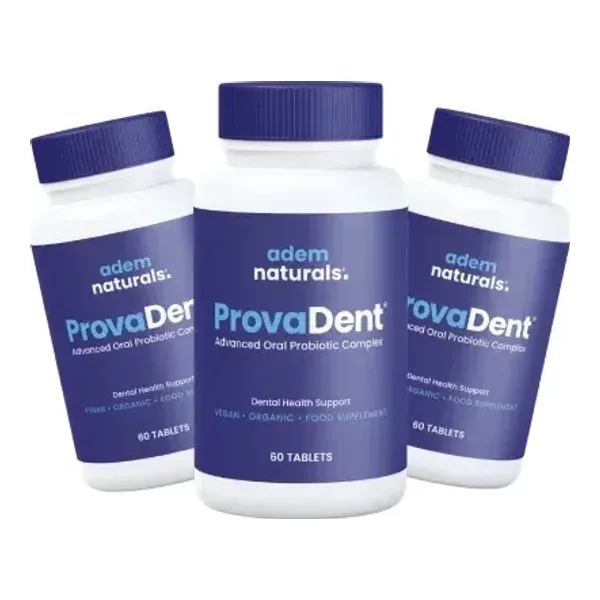
ProvaDent combines four probiotic strains, three plaque-targeting enzymes, xylitol and cranberry in a berry-flavored chewable tablet. Two of those pieces have a real human trial behind the exact ingredients. The headline on the sales page has none.
Our verdict: 2.5 / 5
| Ingredient evidence | 2.5 | Its exact three Lactobacillus strains and a similar enzyme trio each have one small human trial; xylitol and cranberry were studied in other forms |
|---|---|---|
| Dosing vs. research | 2 | Probiotic count is in the studied range; xylitol is about an eighth of the effective gum dose; enzyme activity is not stated |
| Label transparency | 3 | Every ingredient has an amount, but strain split, enzyme activity and one strain name are missing, and one botanical name is wrong |
| Value and refund terms | 2.5 | $49 to $69 a bottle with free US shipping; 60-day refund, return postage at your cost |
Worth considering if you want an oral probiotic with named strains and a disclosed label, you like a chewable you can take like a breath mint, and you see it as an extra on top of brushing, flossing and dental visits.
Probably skip it if you are buying it for the "remineralize teeth overnight" promise in the sales page headline, or if you want ingredient doses that match the research across the board.
Before anything else: bleeding gums, tooth pain, loose teeth or bad breath that does not go away deserve a visit to your dentist. They can have several causes, and some need professional care.
Smallest order $69, from $49 per bottle, 60-day refund policy from the seller
See the current ProvaDent packages, shipping and refund termsOpens the seller's page. It may start with a long video or letter; the packages and refund terms are usually further down. We may earn a commission.
What ProvaDent is
ProvaDent is a chewable tablet sold through Digistore24. The label names Adem Naturals of Tallmadge, Ohio, as the distributor. Each bottle holds 60 tablets, and the suggested serving is two tablets a day, chewed. The sales page suggests one after breakfast and one before bed, and calls the flavor "Winter Berry". It is sold on its own website in 1, 3 and 6-bottle packages at a one-time price; the checkout showed no recurring charge when we looked.
The pitch is that a "sugar molecule" discovered in January 2024 helps break down biofilm, the sticky layer on teeth that matures into plaque, while the probiotics restock the mouth with friendly bacteria. The page headline goes further and talks about swirling a "dental foam" to remineralize teeth overnight. We look at both claims below.
The formula next to the research
Here is the full Supplement Facts panel, transcribed from the label image on the sales page, with what we could find in human trials.
| Ingredient | ProvaDent per day (2 tablets) | Amount in human studies | How it compares |
|---|---|---|---|
| Probiotics: L. salivarius LS97, L. paracasei LC86, L. acidophilus LA85, S. salivarius | 50 mg, 7 billion CFU at manufacture (split not stated) | Chewable tablets with 5 billion CFU each of the three Lactobacillus strains [1] | Same three strains, similar count; the fourth strain is unnamed |
| BioFresh Clean Complex: beta-glucanase, DNase, glucan endo-1,3-alpha-glucosidase | 120 mg (activity not stated) | Lozenges with mutanase, beta-glucanase and DNase [7] | Same enzyme types; strength cannot be compared |
| Organic xylitol | 900 mg | 6.88 to 10.32 g/day in gum [10] | About one eighth of the lowest effective amount |
| Cranberry extract (30% proanthocyanidins) | 100 mg | Mouthwash studies only [11] [12] | Different form; swallowed tablet not tested |
| "Purple carrot powder" | 100 mg | No oral health trial found | Label lists the radish species (see below) |
Other ingredients: organic Nu-Mag (a rice-based flow agent), natural flavors and peppermint oil.
The probiotic strains: a real match, but a very small trial
This is the most interesting part of the label. Most oral probiotic products list species without strain codes, which makes them impossible to match to research. ProvaDent names three strains, LS97, LC86 and LA85, and those exact three were tested together. In a randomized trial at a Chinese dental hospital, 20 adults with chronic periodontitis who had just finished professional periodontal treatment took either chewable tablets with the three strains (5 billion CFU per tablet) or look-alike placebo tablets for three months [1]. The probiotic group had higher salivary IgA (an immune protein in saliva), lower pocket depth and less bleeding on probing than the placebo group, along with fewer Fusobacterium and Porphyromonas bacteria in plaque.
That is a genuine result, and it is also only 10 people per group, in a clinical population, alongside professional care. The same research team also tested a toothpaste with heat-inactivated versions of the three strains in 31 volunteers and saw higher salivary IgA after use [2]. Outside the mouth, LA85 alone was tested in 82 adults on amoxicillin, where it shortened diarrhea episodes, with no serious side effects reported [3]. We found no trial of these strains in healthy older men, and none of ProvaDent itself.
For context, a 2025 meta-analysis of 24 randomized trials found probiotics helped plaque and bleeding scores when added to periodontal treatment, but in the 10 gingivitis trials the improvements in plaque and bleeding were not statistically significant [4]. So the broader evidence leans toward probiotics as an add-on to dental care, and is weaker for everyday gum comfort.
Streptococcus salivarius and breath
The fourth strain is S. salivarius, with no strain code. That matters because the breath research on this species is mostly about one strain, K12. In a small early study, 23 people with chronic bad breath used a chlorhexidine rinse for three days and then K12 or placebo lozenges; a week later 85% of the K12 group had a substantial drop in volatile sulfur compounds, against 30% on placebo [6]. A 2025 meta-analysis of 10 trials found probiotics lowered those sulfur compounds and improved breath odor ratings overall, while warning about small samples and possible publication bias [5]. Without a strain name, we cannot tell whether ProvaDent's S. salivarius is one of the studied ones.
The enzyme complex: the closest thing to the "biofilm" story
BioFresh Clean Complex is three enzymes that break down parts of the plaque matrix: beta-glucanase, DNase and a glucan endo-1,3-alpha-glucosidase (the enzyme family usually called mutanase). In lab-grown biofilm, this trio cut biofilm formation sharply, with reductions above 90% for combinations containing mutanase [8].
The human result is more modest. In a triple-blind trial, 80 healthy adults sucked lozenges with mutanase, beta-glucanase and DNase (at two strengths) or placebo for 14 days while skipping all brushing [7]. Plaque build-up was lower than placebo at day 7 in one active group and across pooled time points, but not at every time point, and gum scores did not differ. The authors, several of them employees of the enzyme maker, concluded that the enzymes might slightly delay plaque formation. ProvaDent lists 120 mg of the complex but no activity units, so we cannot tell how its strength compares with those lozenges.
Xylitol: right ingredient, small amount
Xylitol is a sugar alcohol that mouth bacteria cannot ferment well. In a six-month trial of 132 adults, xylitol gum at 6.88 or 10.32 g a day cut mutans streptococci in plaque about tenfold, and the authors reported that effect only for those two doses, not for 3.44 g a day [10]. ProvaDent supplies 900 mg. The Cochrane review of xylitol products found low-quality evidence for a benefit only from xylitol added to fluoride toothpaste in children, and too little evidence to judge other products in adults [9]. Here xylitol mostly works as a sweetener.
Cranberry and the "purple carrot"
Cranberry compounds can stop some bacteria from sticking to surfaces. In a six-week trial of 59 people, a cranberry mouthwash lowered salivary mutans streptococci but did not change plaque or gum scores [11]. A 14-day trial in 50 dental students found cranberry mouthwash and chlorhexidine mouthwash reduced streptococci by similar amounts [12]. Both were rinses held in the mouth; ProvaDent's 100 mg is chewed and swallowed, a form we found no trial for.
The label lists "Purple Carrot Powder (Raphanus sativus)". Raphanus sativus is the botanical name for radish; carrot is Daucus carota. Either the plant or the Latin name on the label is wrong. It is a small ingredient with no oral health research we could find, but a supplement label should get the botanical names right.
How ProvaDent compares with other oral health formulas we reviewed
ProvaDent's label is not a copy of any product we have covered, though it borrows ideas from two of them. Like ProDentim, it is a chewable probiotic with S. salivarius, but ProvaDent names its Lactobacillus strains and lists twice the count (7 billion CFU against 3.5 billion). Like DentaTonic, it uses plaque-matrix enzymes and xylitol, but ProvaDent states the enzyme complex total and the xylitol amount instead of hiding them inside a proprietary blend. It shares nothing meaningful with DentiCore (chlorella and minerals), FortBite (a clay tooth powder) or DentaSmile Pro (blood sugar botanicals).
What the marketing claims and what we could verify
- "Remineralize teeth overnight". Remineralization means putting minerals such as calcium and phosphate back into enamel. ProvaDent contains no calcium, phosphate, hydroxyapatite or fluoride, and none of its ingredients has a published remineralization trial that we could find. We could not verify this claim, and the product page itself never explains it.
- A "sugar molecule" discovered in January 2024. The page does not name the molecule or the study. Xylitol is the only sugar-type ingredient on the label, and it has been studied for decades. We could not trace the claim to a publication.
- Strains that "attack strep mutans". The published trials of these three strains measured immune markers, gum measures and bacteria such as Fusobacterium and Porphyromonas [1] [2]. We found no human data on their effect on mutans streptococci.
- "Proven to be safe in clinical trials". The individual ingredients were generally well tolerated in the trials above, but ProvaDent as a product has no published trial.
Two more things we noticed. The "just purchased" pop-ups on the sales page pick a random name from a fixed list in the page code and a random bottle count, so they do not show real orders. And the page advertises savings of "up to 56%", while the per-bottle prices work out to about 29% off the single-bottle price; we could not reproduce the larger figure.
Price, packages and refund policy
One bottle (60 tablets) lasts 30 days. Prices on the sales page when we checked:
- 6 bottles: $49 each ($294 total), free US shipping, two e-books included. About $1.63 a day.
- 3 bottles: $59 each ($177 total), free US shipping, two e-books included.
- 1 bottle: $69. The shipping terms page lists US shipping as free.
The refund window is 60 days. According to the refunds page, you contact support by email or phone and pay the return postage yourself (or refuse the package on delivery). Since the strain trial ran for three months, a 90-day supply is the shortest test that resembles the research, and with a 60-day window you would need to decide before finishing it.
ProvaDent packages on the sales page
6 bottles, 180-day supply
$49/bottle
$294 total · Free US shipping
Lowest price per bottle
Includes 2 digital guides
Check the 6-bottle price3 bottles, 90-day supply
$59/bottle
$177 total · Free US shipping
Includes 2 digital guides
Check the 3-bottle price1 bottle, 30-day supply
$69/bottle
$69 total · US shipping listed as free on the shipping terms page
Check the 1-bottle priceButtons open the seller's ProvaDent website, where you choose your supply and complete the order. Prices as listed on the seller's site on October 23, 2026; the price shown at checkout is final.Orders are covered by a 60-day refund policy from the seller (see their terms). We may earn a commission.
Safety
The ingredients were generally well tolerated in the trials we cite, and no serious side effects were reported in the LA85 trial [3]. A few points are worth knowing for men over 50:
- Blood thinners. A systematic review of warfarin interactions lists cranberry among the foods and supplements linked to a higher bleeding risk [14]. If you take warfarin or another anticoagulant, ask your doctor first.
- Xylitol and the heart. A 2024 Cleveland Clinic study linked higher blood xylitol levels with more major cardiovascular events over three years and found that a xylitol-sweetened drink made platelets more reactive in 10 healthy volunteers [13]. The volunteers drank a typical portion of a xylitol-sweetened drink, not a 900 mg dose like ProvaDent's, and the link with heart events is an association, not proof of cause. If you have heart disease or clotting concerns, mention it to your doctor. Large amounts of xylitol can also cause bloating and loose stools [9].
- Weakened immune system. Probiotics are considered safe for most people, but rare systemic infections have been described in people with serious illness or a weakened immune system [15]. Check with your doctor if that applies to you.
- Pets. The FDA warns that xylitol is dangerous for dogs, so keep the bottle out of their reach.
Talk to your doctor or dentist before starting ProvaDent if you take prescription medication, and do not use it in place of dental care. Results vary from person to person.
What we liked and what gave us pause
Liked
- Named Lactobacillus strains that match a published oral trial
- Enzyme types that match a placebo-controlled plaque trial
- An amount listed for every ingredient; no hidden blend total
- One-time price and free US shipping
Gave us pause
- Headline remineralization claim with no mineral ingredient
- Xylitol at about an eighth of the effective trial dose
- Unnamed S. salivarius strain and no enzyme activity units
- Wrong botanical name on the label; simulated purchase pop-ups
- 60-day refund, return shipping at your cost
Frequently asked questions
Where can I buy ProvaDent?
On its own website, through Digistore24. The vendor does not allow sales on Amazon, eBay or other marketplaces, so listings there may not be genuine or covered by the refund policy.
Should I chew it or swallow it?
The label says to chew two tablets a day. The trial of the three Lactobacillus strains also used chewable tablets, so chewing keeps the probiotics in the mouth, where they are meant to work.
Can ProvaDent replace brushing or dental cleanings?
No. In the trials we found, probiotics and enzymes were tested as extras alongside normal hygiene or professional treatment. Keep brushing, flossing and seeing your dentist.
How long before I notice anything?
Results vary. The strain trial measured changes at one and three months, so judging any oral probiotic after a week or two is too early.
Is it a subscription?
No. Each package was a single payment at checkout when we looked.
Want to read their page yourself? The link below opens the ProvaDent sales page, where you can see the full presentation and the current packages.
See ProvaDent prices and packagesHow we reviewed ProvaDent
We read the sales page, its refund and shipping pages and the Supplement Facts label shown on the site, then searched PubMed for human trials of each ingredient, including the exact strain codes, and compared the study amounts with the label. We did not test the product on people, and nobody at Stark Verve is a dentist or medical professional. Read our editorial policy to learn how we choose and update reviews. Stark Verve earns a commission if you buy through our links; that never changes what we write about the evidence.
References
- Wang L, et al. Assessment of the effectiveness of probiotics-assisted physical interventions in the management of chronic periodontitis: a randomized controlled clinical trial. Probiotics Antimicrob Proteins. 2025;17(6):4215-4223. PMID 39304607
- Rui W, et al. Evaluating the role of postbiotics in the modulation of human oral microbiota: a randomized controlled clinical trial. Probiotics Antimicrob Proteins. 2025;17(5):2942-2952. PMID 38502383
- Zhu J, et al. Efficacy and safety of Lactobacillus acidophilus LA85 in preventing antibiotic-associated diarrhea: a randomized, placebo-controlled study. Food Sci Nutr. 2025;13(6):e70490. PMID 40548185
- Yang Y, et al. Efficacy and safety of probiotic therapy for halitosis: a systematic review and meta-analysis of randomized controlled trials. J Breath Res. 2025;20(1). PMID 41289613
- Burton JP, et al. A preliminary study of the effect of probiotic Streptococcus salivarius K12 on oral malodour parameters. J Appl Microbiol. 2006;100(4):754-64. PMID 16553730
- Rikvold PD, et al. The effect of enzymes on dental plaque: a randomized controlled trial. J Dent Res. 2026;105(2):236-244. PMID 40676928
- Dukanovic Rikvold P, et al. The effect of enzymatic treatment with mutanase, beta-glucanase, and DNase on a saliva-derived biofilm model. Caries Res. 2024;58(2):68-76. PMID 38154453
- Riley P, et al. Xylitol-containing products for preventing dental caries in children and adults. Cochrane Database Syst Rev. 2015;(3):CD010743. PMID 25809586
- Milgrom P, et al. Mutans streptococci dose response to xylitol chewing gum. J Dent Res. 2006;85(2):177-81. PMID 16434738
- Weiss EI, et al. A high molecular mass cranberry constituent reduces mutans streptococci level in saliva and inhibits in vitro adhesion to hydroxyapatite. FEMS Microbiol Lett. 2004;232(1):89-92. PMID 15019739
- Khairnar MR, et al. Comparative assessment of cranberry and chlorhexidine mouthwash on streptococcal colonization among dental students: a randomized parallel clinical trial. Contemp Clin Dent. 2015;6(1):35-9. PMID 25684909
- Witkowski M, et al. Xylitol is prothrombotic and associated with cardiovascular risk. Eur Heart J. 2024;45(27):2439-2452. PMID 38842092
- Tan CSS, Lee SWH. Warfarin and food, herbal or dietary supplement interactions: a systematic review. Br J Clin Pharmacol. 2021;87(2):352-374. PMID 32478963
- Doron S, Snydman DR. Risk and safety of probiotics. Clin Infect Dis. 2015;60 Suppl 2:S129-34. PMID 25922398