Strength Over 50: The Training Philosophy That Actually Works
At some point in his 50s, a man has to make a decision about his body.
Not a dramatic decision. Not a resolution made on January first that evaporates by February. A quieter, more permanent one. A decision about what kind of physical life he wants to be capable of in his 60s, his 70s, and beyond. And whether the choices he makes now are moving him toward that or away from it.
The men who get this right tend to have a similar realization at some point: training after 50 is not about performance in the gym. It is about performance in life. The ability to carry luggage without discomfort, to hike with younger family members without holding anyone back, to move through the world with the physical confidence that comes from a body that has been maintained rather than neglected.
The training philosophy that produces this outcome is not the one most men instinctively reach for. It does not involve maximum effort, split routines borrowed from bodybuilding magazines, or any attempt to replicate what worked at 30. It is a different philosophy entirely, built on different principles, aimed at a different target.
Why the Old Approach Stops Working
The training methods that built a man’s body in his 30s and early 40s were operating with a significant hormonal advantage that no longer applies in the same way at 55.
Recovery capacity declines with age. The anabolic hormones that allowed men to train hard three days in a row and wake up ready to go again are operating at lower levels. The connective tissue, tendons and ligaments, becomes less elastic and more vulnerable to the kind of cumulative stress that younger men absorb without consequence.
This does not mean the body cannot respond to training. It absolutely does, often dramatically and quickly. It means the equation has changed. Volume and intensity need to be balanced more carefully against recovery. Pushing through pain signals that would have been manageable at 35 produces different outcomes at 55.
The men who ignore this tend to cycle through the same pattern: train hard, get injured, rest, lose ground, start over. The men who adapt to it build something far more durable.
[→ Link: Post 4 - The Lost Art of Male Vitality]
The Four Pillars of Effective Training After 50
Resistance training as the non-negotiable foundation.
Muscle mass declines at a rate of three to five percent per decade after 40 without deliberate intervention. This process, called sarcopenia, accelerates in the absence of resistance training and has consequences that extend far beyond aesthetics. Muscle mass is directly correlated with metabolic rate, insulin sensitivity, bone density, and the physical resilience that determines quality of life in later decades.
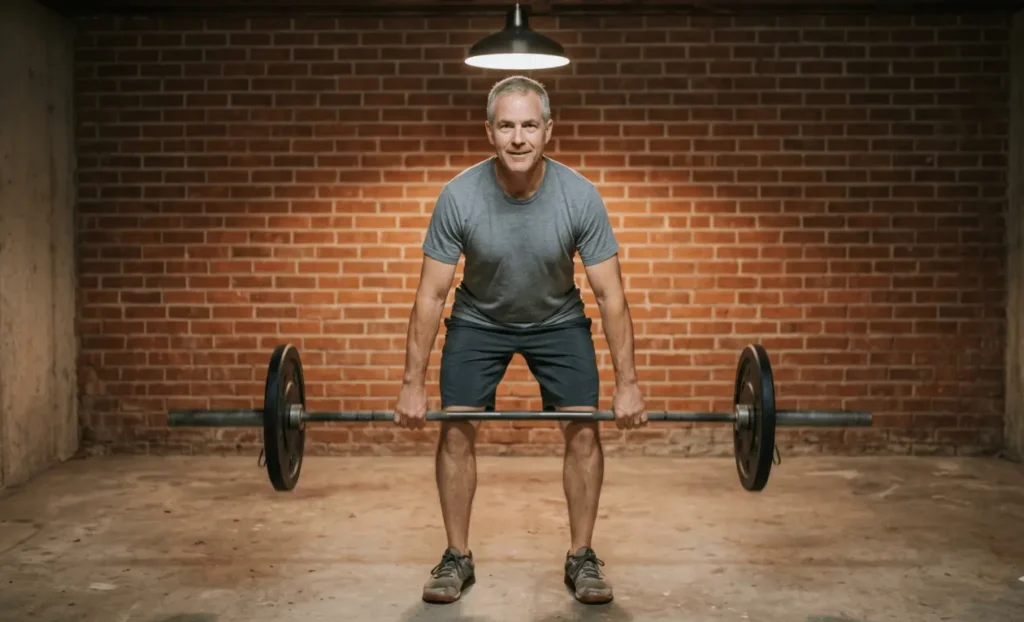
Two to three sessions of resistance training per week, focused on compound movements that work multiple muscle groups simultaneously, is enough to halt and in many cases reverse this decline. The goal is not hypertrophy for its own sake. It is maintaining the physical infrastructure that keeps everything else functioning.
Squats, deadlifts, pressing movements, pulling movements. The basics, performed consistently and with appropriate load, deliver more long-term value than any specialized protocol.
Mobility as a daily practice, not an afterthought.
The physical limitation most men over 50 encounter first is not strength. It is range of motion. Hips that no longer rotate fully. Shoulders that have lost overhead reach. A thoracic spine that has stiffened from decades of desk work and driving.
Mobility work is not stretching performed reluctantly after a workout. It is a deliberate daily practice of moving joints through their full available range, progressively expanding that range over time. Ten to fifteen minutes daily, consistently applied, produces changes in physical capability that men consistently describe as feeling years younger in practical terms.
The return on this investment is disproportionately high relative to the time required. Most men who start taking mobility seriously report that it changes how they feel in daily life more than any other single training decision.
Cardiovascular capacity as longevity infrastructure.
The research on cardiovascular fitness and longevity in men is unambiguous. VO2 max, the body’s maximum rate of oxygen utilization, is one of the strongest predictors of all-cause mortality available. Men in the top quartile of cardiovascular fitness for their age group live measurably longer and with significantly better quality of life than men in the bottom quartile.
The good news is that cardiovascular capacity responds reliably to training at any age. Two to three sessions per week of sustained moderate-intensity cardio, combined with occasional higher-intensity intervals, produces meaningful improvements in VO2 max within weeks.
Walking does not count as cardiovascular training in this context. The intensity needs to be sufficient to elevate heart rate meaningfully. Cycling, swimming, rowing, incline treadmill walking at pace, or any activity that puts sustained demand on the cardiovascular system qualifies.
Recovery as a scheduled component, not a gap between sessions.
Men who train effectively after 50 treat recovery with the same deliberateness they bring to the training itself. Sleep as a training variable, not a separate concern. Nutrition timed around sessions to support repair. Rest days that are genuinely restful rather than filled with physical activity that negates their purpose.
The training stimulus tells the body to adapt. Recovery is where the adaptation actually occurs. Without adequate recovery, the stimulus produces breakdown rather than improvement. This is the most commonly violated principle in men’s training after 50, and the one that accounts for most of the injuries, plateaus, and frustration that lead men to abandon training entirely.
[→ Link: Post 2 - The Sleep Protocol Every High-Performing Man Over 50 Needs]
Building a Week That Actually Sustains
The training week that works for men over 50 is not complicated. It is consistent.
A structure that delivers results without accumulating injury looks something like this: two to three resistance sessions, two cardiovascular sessions, and daily mobility work embedded into the morning or evening routine. Total active training time across the week sits between four and six hours. The remaining time is recovery.
The resistance sessions should not be consecutive. The body needs forty-eight hours between sessions working the same muscle groups to complete the repair and adaptation cycle. Men who train Monday, Wednesday, and Friday with full rest or light activity on the days between tend to make faster progress and stay healthier than men who cluster their sessions.
The cardiovascular sessions work well on the days between resistance training, where they provide active recovery benefits while building aerobic capacity simultaneously.
The single most important structural decision is the length of the commitment. Men who commit to ninety days of consistent application before evaluating results are working with the actual timeline of physiological adaptation. Men who evaluate after three weeks are almost always still in the early adaptation phase and drawing conclusions from incomplete data.
What Progress Actually Looks Like After 50
The metrics that matter after 50 are different from the ones that mattered at 30.
Weight on the bar is one indicator, but it is a secondary one. The primary indicators are: range of motion improvements in the hips, thoracic spine, and shoulders. Reduction in the joint discomfort that many men have accepted as normal. Cardiovascular capacity as measured by how a set of stairs or a brisk walk feels compared to three months ago. Recovery speed between sessions.
Men who track these markers consistently report something that men who only track weight on the bar often miss: the progress is happening, it just looks different than it used to.
The body at 55 is not the body at 30. It is capable of more, in terms of durability, consistency, and long-term adaptation, than most men give it credit for. It just requires a different conversation than the one most men were taught to have with it.
Physical strength after 50 is not about proving something to anyone. It is about maintaining the capacity to live fully in the decades ahead. That is a target worth training for.
[→ Link: Post 5 - Morning Habits of Men Who Age Like They Mean It]
Key Takeaways
One Factor That Affects Strength, Recovery, and Drive Simultaneously
Training delivers results when the underlying system is working with it rather than against it. For men over 50, there is often a physiological variable that sits underneath all of it — affecting recovery speed, muscle retention, energy, and drive at the same time.
Most men have never taken two minutes to evaluate it.