The Verve Edit

What It Means to Be a Man of Presence in Your 50s and Beyond
What It Means to Be a Man of Presence in Your 50s and Beyond There is a quality that certain men carry that is difficult


By Grant Whitaker, Executive Editor | 8 min read
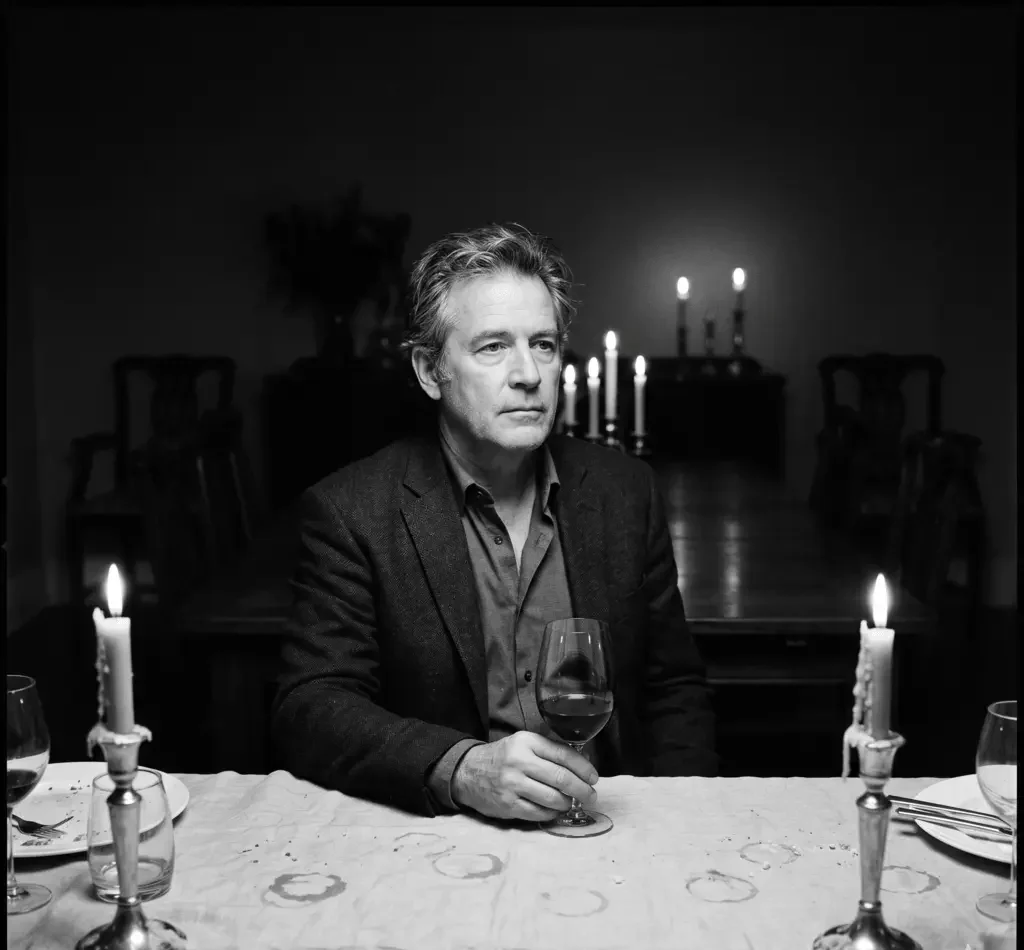
There is a quality that certain men carry that is difficult to name precisely but immediately recognizable when encountered.
It is not charisma in the conventional sense. It is not the loudest voice in the room or the most polished performance. It is something quieter and more durable. The sense, when talking with such a man, that he is entirely here. That the conversation is receiving his full attention rather than a fraction of it. That behind his eyes something is actually thinking rather than calculating, actually listening rather than waiting to speak.
This quality is what most people mean when they call a man impressive without being able to articulate exactly why. It is what younger men notice and file away under the vague category of wanting to be like that someday. It is what women in long marriages describe when they say their husbands became more attractive to them over time rather than less.
It is presence. And it is one of the most misunderstood capacities available to a man after 50.
Presence is not dominance. The man who controls rooms through volume, status signaling, or the implicit threat of his displeasure is not demonstrating presence. He is demonstrating a need for control that is, on close inspection, the opposite of presence — a defensive posture built on the fear of what the room might become without his management of it.
Presence is not performance. The man who has curated a persona — who has developed a reliable set of stories, opinions, and reactions that he deploys consistently across social situations — is not present. He is performing. The performance may be polished and even genuinely entertaining. But the man behind it is not available, and the people around him can feel that unavailability even if they cannot name it.
Presence is not authority derived from position. A man’s title, income, or professional reputation can command attention in a room. That is not presence. Presence is what remains when the title is removed. It is the quality of the man himself rather than the position he occupies. Men who have confused the two tend to discover the distinction at retirement, or whenever the professional identity that was carrying their weight in social situations is no longer available to do so.
And presence is not calmness as a performance of having nothing wrong. Some of the most present men carry significant difficulty — grief, uncertainty, hard decisions, real losses. Their presence does not come from the absence of those things. It comes from having developed the capacity to hold them without being destabilized by them.
The men who carry genuine presence in their 50s and beyond have almost always built it through a specific combination of internal work and accumulated experience that cannot be shortcut.
A settled relationship with their own identity. The man of presence knows who he is in a way that does not require external confirmation. His sense of self is not primarily constructed from his professional role, his social reputation, or the opinions of the people around him. He has done enough internal reckoning — through difficulty, through failure, through the long process of understanding his own patterns and motivations — to have a foundation that holds when the external structures shift.
This does not mean he has no ego. It means his ego is not running the room. The difference is felt immediately by anyone paying attention.
The practice of full attention. Presence is partly a skill, and the skill is the capacity to give another person or situation complete, undivided attention. This sounds simple and is increasingly rare. The attention economy has systematically degraded the average man’s capacity for sustained focus — including the focused attention that genuine conversation requires.
Men who are present in conversation are not thinking about their response while the other person is speaking. They are listening. They are taking in not just the words but the tone, the pauses, the things being circled without being said directly. They respond to what was actually communicated rather than to a summary they assembled while waiting for their turn.
This quality of attention makes people feel genuinely heard in a way that most interactions do not produce. It is one of the primary reasons certain men are sought out for counsel, trusted with difficulty, and remembered long after a conversation ends.
[→ Link: Post 7 - The Focused Man: How to Sharpen Mental Clarity as You Age]
A body that is physically inhabited. This sounds abstract and is entirely concrete. Men who are chronically stressed, sleep-deprived, or physically neglected are not fully in their bodies. Their attention is pulled toward discomfort, toward internal noise, toward the low-grade physical distraction of a system running poorly. Their presence is compromised before they walk into a room.
Men who maintain their physical system — who sleep well, move regularly, and manage their stress load with intention — occupy their bodies differently. They sit differently. They make eye contact differently. The physical ease communicates something that words do not need to add.
[→ Link: Post 6 - Strength Over 50: The Training Philosophy That Actually Works]
"The most magnetic men I have encountered were not trying to be magnetic. They were simply entirely there. In a world of half-present people, that is extraordinary."
— Grant Whitaker, Stark Verve

Presence is an internal state that expresses itself externally in ways that are specific and observable.
The man of presence is not in a hurry in conversation. He allows pauses without filling them reflexively. He asks questions that demonstrate he actually heard what was said rather than questions that redirect the conversation toward himself. When he disagrees, he does so without urgency — not because he lacks conviction but because he is secure enough in his position not to need immediate resolution.
He does not perform reactions. His responses to what he hears are genuine rather than calibrated for effect. When something is funny he laughs; when something is serious he is serious. The absence of performance in these small moments is part of what makes him feel trustworthy. People can sense when they are being managed, even when they cannot articulate it. The man who is not managing them stands out immediately.
He is comfortable with silence. This is rarer than it sounds. Most men treat silence in conversation as a failure state requiring correction. The man of presence treats it as part of the conversation — a moment for genuine thought rather than a gap to be filled with something that sounds adequate.
He brings his full attention to whatever is directly in front of him. Not to the phone face-down beside his plate. Not to the scanning awareness of who else is in the room. To the person or the task or the moment that is actually here. This sounds like basic courtesy and it is. It is also, in practice, something that most men deliver inconsistently at best.
In professional contexts, genuine presence is one of the most durable leadership advantages available to a man after 50.
The hierarchical authority that younger leadership depends on — the positional power, the technical superiority, the energy and hunger of someone building something for the first time — shifts in its effectiveness over time. What replaces it, in the men who lead most effectively in their later career, is something harder to manufacture and more difficult to challenge.
The ability to walk into a difficult situation and be genuinely steady — not performing steadiness but actually feeling it — is something men develop through accumulated experience with difficulty. Having been through enough hard things to know that most hard things resolve, and that the quality of the response to them matters more than the immediate resolution. That knowledge lives in the body differently than it does in the mind. It changes how a man occupies a room.
The teams that perform best under experienced leadership consistently describe the same quality in the leaders they trust most: the sense that the person at the front of the room is actually there. That the decision being made is being made from a place of genuine consideration rather than reactive anxiety. That the difficulty is being held rather than transferred to everyone around the leader.
This is not a management technique. It is the natural output of a man who has done the internal work that presence requires.
[→ Link: Post 1 - The Second Peak: Why Men Over 50 Are Outperforming Their Younger Selves]
Presence is not a fixed trait. It is developed, and the development has specific inputs.
Reducing the background noise. A man cannot be fully present in conversation when his nervous system is running a continuous thread of unresolved concerns, unread messages, and ambient anxiety. The practices that reduce this background noise — deliberate stress management, sleep, physical movement, cognitive offloading through writing — are prerequisites for presence rather than separate concerns. A man who works on his nervous system is working on his presence.
Building the capacity for sustained attention. The practices that develop focused attention — deep reading, meditation, extended periods of single-task work — directly train the attentional capacity that presence in conversation requires. The man who practices sustained attention in solitude brings that capacity into his interactions. The man who has allowed his attention to fragment across years of multi-tasking and constant connectivity finds that genuine presence in conversation requires a capacity he has to rebuild.
[→ Link: Post 5 - Morning Habits of Men Who Age Like They Mean It]
Doing the internal reckoning that settledness requires. This is the least comfortable part of the conversation. The men who carry the most genuine presence have almost invariably gone through a period of honest self-examination that most men avoid — understanding their own patterns, their motivations, the ways their history shows up in their present behavior, the difference between who they are and who they have been performing.
This examination does not require therapy, though therapy is one valid path. It can happen through sustained journaling, through honest conversation with trusted men, through the accumulated self-knowledge that difficulty and reflection produce over time. What it requires is the willingness to look at oneself honestly rather than to maintain the performance of a settled man while remaining, internally, an unsettled one.
The men who do this work tend to describe the same outcome. Not that they became different people. That they became more fully the person they already were underneath everything that had accumulated on top of it.
Practicing presence in small moments. The capacity for presence is built in the ordinary interactions before it shows up in the significant ones. The conversation with a family member where the phone stays in the pocket. The meal eaten without a screen. The walk taken without earbuds. The transition between tasks that includes a genuine pause rather than an immediate pivot. These small practices of attention build the muscle that full presence in high-stakes moments requires.
A man cannot be fully present when his body is working against him. Energy depletion, hormonal imbalance, and chronic physical strain all manifest as the mental noise and physical distraction that compromise presence before a conversation begins.
For men over 50, there is often a specific physiological variable contributing to this that most men have never assessed.
Two minutes is enough to find out if it applies to you.
What It Means to Be a Man of Presence in Your 50s and Beyond There is a quality that certain men carry that is difficult

The Brotherhood Problem: Why Men Over 50 Are Quietly Lonely — And How to Fix It There is a particular kind of loneliness that does

What Your Father Never Told You About Staying Strong After 50 Most men arrive at 50 carrying a version of strength that was never fully

The Second Peak: Why Men Over 50 Are Outperforming Their Younger Selves Something happens to certain men in their 50s that does not fit the
How the World’s Most Vital Men Manage Stress Without Burning Out Every man over 50 has developed a relationship with stress. The question is whether

The Focused Man: How to Sharpen Mental Clarity as You Age There is a particular kind of frustration that men in their 50s describe in
Grant Whitaker is the Executive Editor of Stark Verve. He writes about performance, longevity, and what it actually means to be a vital man after 50.