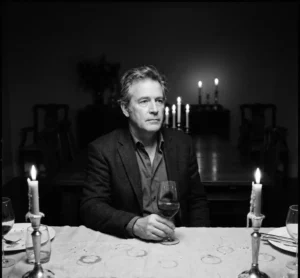
The Lost Art of Male Vitality: How Modern Life Is Draining Your Energy
There is a version of a man at 55 that nobody talks about enough.
He has built something real. A career, a family, a reputation. He has put in the decades of work that younger men only read about in biographies. And yet, somewhere between the mortgage and the Monday morning meetings, he started running on a kind of reserve fuel he cannot quite name. He gets through the day. But getting through is different from living forward.
This is not a story about disease. It is a story about drift. The slow, compounding cost of a lifestyle that was designed for productivity and optimized for almost everything except the man himself.
Vitality, the raw physical and mental energy that once felt automatic, does not vanish overnight. It erodes. And the frustrating part is that most of the forces behind that erosion are completely invisible in daily life.
The Body Keeps the Score of Your Schedule
The average man over 50 in America is running a chronic stress load that would have been considered extraordinary by previous generations. Not dramatic stress. Sustained, low-grade, always-on pressure that never fully releases.
Work emails after dinner. Financial decisions with real stakes. Aging parents. Adult children still needing navigation support. A world that moves faster than it did when he was 35.
The body responds to all of this with the same physiological toolkit it used for genuine physical threats: elevated cortisol, disrupted sleep architecture, reduced recovery capacity. The system was built for short sprints, not marathons. Running it at a low simmer for years extracts a cost that shows up as fatigue, reduced drive, and a diminished sense of what used to feel like edge.
The research on chronic stress and male energy is clear: the longer the exposure, the deeper the impact on everything from muscle retention to mood regulation. This is not a weakness. It is basic biology meeting a lifestyle that was never designed with biology in mind.
What the Previous Generation Got Right Without Knowing It
Here is something worth considering. Men in their 50s and 60s a generation ago were not necessarily healthier by virtue of better information. Many of them smoked, drank more, and had zero concept of recovery science.
But they had something that has become genuinely rare: hard stops in the day.
Work ended when you left the building. Weekends had a different texture than weekdays. Physical labor was more common, which meant the body got actual exertion rather than the tension of sitting still for ten hours in a state of low-grade mental stress.
There was also more time in what researchers now call default mode, the mental state of unstructured thought that is essential for cognitive restoration. Driving without a podcast. Sitting in a backyard without a phone. Doing one thing at a time.
The vitality those men carried into their later decades was not accidental. It was the byproduct of a rhythm that modern life has largely dismantled.
[→ Link: Post 5 – Morning Habits of Men Who Age Like They Mean It]
The Three Areas Where Modern Men Lose the Most Ground
Physical output without physical recovery. Many men over 50 still push themselves in terms of work demands, travel, and responsibility, but have lost the counterweight of genuine physical activity and deliberate rest. The body needs to be loaded and then recovered. Without both sides of that equation, it starts to break down rather than adapt.
Cognitive load without cognitive rest. The brain is an organ with real metabolic demands. Constant information input, decision-making, and screen time without adequate downtime depletes the mental resources that generate clarity, motivation, and emotional steadiness. Most men are running a significant cognitive deficit and have normalized it as just how life feels now.
Social connection without depth. Men are not wired for isolation, but the friendships that sustained younger men often thin out significantly after 50. Work relationships replace genuine bonds. The result is a kind of low-level social malnourishment that contributes more to overall energy and vitality than most men would expect.
The Habits That Actually Move the Needle
The men who maintain high vitality through their 50s and into their 60s tend to share a handful of consistent behaviors. None of them are dramatic. That is precisely the point.
They protect their sleep like a professional obligation. Not as something that happens after everything else is done, but as a scheduled, non-negotiable block that the rest of the day is structured around. Sleep is where testosterone is produced, where cortisol is cleared, and where the brain consolidates the day’s cognitive load. Treating it as optional has real consequences that compound over time.
They move their body with intention, not punishment. This is not about grinding through workouts to prove something. It is about consistent, varied physical activity that includes resistance, mobility, and outdoor exposure. The goal is to remain capable, not to perform for anyone.
They create real breaks in the day. Even ten minutes of genuine disconnection, a walk without the phone, sitting outside without an agenda, reading something with no practical purpose, changes the physiological state in measurable ways. The nervous system needs downtime to regulate itself.
They invest in a small number of genuine relationships. Not networking. Not group chats. Actual friendships with men they trust, where real conversations happen. The vitality benefit of this is well-documented and consistently underestimated.
[→ Link: Post 9 - The Brotherhood Problem: Why Men Over 50 Are Quietly Lonely]
Vitality Is a Practice, Not a Destination
The men who carry real energy and presence into their later decades did not find a formula. They built a practice. A set of daily and weekly choices that kept the fundamental systems of the body and mind running the way they were built to run.
The good news is that the body responds faster than most men expect once the inputs change. Sleep quality improves within days of consistent effort. Physical energy responds to movement within weeks. Mental clarity follows when the cognitive load is managed rather than ignored.
The lost art of male vitality is not lost because it was forgotten. It was crowded out. And it can be rebuilt.
Key Takeaways
One More Thing Worth Checking
Vitality operates as a system. When energy, drive, and physical resilience start to decline together, there is often a single underlying factor that touches all three at once.
Most men over 50 have never had it evaluated.
It takes about two minutes, and the results tend to be clarifying.