Review · Nail and skin
TerraCalm review: what is actually in the jar, and what the research says
TerraCalm is marketed as a French mineral mud for toenails. The label shows a water-based cream that is rinsed off after a minute. We compared the label, the sales page and the published research.
This is an independent review page. Stark Verve is not the maker or seller of TerraCalm, and we earn a commission if you buy through our links.
Our verdict: 2 / 5
| Ingredient evidence | 1.5 | No human study of clay on nails or feet; the essential oil data come from small, leave-on studies |
|---|---|---|
| Dosing vs. research | 1 | No concentrations disclosed; a one-minute rinse-off routine differs from every study we found |
| Label transparency | 3 | Full ingredient list, directions and warnings published; no amounts, and the label contradicts parts of the sales page |
| Value and refund terms | 2.5 | $49 to $69 per 3 oz jar; 60-day refund window, shorter than the 3 months the seller itself suggests |
Worth considering if you want a pleasant-smelling, cooling foot cream for dry or rough skin around the nails, your doctor or podiatrist has already looked at your feet, and you see it as part of everyday foot care.
Probably skip it if you are expecting the clay to reach under the nail and change how a thick, discolored toenail grows. We found no study showing that, and the one-minute rinse-off routine makes it even less likely.
Before anything else: thickened, yellow, crumbling or painful toenails should be seen by a doctor or podiatrist. If you have diabetes, numb feet or poor circulation, do not start any new foot product on your own.
Smallest order $69, from $49 per jar, 60-day refund policy from the seller
See the current TerraCalm packages, shipping and refund termsOpens the seller's page. It may start with a long video or letter; the packages and refund terms are usually further down. We may earn a commission.
Came here for TerraCalm? The highest-rated nails and skin label we checked is Kerassentials, 2.1 out of 5.
What TerraCalm is
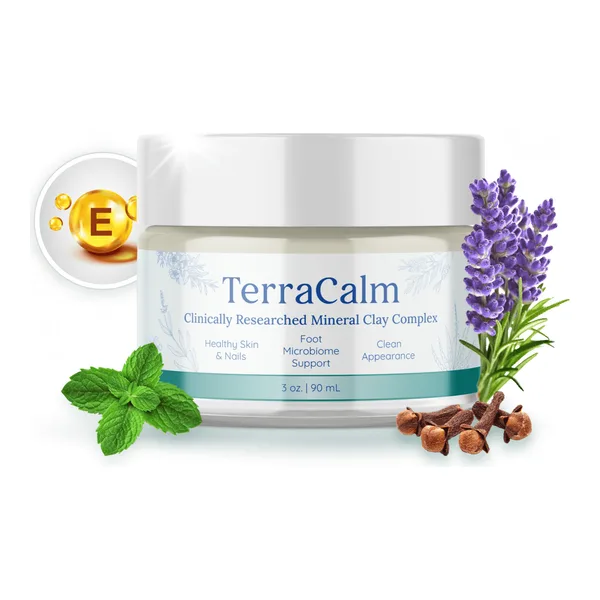
TerraCalm is a topical product, applied to the skin and never swallowed. It comes in 3 oz (90 mL) jars, sold through Digistore24 on the official website only, as a one-time purchase with no subscription. The label lists TerraCalm as the distributor, with an address in Tallmadge, Ohio, and calls the product a "Clinically Researched Mineral Clay Complex" for "Healthy Skin & Nails", "Foot Microbiome Support" and a "Clean Appearance".
The directions on the label are short: once a day, massage a small amount of the cream onto the target areas, leave it on for at least one minute, then rinse it off. The label also carries a set of drug-style warnings, including "The safety of this product has not been determined", instructions not to apply it to wounds, damaged or irritated skin, and advice to stop and ask a doctor if the condition worsens or symptoms last more than seven days.
The sales page tells a different story. It describes a French "mineral mud" whose "intelligent microscopic particles" of illite clay starve fungus at the root of the nail. That gap between the label and the marketing is the main thread of this review.
The label next to the research
The full ingredient list is published on the official site (we describe it here instead of reproducing the image, because the seller does not grant permission to reuse its pictures). It has 28 entries. The first nine are the base of an ordinary cream: water, emulsifiers (cetearyl alcohol and ceteareth-20), glycerin, light oils and esters, sunflower oil, and a thickener with its neutralizer. Next come two preservatives, DMDM hydantoin and iodopropynyl butylcarbamate. Only after those do the marketed ingredients appear: aloe, vitamin E, shea butter, sweet almond oil, French green clay, then thyme, tea tree, clove, oregano, cedarwood and lavender oils, manuka honey, menthol, jasmine absolute in jojoba oil and bearberry extract.
No concentration is given for any of them. US cosmetic labels list ingredients in descending order of amount, although ingredients present at 1% or less may follow in any order. Preservatives are normally used in small amounts, so the clay, listed after two of them, is probably a minor part of the cream. The label does not let anyone confirm that either way.
| Ingredient | TerraCalm | What the human research used | How it compares |
|---|---|---|---|
| French green clay | Amount not stated; listed 16th | No human study on nails or foot skin found; lab and mouse studies used wet clay poultices [1] [3] | Cannot be compared |
| Oregano and tea tree oils, vitamin E | Amounts not stated; rinsed off after 1 minute | Leave-on nail oil, once daily on the nail plate for 6 months [4] | Same family of ingredients, very different contact time |
| Tea tree oil | Amount not stated | Randomized trials; side effects minor except at 25% strength or more [6] | Strength unknown |
| Thyme, clove, cedarwood, lavender oils, manuka honey, bearberry | Amounts not stated | No human nail or foot study found for these in our PubMed searches | Cannot be compared |
| Menthol | Amount not stated | Gives a cooling feel; no nail study used | Comfort ingredient |
French green clay: real lab findings, about bacteria, and dependent on the deposit
Clay is the headline ingredient, and it does have an interesting research history. A team at Arizona State University tested two French green clays that had been used on patients with Buruli ulcer, a serious skin infection. In lab cultures, one of them killed a wide range of bacteria. The other, with a very similar structure, had no effect and in some tests let bacteria grow faster [1]. The researchers traced the difference to the chemistry of each deposit and the metal ions it releases in water [2]. In a later mouse study, wet illite clay poultices applied twice a day for seven days to infected skin wounds lowered bacterial counts, while another clay type did poorly and irritated the skin [3].
Three things follow for TerraCalm. These studies were about bacteria, with no fungus or nail tested. They used thick wet poultices left on the skin, compared with a small amount of cream rinsed off after a minute. And because results depended on the exact deposit, "French green clay" on a label tells you little about how a particular batch behaves. We searched PubMed for illite or any clay in toenail or athlete's foot studies and found none.
The essential oils: the most relevant evidence, in a different format
The closest published match to TerraCalm's oils is an Italian open study. Twenty patients with mild to moderate nail fungus applied an oil containing vitamin E with lime, oregano and tea tree oils once a day to the nail and surrounding skin for six months. At the 12-month check, most of them (about 79%) had clear nails on exam and lab testing, and no side effects were recorded [4]. It is encouraging, but there was no comparison group, the sample was small, and the product was a leave-on oil applied directly to the nail plate.
Wider reviews point the same way. A meta-analysis of essential oils on skin infections found them better than placebo and similar to standard options in fungal skin infections, while rating the studies low in quality [5]. A systematic review of 46 randomized trials of tea tree oil, three of them in podiatry, called the overall quality poor to modest [6]. A dermatology review of over-the-counter and natural nail remedies covered mostly lab data and a handful of small clinical studies [7].
Why the one-minute rinse matters
The nail plate is a dense barrier. Pharmaceutical researchers describe it as the main reason topical nail products struggle, and they study chemical enhancers and physical devices to push ingredients through it [8]. The sales page makes a related point itself, saying common products only reach the surface of the nail. A cream that sits on the skin for a minute before being washed away is a weaker fit for that problem than the leave-on oils in the studies above. It may still feel cooling and leave skin softer, which is a reasonable thing for a foot cream to do.
What the marketing claims vs. what we could verify
- "Illite particles" that starve fungus at the nail root. We could not trace this to any published study. The clay research we found concerns bacteria in lab dishes and mouse skin wounds [1] [3].
- "Clinically proven" and "Clinically Researched". We found no clinical study of TerraCalm itself. The reference list on the official site is mostly lab studies of individual oils. One linked PubMed paper is a 1984 report on parasites in the bile duct, which has nothing to do with nails or skin.
- "100% natural". The label includes synthetic emulsifiers, an acrylate thickener and two synthetic preservatives.
- Safety. The site's FAQ says the product is designed for all ages and medical conditions and that its ingredients are proven safe in clinical trials. The jar's own label says its safety has not been determined. We give the label more weight.
- "FDA-approved facility". The same FAQ later calls the facility "FDA accredited". We could not verify either phrase and do not rely on them.
- Customer stories. The site's own disclaimer says some testimonials were recorded with paid actors, so we leave them out entirely.
Price, packages and refund policy
The seller counts one 3 oz jar as a 30-day supply. Prices on the official site when we checked:
- 6 jars: $49 each ($294 total), free US shipping, two digital guides included.
- 3 jars: $59 each ($177 total), free US shipping, two digital guides included.
- 1 jar: $69, free US shipping.
Shipping to Canada, the UK, Ireland, Australia and New Zealand costs $15.95. The refund policy runs 60 days from delivery. You email support, then send back every jar, opened or empty, at your own shipping cost. One detail stands out: the refund page itself advises using the product for at least three months before judging it, which is longer than the 60-day window. Toenails also grow slowly, so a fair test of any nail product runs past that window. Keep that in mind before buying a six-jar supply.
TerraCalm packages on the official site (sold in jars)
6 jars, 180-day supply
$49/jar
$294 total · Free US shipping
Lowest price per jar
6 jars; includes 2 digital guides
Check the 6-jar price3 jars, 90-day supply
$59/jar
$177 total · Free US shipping
3 jars; includes 2 digital guides
Check the 3-jar priceButtons open the seller's TerraCalm website, where you choose your supply and complete the order. Prices as listed on the seller's site on October 23, 2026; the price shown at checkout is final.Orders are covered by a 60-day refund policy from the seller (see their terms). We may earn a commission.
Safety
TerraCalm is for external use only. The main documented risk with creams like this is skin allergy. DMDM hydantoin releases small amounts of formaldehyde, and formaldehyde releasers are a well-known cause of allergic contact dermatitis [13]. A 2026 meta-analysis of more than 1.3 million patch-tested patients found allergy to DMDM hydantoin in 1.37% of them, with the highest rates of formaldehyde allergy in North America [14]. Tea tree and clove are among the essential oils that most often cause positive patch tests, and jasmine absolutes are among the nearly 80 oils reported to cause it [15]. If you know you react to formaldehyde, fragrances or essential oils, this product is a poor match. Try a small patch first, and stop if you get redness, itching or blistering.
We did not find reports of interactions between prescription medicines and these ingredients when used on the skin in cosmetic amounts. Even so, ask your doctor before using it if you take prescription medication or already use a prescribed nail or skin product, and follow the label's instruction not to combine it with other creams or ointments on the same area.
Diabetes and circulation. This matters for men over 50. In the Seattle Diabetic Foot Study, which followed 1,285 veterans with diabetes (98% men, average age 62) for about three years, having toenail fungus at the start was linked to a 58% higher risk of a later foot ulcer [11]. International guidelines recommend regular foot checks for people with diabetes and prompt professional care for any lesion that could become an ulcer [12]. If you have diabetes, numbness or poor circulation in your feet, see your doctor or podiatrist before using any foot product, and get prompt care for cracks, sores, redness, warmth, swelling or discharge.
When to see a doctor or podiatrist. Nail fungus becomes more common with age; a 2024 analysis of 108 lab-confirmed studies found older adults about 4.7 times more likely to have it than the general population [10]. Yet fungus accounts for at most about half of nail conditions [7], and doctors rely on lab tests to tell them apart [9]. See a professional if a nail is thick, discolored, lifting, painful or spreading to other nails, if the skin is broken or cracked, or if anything gets worse while you use a product. Results vary from person to person.
What we liked and what gave us pause
Liked
- The full ingredient list, directions and warnings are on the official site
- Oregano and tea tree oils have some small human studies on nails and skin
- Free US shipping on every package and no subscription
- Clear label warnings about wounds, irritated skin and when to stop
Gave us pause
- The clay mechanism could not be traced to any study
- No amounts for any ingredient; clay listed after the preservatives
- Rinsed off after a minute, unlike the products in the studies
- Formaldehyde-releasing preservative and common allergen oils
- Sales page claims that conflict with the jar's own label
- Refund window shorter than the seller's own suggested trial
Frequently asked questions
Is TerraCalm taken by mouth?
No. It is a cream for the skin of the feet, labeled for external use only. Keep it away from the eyes and mouth and wash your hands after use.
Is it really a mud or clay?
The label calls it a cream, and its first ingredient is water. French green clay is one of 28 listed ingredients, in an undisclosed amount.
Where can I buy TerraCalm?
Only on the official website, which processes orders through Digistore24. The seller says it is not sold in stores or on other sites, so third-party listings may not be genuine or covered by the refund policy.
How long before I notice anything?
Results vary. A cream can make skin feel softer and cooler within days. Toenails grow slowly, and the nail studies we found ran for six months or longer.
Can it replace care from my doctor?
No. TerraCalm is a cosmetic foot cream. Do not stop or change any prescribed treatment without talking to your doctor.
Want to read the label and terms yourself? The link below opens the official TerraCalm website, where you can see their full presentation, ingredient label and refund policy.
Visit the official TerraCalm websiteHow we reviewed TerraCalm
We read the official sales page, its FAQ, refund, disclaimer and reference pages, the affiliate rules and the ingredient label shown on the site. The seller does not grant permission to reuse its images, so we describe the label in words. We then searched PubMed for human studies of the clay and the essential oils on nails and foot skin, reviews of topical nail products, safety data on the preservatives and oils, and foot-care research for people with diabetes. We did not test the product on people, and nobody at Stark Verve is a medical professional. Read our editorial policy to learn how we choose and update reviews. Stark Verve earns a commission if you buy through our links; that never changes what we write about the evidence.
References
- Haydel SE, Remenih CM, Williams LB. Broad-spectrum in vitro antibacterial activities of clay minerals against antibiotic-susceptible and antibiotic-resistant bacterial pathogens. J Antimicrob Chemother. 2008;61(2):353-61. PMID 18070832
- Williams LB, Haydel SE, Giese RF, Eberl DD. Chemical and mineralogical characteristics of French green clays used for healing. Clays Clay Miner. 2008;56(4):437-52. PMID 19079803
- Otto CC, Kilbourne J, Haydel SE. Natural and ion-exchanged illite clays reduce bacterial burden and inflammation in cutaneous meticillin-resistant Staphylococcus aureus infections in mice. J Med Microbiol. 2016;65(1):19-27. PMID 26508716
- Alessandrini A, Starace M, Bruni F, Piraccini BM. An open study to evaluate effectiveness and tolerability of a nail oil composed of vitamin E and essential oils in mild to moderate distal subungual onychomycosis. Skin Appendage Disord. 2020;6(1):14-8. PMID 32021856
- Deyno S, Mtewa AG, Abebe A, et al. Essential oils as topical anti-infective agents: a systematic review and meta-analysis. Complement Ther Med. 2019;47:102224. PMID 31780027
- Kairey L, Agnew T, Bowles EJ, et al. Efficacy and safety of Melaleuca alternifolia (tea tree) oil for human health: a systematic review of randomized controlled trials. Front Pharmacol. 2023;14:1116077. PMID 37033604
- Halteh P, Scher RK, Lipner SR. Over-the-counter and natural remedies for onychomycosis: do they really work? Cutis. 2016;98(5):E16-E25. PMID 28040821
- Angelo T, Borgheti-Cardoso LN, Gelfuso GM, Taveira SF, Gratieri T. Chemical and physical strategies in onychomycosis topical treatment: a review. Med Mycol. 2017;55(5):461-75. PMID 27703019
- Lipner SR, Scher RK. Onychomycosis: clinical overview and diagnosis. J Am Acad Dermatol. 2019;80(4):835-51. PMID 29959961
- Gupta AK, Wang T, Polla Ravi S, Mann A, Bamimore MA. Global prevalence of onychomycosis in general and special populations: an updated perspective. Mycoses. 2024;67(4):e13725. PMID 38606891
- Boyko EJ, Ahroni JH, Cohen V, Nelson KM, Heagerty PJ. Prediction of diabetic foot ulcer occurrence using commonly available clinical information: the Seattle Diabetic Foot Study. Diabetes Care. 2006;29(6):1202-7. PMID 16731996
- Bus SA, Sacco ICN, Monteiro-Soares M, et al. Guidelines on the prevention of foot ulcers in persons with diabetes (IWGDF 2023 update). Diabetes Metab Res Rev. 2024;40(3):e3651. PMID 37302121
- Goossens A, Aerts O. Contact allergy to and allergic contact dermatitis from formaldehyde and formaldehyde releasers: a clinical review and update. Contact Dermatitis. 2022;87(1):20-7. PMID 35229319
- Karimian K, Isufi D, Jensen MB, et al. The prevalence of contact allergy to formaldehyde and formaldehyde releasers: a systematic review and meta-analysis. Contact Dermatitis. 2026;95(2):125-47. PMID 42035787
- de Groot AC, Schmidt E. Essential oils, part IV: contact allergy. Dermatitis. 2016;27(4):170-5. PMID 27427818