
Review · Memory and focus
Neuro Serge review: which formula is in the bottle?
Neuro Serge is a capsule sold online as brain support for older adults. We read both of its official sales pages and found two different ingredient lists and no doses on either. Here is what the research says about each ingredient they name.
Our verdict: 1.6 / 5
| Ingredient evidence | 2 | Bacopa and phosphatidylserine have some human data on memory in older adults; most other named ingredients have little or none |
|---|---|---|
| Dosing vs. research | 1 | No dose is published for any ingredient, so nothing can be compared with the trials |
| Label transparency | 1 | No Supplement Facts panel, and the two official pages list different ingredients |
| Value and refund terms | 2.5 | $49 to $79 per bottle, one-time payment; 90-day refund only if every bottle is returned |
Worth considering if you are curious about bacopa or phosphatidylserine, accept that you will not know how much of either you are taking, and are willing to keep every bottle so you can send them all back within 90 days if nothing changes.
Probably skip it if you want to read a label before you buy, you take prescription medication that acts on the brain or the heart, or you are hoping for the dramatic memory turnaround the long sales story describes. We found no evidence for it.
Before anything else: some forgetfulness with age is common, but memory changes that are new, getting worse or worrying your family deserve a visit to your doctor. Sleep, hearing, mood, thyroid levels, vitamin B12 and medication side effects can all play a part, and several of those are easy to check.
Smallest order $158, from $49 per bottle, 90-day refund policy from the seller
See the current Neuro Serge packages, shipping and refund termsOpens the seller's page. It may start with a long video or letter; the packages and refund terms are usually further down. We may earn a commission.
Came here for Neuro Serge? The highest-rated memory and focus label we checked is Synaptigen, 2.4 out of 5.
What Neuro Serge is
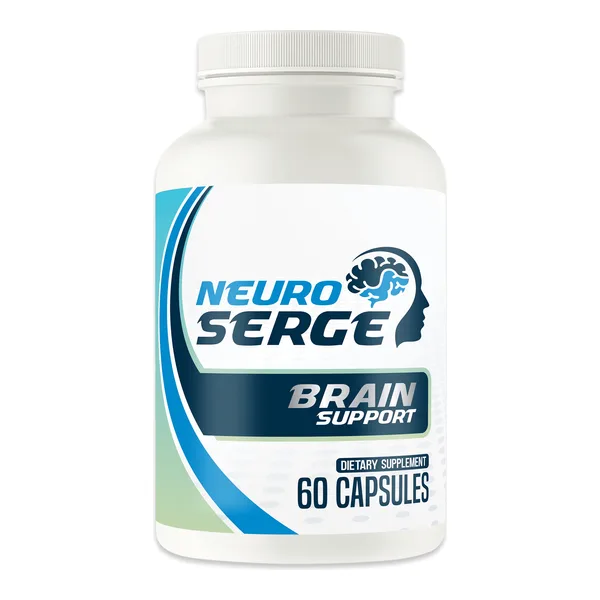
Neuro Serge is a dietary supplement sold in white bottles of 60 capsules marked "Brain Support." The sales pages price a bottle as a 30-day supply but do not state how many capsules to take, and they name no manufacturer or brand owner. Orders run through ClickBank, and the returns address is a fulfillment center in Tallmadge, Ohio. It is sold only on the official website as a one-time purchase.
There are two official presentations. The page our link opens is a short product page that describes "a unique blend of 20+ ingredients and nutrients." The other is a long text presentation, written as a podcast interview, that tells a family story about memory loss and blames it on a sticky "neuro sludge" choking brain cells. Both carry the same name, bottle and prices.
The label problem: two formulas
We looked for a Supplement Facts panel on the product page, the long presentation, the FAQ, the footer pages and the checkout. There is none. No dose is given for any ingredient on any page. That alone would put transparency at the bottom of our scale. What we found next is more unusual.
The two pages name different ingredients:
| Product page (where our link lands) | Long text presentation |
|---|---|
| Olive leaf | Phosphatidylserine |
| Cassia cinnamon | Bacopa monnieri |
| Deglycyrrhizinated licorice (DGL) | Huperzine A |
| Green tea extract | EGCG (a green tea compound) |
| Grape seed extract | Naringin |
| Bilberry extract | Bilberry |
| "20+ plants and nutrients" in total | GABA; "seven ingredients" in total |
Only bilberry, and green tea in two forms, appear on both. The product page also describes its six ingredients mostly in terms of heart health, blood sugar, insulin, fiber, weight, vision, gums, kidneys and breathing. Only one line, for green tea, mentions the brain. Its two free bonus guides are about blood sugar and weight loss, and the "scientific references" printed at the bottom concern sleep, body weight and metabolism. To us, that page reads like one built for a different product and relabeled.
We cannot tell which list matches the capsules, so this review covers both. If you buy, the first thing to do is read the label on the bottle that arrives and compare it with this page.
The ingredients next to the research
For each ingredient we looked for human trials on memory, attention or thinking speed, preferably in older adults. Because Neuro Serge publishes no doses, the right-hand column can only say what amount would be needed to match the research.
| Ingredient | Which page | Amount in trials | What the trials found |
|---|---|---|---|
| Bacopa monnieri | Long page | 300 mg/day standardized extract, 12 weeks or more [2] [1] | Modest gains in recall and attention speed |
| Phosphatidylserine | Long page | 100 to 600 mg/day [3] [4] [6] | Mixed: one soy-based trial positive in a subgroup, another null |
| Huperzine A | Long page | Trials in diagnosed patients only [7] | Not studied as a healthy-aging supplement in the trials we found |
| Green tea, EGCG | Both | Varied; matcha 2 g/day for 12 months [8] [9] | Effects mostly tied to caffeine plus L-theanine together |
| Bilberry | Both | Bilberry and red grape juice, 9 weeks [10] | No change in memory scores in older men |
| Grape seed extract | Product page | 320 to 400 mg/day [11] [12] | No significant benefit over placebo |
| GABA | Long page | Single dose in young adults [13] | One narrow attention effect; no memory trials found |
| Naringin, olive leaf, cassia cinnamon, DGL | One page each | No human memory trials found | Cannot be compared |
Bacopa: the best-supported name on either list
Bacopa monnieri is an Ayurvedic herb; the long page calls it by an older common name, thyme-leaved gratiola. A meta-analysis pooled nine randomized trials (518 people) of standardized extracts taken for at least 12 weeks. Bacopa shortened a test of attention and task switching and slightly sped up reaction time, and the authors called the evidence promising but not definitive [1]. In a 12-week Oregon trial of 54 adults aged 65 and over without dementia, 300 mg a day of a standardized extract improved delayed word recall compared with placebo, with mostly mild stomach upset as the side effect [2].
The catch: those results come from standardized extracts at known amounts. Neuro Serge names neither the extract nor the dose, and bacopa is absent from the page our link opens.
Phosphatidylserine: an honest split decision
Phosphatidylserine is a fat found in cell membranes. In a Japanese trial, 78 adults aged 50 to 69 with memory complaints took 100 or 300 mg of soy-derived phosphatidylserine or placebo for six months. All three groups improved, including placebo; only participants who started with lower scores showed a memory gain over their baseline [3]. A Dutch trial of 120 adults over 57 with age-associated memory impairment found no difference at all from placebo at 300 or 600 mg a day for 12 weeks [4]. The older positive Italian study used phosphatidylserine taken from cow brain, a different source from the soy-based trials above, in patients aged 65 to 93 with moderate to severe decline [6]. For a healthy man in his fifties or sixties, the soy-based evidence is weak.
Huperzine A: a drug-like compound
Huperzine A comes from a Chinese club moss. It blocks acetylcholinesterase, the same enzyme targeted by several prescription memory medicines. A Cochrane review found six trials, all in people already diagnosed with Alzheimer's disease, and judged only one of them adequate in quality and size; it concluded there was not enough evidence to recommend it [7]. Those trials say little about memory and focus in healthy older men. Because of how it works, we treat huperzine A as a reason to talk to your doctor first (see Safety).
Green tea and EGCG: the tea matters more than the extract
A systematic review of 21 human studies found green tea linked to better attention, memory and calmer mood, but traced most of the effect to caffeine and L-theanine acting together, with smaller effects from either alone [8]. In a 12-month trial in 99 older adults with mild memory concerns, 2 g of matcha a day did not change the main memory and daily-function scores; only a test of reading facial emotions improved [9]. Neuro Serge's product page says it has no stimulants, so if the green tea is decaffeinated, the combination behind the best results may be missing.
Bilberry and grape seed: no memory effect in the trials
Bilberry is the one ingredient both pages agree on. In a nine-week trial of 60 Norwegian men aged 67 and over with memory complaints, a bilberry and red grape juice blend lowered some blood markers of inflammation but did not change memory or motor test scores compared with placebo [10]. Grape seed extract fared no better: 320 mg a day for six months did not improve thinking scores more than placebo in 71 adults aged 60 and over with mild cognitive impairment [11], and 400 mg a day for 12 weeks gave no consistent benefit in young adults [12].
GABA, naringin and the rest
GABA is a calming messenger in the brain, but it is debated whether GABA taken by mouth reaches the brain at all. The one controlled trial we found tested a single dose in young adults and saw a small effect on one attention task and none on another [13]. For naringin, a citrus compound, we found only animal studies. For olive leaf, cassia cinnamon and deglycyrrhizinated licorice we found no human trials on memory or focus; the product page itself describes them in terms of heart, blood sugar and gums.
What the marketing claims, and what we could verify
The long presentation says that memory loss is caused by a "neuro sludge" that smothers the brain's immune cells (microglia), that researchers at several well-known universities proved this with new brain scans, and that a trial of 850 people aged 60 to 92 using the formula showed broad improvement. It also cites a study in which a flower extract improved memory by 102%.
Microglia are real and are an active research topic. "Neuro sludge" is not a scientific term, and we found no publication describing it. We found no published trial of Neuro Serge in any population, including the 850-person study, and could not match the 102% figure to a bacopa or other trial on PubMed. The presentation goes on to describe reversing memory decline, which is a claim no dietary supplement may lawfully make and one we will not repeat as if it were plausible. The product page's claim of 20+ clinically proven ingredients could not be checked either: it lists six and doses none. None of this plays a part in our score.
Price, packages and refund policy
Prices on the page our link opens, when we checked:
- 6 bottles (180 days): $49 each, $294 total, free US shipping, two digital bonus guides.
- 3 bottles (90 days): $69 each, $207 total, free US shipping, two digital bonus guides.
- 2 bottles (60 days): $79 each, $158 total, plus shipping.
There is no single-bottle option, so the smallest purchase is $158 plus shipping. The site says every order is a one-time payment with no subscription.
The refund rules deserve a careful read. The terms and returns pages set a 90-day window. To get money back, you must ship every bottle from the order back to the Ohio fulfillment center, including empty ones and any bonus bottles, with a note giving your order details, and the package must arrive within 90 days of purchase. You pay the return postage, and shipping fees are not refunded. The long presentation mentions a 180-day guarantee in some places and 90 days in others; we go by the written policy, which says 90. Keep the bottles and the box until you are sure.
Neuro Serge packages on the official site
6 bottles, 180-day supply
$49/bottle
$294 total · Free US shipping
Lowest price per bottle
Includes 2 digital bonus guides
Check the 6-bottle price3 bottles, 90-day supply
$69/bottle
$207 total · Free US shipping
Includes 2 digital bonus guides
Check the 3-bottle priceButtons open the seller's Neuro Serge website, where you choose your supply and complete the order. Prices as listed on the seller's site on October 23, 2026; the price shown at checkout is final.Orders are covered by a 90-day refund policy from the seller (see their terms). We may earn a commission.
Safety
Without a label, nobody can judge the safety of the exact product, so the notes below are about the named ingredients.
- Huperzine A works on the same enzyme as some prescription memory medicines [7]. Do not combine them without your doctor, and mention it to your doctor if you take any other medicine that acts on the nervous system.
- Green tea extract has been linked to rare cases of liver injury; a US Pharmacopeia review found 34 such case reports and noted that taking concentrated extract on an empty stomach appears riskier than with food [14]. Stop and see a doctor if you notice dark urine, yellowing skin or eyes, or pain under the right ribs.
- Cassia cinnamon naturally contains coumarin, which can harm the liver in sensitive people; European and German food safety assessors set a tolerable intake of 0.1 mg per kilogram of body weight a day [15]. The coumarin content of Neuro Serge is unknown.
- Bacopa caused mostly mild stomach upset in its trial in older adults [2]. Phosphatidylserine from soy showed no safety differences from placebo at up to 600 mg a day in older people [5].
Talk to your doctor before starting Neuro Serge if you take any prescription medication, especially blood thinners, blood pressure or blood sugar medicines, sedatives, or anything prescribed for memory, mood or sleep. Bring the bottle so they can read the label. Results vary from person to person, and memory problems that are new or getting worse deserve medical care, not a supplement trial.
What we liked and what gave us pause
Liked
- The long page names bacopa, the ingredient with the most consistent trial data for memory in older adults
- One-time payment, no auto-ship
- A written 90-day refund policy with a physical returns address
Gave us pause
- No Supplement Facts panel and no doses anywhere
- Two official pages, two different formulas
- Product page focused on blood sugar and heart claims, not memory
- Unverifiable "neuro sludge" story and trial numbers
- Refund requires returning every bottle, at your expense, inside 90 days
- Includes huperzine A, which can interact with medicines
Frequently asked questions
What is actually in Neuro Serge?
We cannot say for sure. The two official sales pages list different ingredients and neither gives doses. Check the Supplement Facts panel on the bottle you receive and compare it with the two lists in this review.
Where can I buy Neuro Serge?
Only on the official website, which checks out through ClickBank. The vendor does not allow sales on Amazon, eBay or similar sites, so listings there may not be genuine or covered by the refund policy.
How long before I notice anything?
Results vary. The bacopa and phosphatidylserine trials ran from 12 weeks to six months, and many showed small or no differences from placebo. A week or two is too short to judge any product in this category.
Can it replace medication or a memory evaluation?
No. Neuro Serge is a dietary supplement. Do not stop or change a prescription without your doctor, and see a doctor about memory changes that concern you.
Want to look at the official page yourself? The link below opens the Neuro Serge website, where you can read their presentation and choose a package. Ask to see the full label before you order.
Visit the official Neuro Serge websiteHow we reviewed Neuro Serge
We read the official product page, the long text presentation, the FAQ, the terms, shipping and returns pages, and the vendor's affiliate terms. We looked for a Supplement Facts panel and found none. We then searched PubMed for human trials and reviews of every named ingredient on memory, attention or thinking speed, and compared them with what the product discloses. We did not test the product on people, and nobody at Stark Verve is a medical professional. Read our editorial policy to learn how we choose and update reviews. This is a paid review in the sense that Stark Verve earns a commission if you buy through our links; that never changes what we write about the evidence.
References
- Kongkeaw C, Dilokthornsakul P, Thanarangsarit P, Limpeanchob N, Norman Scholfield C. Meta-analysis of randomized controlled trials on cognitive effects of Bacopa monnieri extract. J Ethnopharmacol. 2014;151(1):528-35. PMID 24252493
- Calabrese C, Gregory WL, Leo M, Kraemer D, Bone K, Oken B. Effects of a standardized Bacopa monnieri extract on cognitive performance, anxiety, and depression in the elderly: a randomized, double-blind, placebo-controlled trial. J Altern Complement Med. 2008;14(6):707-13. PMID 18611150
- Kato-Kataoka A, Sakai M, Ebina R, Nonaka C, Asano T, Miyamori T. Soybean-derived phosphatidylserine improves memory function of the elderly Japanese subjects with memory complaints. J Clin Biochem Nutr. 2010;47(3):246-55. PMID 21103034
- Jorissen BL, Brouns F, Van Boxtel MP, et al. The influence of soy-derived phosphatidylserine on cognition in age-associated memory impairment. Nutr Neurosci. 2001;4(2):121-34. PMID 11842880
- Jorissen BL, Brouns F, Van Boxtel MP, Riedel WJ. Safety of soy-derived phosphatidylserine in elderly people. Nutr Neurosci. 2002;5(5):337-43. PMID 12385596
- Cenacchi T, Bertoldin T, Farina C, Fiori MG, Crepaldi G. Cognitive decline in the elderly: a double-blind, placebo-controlled multicenter study on efficacy of phosphatidylserine administration. Aging (Milano). 1993;5(2):123-33. PMID 8323999
- Li J, Wu HM, Zhou RL, Liu GJ, Dong BR. Huperzine A for Alzheimer's disease. Cochrane Database Syst Rev. 2008;(2):CD005592. PMID 18425924
- Mancini E, Beglinger C, Drewe J, Zanchi D, Lang UE, Borgwardt S. Green tea effects on cognition, mood and human brain function: a systematic review. Phytomedicine. 2017;34:26-37. PMID 28899506
- Uchida K, Meno K, Korenaga T, et al. Effect of matcha green tea on cognitive functions and sleep quality in older adults with cognitive decline: a randomized controlled study over 12 months. PLoS One. 2024;19(8):e0309287. PMID 39213264
- Bøhn SK, Myhrstad MCW, Thoresen M, et al. Bilberry/red grape juice decreases plasma biomarkers of inflammation and tissue damage in aged men with subjective memory impairment: a randomized clinical trial. BMC Nutr. 2021;7(1):75. PMID 34802467
- Li B, Cheng J, Cheng G, et al. The effect of grape seed procyanidins extract on cognitive function in elderly people with mild cognitive impairment: a randomized, double-blind, placebo-controlled clinical trial. Heliyon. 2023;9(6):e16994. PMID 37389051
- Bell L, Whyte AR, Lamport DJ, Spencer JPE, Butler LT, Williams CM. Grape seed polyphenol extract and cognitive function in healthy young adults: a randomised, placebo-controlled, parallel-groups acute-on-chronic trial. Nutr Neurosci. 2022;25(1):54-63. PMID 31942838
- Leonte A, Colzato LS, Steenbergen L, Hommel B, Akyürek EG. Supplementation of gamma-aminobutyric acid (GABA) affects temporal, but not spatial visual attention. Brain Cogn. 2018;120:8-16. PMID 29222993
- Sarma DN, Barrett ML, Chavez ML, et al. Safety of green tea extracts: a systematic review by the US Pharmacopeia. Drug Saf. 2008;31(6):469-84. PMID 18484782
- Abraham K, Wöhrlin F, Lindtner O, Heinemeyer G, Lampen A. Toxicology and risk assessment of coumarin: focus on human data. Mol Nutr Food Res. 2010;54(2):228-39. PMID 20024932