
Review · Memory and focus
Synaptigen review: a probiotic for memory, checked against the research
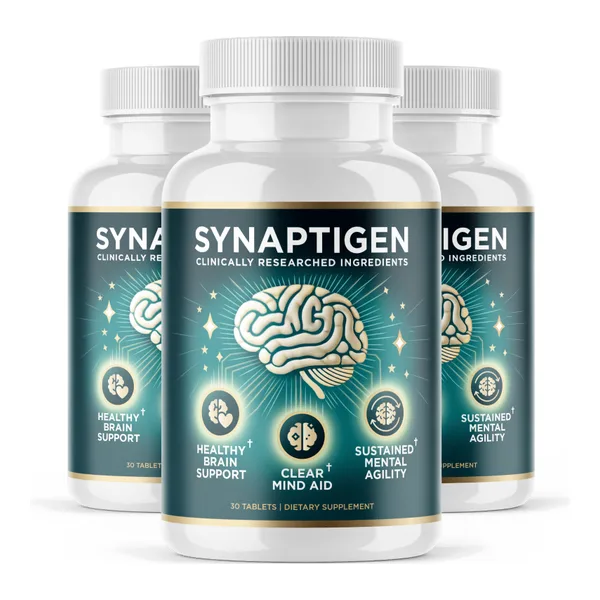
Synaptigen is a chewable tablet that pairs gut and mouth bacteria with a pinch of chicory fiber. Probiotics and memory is a real research field. The question is whether this formula looks like the products that were actually tested.
Our verdict: 2.4 / 5
| Ingredient evidence | 2 | Probiotics as a class show small, uneven memory signals in older adults; none of the four Synaptigen strains has a memory trial we could find |
|---|---|---|
| Dosing vs. research | 1.5 | 3.5 billion CFU at manufacture, about a sixth of the amount linked to the best results; 100 mg of inulin against 5 g in the one memory study |
| Label transparency | 2.5 | Full label published, but the three main strains share a proprietary blend and only one strain code is named |
| Value and refund terms | 3.5 | $49 to $79 per bottle; 180-day refund, though every bottle must go back at your own shipping cost |
Worth considering if you are curious about the gut and brain connection, already like probiotics, and want a low-commitment trial with a long refund window behind you.
Probably skip it if you want the specific strains and amounts that have been tested for memory in older adults. Synaptigen does not contain them, and its bacterial count is several times lower than the research average.
Before anything else: forgetting names now and then is common after 50. Memory changes that are new, getting worse, or worrying your family deserve a visit to your doctor, because several treatable conditions and medications can affect memory.
Smallest order $158, from $49 per bottle, 180-day refund policy from the seller
See the current Synaptigen packages, shipping and refund termsOpens the seller's page. It may start with a long video or letter; the packages and refund terms are usually further down. We may earn a commission.
What Synaptigen is
Synaptigen is a dietary supplement in tablet form, sold through the official website with BuyGoods acting as the retailer. The label names Synaptigen of Tallmadge, Ohio, as the distributor. Each bottle holds 30 tablets. The label says to take one tablet once or twice a day and to let it dissolve in your mouth or chew it slowly.
The sales page is a video presentation. Its headline invites you to chew a "probiotic herb" to recover lost memories. That framing matters for this review, because the label tells a different story: Synaptigen is mostly bacteria, and the only plant ingredient is 100 mg of chicory root fiber.
What is on the label
We read the Supplement Facts panel published on the official site. Per tablet:
- Inulin powder (chicory root): 100 mg
- Proprietary probiotic blend: 20 mg, 3.5 billion CFU at the time of manufacture, made of Lactobacillus paracasei, Lactobacillus reuteri and Bifidobacterium lactis BL-04
- Streptococcus salivarius: 20 mg, with no CFU count and no strain code
- Other ingredients: tricalcium phosphate, microcrystalline cellulose, natural strawberry flavor, peppermint essential oil
Three things stand out. The blend does not say how many of the 3.5 billion bacteria belong to each strain. Only one strain code (BL-04) is given, and in probiotic research the strain code is what links a product to a study. And the CFU figure is stated "at the time of manufacture", so the count in a tablet you take months later may be lower.
The formula next to the research
For each ingredient we looked for human trials on memory or thinking, then compared what was used there with one Synaptigen tablet.
| Ingredient | Synaptigen per tablet | What the research used | How it compares |
|---|---|---|---|
| Probiotic bacteria (total) | 3.5 billion CFU (blend) | About 20 billion CFU a day for 12 weeks gave the best results in a meta-analysis [1] | Roughly one sixth, or one third at two tablets a day |
| L. paracasei, L. reuteri | Undisclosed share of the blend | No memory trial in people found for these species; L. reuteri has gum health trials [12] | Cannot be compared |
| B. lactis BL-04 | Undisclosed share of the blend | Studied for colds, with no effect [8]; no memory trial found | Cannot be compared |
| S. salivarius | 20 mg (no CFU, no strain) | Strains K12 and M18 studied for breath and gums [11] [10] | Strain unknown; no memory outcome |
| Inulin (chicory) | 100 mg | 5 g in a single-dose memory study [9] | 50 times lower |
Probiotics and memory: the category has some support
This is the strongest part of the case for Synaptigen, so it deserves a fair hearing. A 2026 meta-analysis of 21 randomized trials found that probiotic effects on thinking showed up mainly in older age groups, with small to moderate gains in memory, processing speed and overall cognitive scores [1]. A review in Age and Ageing of 14 studies in adults aged 60 and up found that nine reported improvement in at least one area of thinking, with a pooled gain of about 1.3 points on global cognition tests [2]. A third review of 16 studies in adults over 50 reached a similar conclusion and noted that multi-strain products tended to do better than single strains [4].
The caveats are real, though. A 2026 review limited to placebo-controlled trials in people over 60 called the evidence "preliminary" and said the small number of trials, short follow-up and very mixed results rule out firm conclusions [3]. Several reviews found the clearest effects in people who already had measurable memory problems, which is a different group from healthy men looking to stay sharp.
Specific strains: the tested ones are not in this tablet
Probiotic effects tend to belong to specific strains, so it helps to look at which ones carried the positive trials. In 63 healthy adults over 65, a combination of Bifidobacterium bifidum BGN4 and Bifidobacterium longum BORI for 12 weeks improved a mental flexibility test and stress scores compared with placebo [5]. In 121 older adults with memory complaints, Bifidobacterium breve A1 for 12 weeks did not beat placebo overall; only a subgroup with lower starting scores showed a difference in immediate memory [6]. A crossover trial in 33 healthy older adults found better memory and mood scores after 10 weeks of a Lactobacillus rhamnosus and B. lactis product [7], although the abstract does not name the strains.
None of those strains appears on the Synaptigen label. The one strain Synaptigen does name, BL-04, was tested in a 334-person trial for colds, where it made no difference to illness rates [8]. We found no human trial of BL-04, L. paracasei or L. reuteri on memory.
Streptococcus salivarius and the chewable format
The chewable format and S. salivarius point to an oral health angle. Certain S. salivarius strains have reasonable evidence for the mouth: a systematic review of six trials found that probiotics, K12 among them, reduced bad-breath compounds [11], and in 62 adults with gum inflammation, the M18 strain taken as lozenges for three months reduced gum bleeding and plaque [10]. One lozenge of L. reuteri a day for three months reduced gum bleeding in a small trial of patients in periodontal maintenance, with results varying from person to person [12]. Synaptigen does not say which S. salivarius strain it uses or how many bacteria it contains, so we cannot tell whether it matches any of these products.
Inulin: a token amount
Inulin is a plant fiber that feeds gut bacteria. In a placebo-controlled crossover study of 47 adults, a single 5 g dose was followed by better scores on recognition and recall tasks a few hours later [9]. The authors noted that an earlier study of regular inulin use found no improvement in mood or performance. Synaptigen contains 100 mg, one fiftieth of that dose, and less fiber than you would get from a few bites of onion.
What the marketing says and what we could verify
The sales headline describes chewing a "probiotic herb" to bring back years of lost memories. We could not find a published study showing that any Synaptigen ingredient, or the product itself, restores lost memories. We also found no herb on the label beyond the chicory fiber and the peppermint oil used as flavor.
There is a real line of research behind the idea of mouth bacteria and the aging brain. A 2026 meta-analysis of 59 cohort studies found that gum disease and tooth loss were linked with modestly higher rates of later memory problems, but the authors stressed that bias and confounding limit any cause-and-effect reading and that intervention studies are still needed [13]. That is an association. No trial we found shows that an oral probiotic changes memory.
We also opened the "References" page linked in the site footer. Most of the citations listed there are about blood sugar, the liver, the pancreas, blood pressure and weight, and none is about probiotics or memory. The same page shows the labels of two other products. It reads like a page carried over from another product, and it does not support the Synaptigen claims.
Price, packages and refund policy
Prices on the official site when we checked:
- 6 bottles (sold as "3 + 3"): $49 each, $294 total, free US shipping, three digital guides included.
- 3 bottles (sold as "2 + 1"): $69 each, $207 total, free US shipping.
- 2 bottles: $79 each, $158 total, plus $9.99 shipping.
The site counts each bottle as a 30-day supply. That only holds at one tablet a day. The label allows two tablets a day, and at that rate a bottle lasts 15 days and the 6-bottle package covers three months, which roughly doubles the daily cost. We saw no subscription on the sales page; after checkout, additional offers are shown.
The refund policy runs for 180 days from delivery. To get a refund you email support, then mail back every bottle, opened or empty, with the packing slip, and you pay the return postage. The company says refunds are processed within days of receiving the package. Since most probiotic memory trials ran about 12 weeks, a 90-day supply at one tablet a day is the shortest test that resembles the research.
Synaptigen packages on the official site
6 bottles, 180-day supply
$49/bottle
$294 total · Free US shipping
Lowest price per bottle
Sold as 3 + 3 bottles; includes 3 digital guides
Check the 6-bottle price3 bottles, 90-day supply
$69/bottle
$207 total · Free US shipping
Sold as 2 + 1 bottles
Check the 3-bottle priceButtons open the seller's Synaptigen website, where you choose your supply and complete the order. Prices as listed on the seller's site on October 23, 2026; the price shown at checkout is final.Orders are covered by a 180-day refund policy from the seller (see their terms). We may earn a commission.
Safety
Probiotics were generally well tolerated in the trials above, and the reviews reported no serious side effects linked to them [11] [10]. Inulin can cause gas or bloating at higher amounts, which is unlikely at 100 mg. The main safety concern with Lactobacillus products is rare bloodstream and heart valve infections, reported mostly in people with weakened immune systems, diabetes, prosthetic heart valves or recent dental procedures; a review counted 48 published cases over three years, including seven involving L. paracasei and one involving L. reuteri [14].
Talk to your doctor before starting Synaptigen if you take medicines that suppress the immune system, are having chemotherapy, have an artificial heart valve, or have a central line. If you take antibiotics, ask your doctor or pharmacist how to space them from a probiotic. And because memory changes can come from sleep problems, low vitamin B12, thyroid issues, depression or medication side effects, a check-up is a better first step than any supplement. Results vary from person to person.
What we liked and what gave us pause
Liked
- Probiotics for memory in older adults is a real and growing research area
- The full label is published, with a total CFU count
- 180-day refund window that includes opened bottles
- Low-calorie chewable format with no stimulants
Gave us pause
- None of the strains in the memory trials we found is in the formula
- About a sixth of the CFU count linked to the best results
- Proprietary blend, unnamed strains and no CFU for S. salivarius
- The "probiotic herb" headline does not match the label
- Footer references are about other health topics
- At two tablets a day, a bottle lasts 15 days
Frequently asked questions
Where can I buy Synaptigen?
On the official website, with BuyGoods processing orders. The company does not allow sales on Amazon, eBay or other marketplaces, so listings there may not be genuine or covered by the refund policy.
How long before I notice anything?
Results vary. Most probiotic memory trials ran 10 to 12 weeks, so a judgment after a week or two would be premature.
Should I take one tablet or two?
The label allows either. The pricing assumes one a day. Taking two doubles the bacterial count, still below the research average, and halves how long each bottle lasts.
Can Synaptigen replace my medication or a memory evaluation?
No. Synaptigen is a dietary supplement. Do not stop or change a prescription without talking to your doctor, and bring any real concern about memory to a medical professional.
Want to read the official page yourself? The link below opens the Synaptigen website, where you can watch their presentation and see the current packages.
Visit the official Synaptigen websiteHow we reviewed Synaptigen
We read the official sales page, the Supplement Facts label, the refund and shipping pages and the references page on the official site. We searched PubMed for human trials and systematic reviews of each ingredient, focusing on memory and thinking in older adults, and compared the amounts used there with the label. We did not test the product on people, and nobody at Stark Verve is a medical professional. Read our editorial policy to learn how we choose and update reviews. Stark Verve earns a commission if you buy through our links; that never changes what we write about the evidence.
References
- Guo H, et al. Effects of probiotics on cognitive function across the human lifespan: a meta-analysis. Eur J Clin Nutr. 2026;80(1):46-61. PMID 40983638
- Birns B, Murshed S, Ni Lochlainn M. Gut microbiome modulation can improve cognitive function in older adults: a systematic review and meta-analysis. Age Ageing. 2026;55(9):afag287. PMID 42806137
- Silva-Olivares F, et al. Can live microbial interventions support healthy aging? A systematic review and meta-analysis of cognitive and muscle outcomes in aging adults. Front Nutr. 2026;13:1869929. PMID 42819170
- Handajani YS, et al. Probiotics and aging: impacts on cognitive function, brain-derived neurotrophic factor, inflammation, and antioxidant activity. A systematic review and meta-analysis. J Alzheimers Dis. 2026;110(2):545-558. PMID 41630163
- Kim CS, et al. Probiotic supplementation improves cognitive function and mood with changes in gut microbiota in community-dwelling older adults: a randomized, double-blind, placebo-controlled, multicenter trial. J Gerontol A Biol Sci Med Sci. 2021;76(1):32-40. PMID 32300799
- Kobayashi Y, et al. Effects of Bifidobacterium breve A1 on the cognitive function of older adults with memory complaints: a randomised, double-blind, placebo-controlled trial. Benef Microbes. 2019;10(5):511-520. PMID 31090457
- Ruiz-Gonzalez C, et al. Cognitive and emotional effect of a multi-species probiotic containing Lactobacillus rhamnosus and Bifidobacterium lactis in healthy older adults: a double-blind randomized placebo-controlled crossover trial. Probiotics Antimicrob Proteins. 2025;17(5):3525-3537. PMID 38935259
- Turner RB, et al. Effect of Bifidobacterium animalis spp. lactis Bl-04 on rhinovirus-induced colds: a randomized, placebo-controlled, single-center, phase II trial in healthy volunteers. EClinicalMedicine. 2021;43:101224. PMID 34927036
- Smith AP, Sutherland D, Hewlett P. An investigation of the acute effects of oligofructose-enriched inulin on subjective wellbeing, mood and cognitive performance. Nutrients. 2015;7(11):8887-96. PMID 26516908
- Babina K, et al. A three-month probiotic (the Streptococcus salivarius M18 strain) supplementation decreases gingival bleeding and plaque accumulation: a randomized clinical trial. Dent J (Basel). 2024;12(7):222. PMID 39057009
- Passadakis G, et al. Effectiveness of probiotics in managing oral halitosis: a systematic review of randomized controlled trials. J Int Soc Prev Community Dent. 2025;15(4):301-312. PMID 40951721
- Thierbach R, et al. L. reuteri in supportive periodontal therapy: are there already clinical effects after 3 months with one lozenge a day? A double-blind randomized placebo-controlled study. Microorganisms. 2024;12(4):648. PMID 38674595
- Demmer RT, et al. Periodontitis, tooth loss, and risk of cognitive impairment and dementia: a systematic review with meta-analysis. J Periodontal Res. 2026 (online ahead of print). PMID 42747062
- Rossi F, et al. Lactobacilli infection case reports in the last three years and safety implications. Nutrients. 2022;14(6):1178. PMID 35334835