Review · Nerve health
Nervogen Pro review: what we could verify about its five herbs
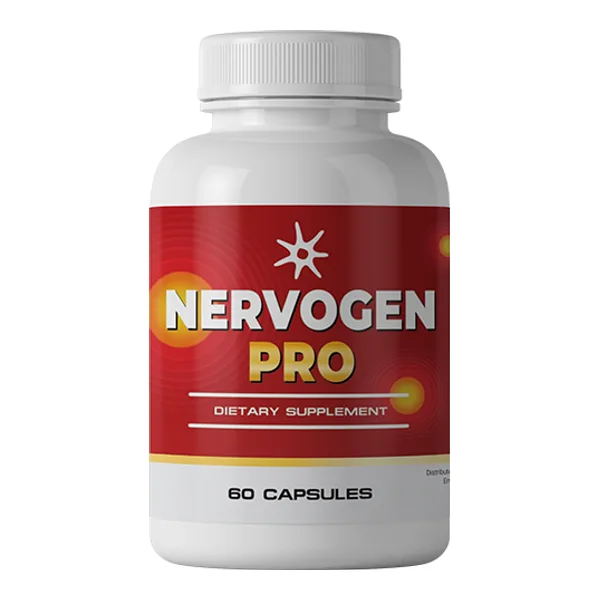
Nervogen Pro is sold as a botanical supplement for nerve comfort. Its sales page lists five plants, but gives no serving size or ingredient amounts. That missing label makes it difficult to compare the product with research or judge what a daily serving contains.
Our verdict: 1.4 / 5
| Ingredient evidence | 1.5 | Some human data on individual botanicals, but not on this formula or nerve comfort |
|---|---|---|
| Dosing vs. research | 1 | The daily serving and all ingredient amounts are undisclosed |
| Label transparency | 0.5 | No Supplement Facts panel was available on the sales page |
| Value and refund terms | 2.5 | $49 to $69 per bottle, with a 60-day return window and customer-paid return postage |
Worth considering if you are looking for a botanical product, have reviewed the ingredient list with a clinician, and are comfortable making a decision without dose information.
Probably skip it if you want transparent amounts, a formula tested in a clinical trial, or evidence that directly evaluates nerve comfort. The lack of a label is the central issue here.
Before starting: results vary. Talk with your doctor, especially if you take medication. New or worsening numbness, tingling, burning or weakness deserves medical care, since a supplement review cannot establish the cause.
Smallest order $69, from $49 per bottle, 60-day refund policy from the seller
See the current Nervogen Pro packages, shipping and refund termsOpens the seller's page. It may start with a long video or letter; the packages and refund terms are usually further down. We may earn a commission.
Came here for Nervogen Pro? The highest-rated nerve comfort label we checked is Nerve Fresh, 2.3 out of 5.
What Nervogen Pro is
Nervogen Pro is a capsule supplement presented on a sales page at thenervogen.com. The page says its formula includes Passiflora incarnata, Corydalis yanhusuo, California poppy seeds, prickly pear and marshmallow root. It does not display a Supplement Facts panel, capsule count, serving size or amount for any of the five ingredients. We could not establish whether the formula is a single capsule, a multi capsule serving, or how much of each plant a person would take.
The page discusses nerve health and describes a mix of herbs as its approach. That is a marketing description, not clinical evidence about Nervogen Pro itself. The page’s checkout buttons are supplied by scripts. The package descriptions show 30 days for one bottle, 90 days for three bottles and 180 days for six bottles.
The formula beside the human research
We looked for human studies on the named plants and the outcomes closest to the page’s nerve comfort framing. The available studies are not equivalent to a trial of this product. Some evaluated anxiety, some temporary experimental pain, and others studied prickly pear juice for unrelated outcomes. None tells us what Nervogen Pro does at its undisclosed doses.
| Named ingredient | What human research looked at | What can be said about Nervogen Pro |
|---|---|---|
| Passionflower | Small anxiety studies and a systematic review [1] [3] | Not a test of this formula or nerve comfort. Product amount and extract are unknown. |
| Corydalis | A controlled study of a combined herbal preparation during a cold pressor pain test [4] | The study cannot show how this ingredient works alone or at the product’s unknown amount. |
| California poppy | A combination product with hawthorn and magnesium was studied for anxiety [5] | It does not isolate poppy or assess nerve comfort. |
| Prickly pear | Juice studies examined exercise recovery, heart rate variability and cortical measures [7] [6] [8] | These used fruit juice, not a specified capsule extract, and did not establish nerve comfort benefits. |
| Marshmallow root | The PubMed record we reviewed is a LactMed monograph, not a nerve comfort trial [9] | No comparison is possible without a product dose, plant part and preparation details. |
Passionflower: human data is about other outcomes
A systematic review included nine clinical trials of Passiflora preparations in neuropsychiatric settings. The studies varied in length from a single day to 30 days and covered outcomes such as anxiety and sleep. The review noted product and study limitations, including weak descriptions of preparation and trial methods [1] [2]. In one 36-person, four-week pilot trial, participants with generalized anxiety received 45 drops a day of passionflower extract or oxazepam. The trial was small and does not establish an effect on nerve comfort [3].
Corydalis: a pain test is not a nerve supplement trial
A controlled human study tested Corydalis yanhusuo together with Angelica dahurica in a laboratory cold pressor pain task. The single dose combination changed reported pain intensity and bothersomeness in that setting [4]. It did not study chronic nerve discomfort, the Nervogen formula or Corydalis by itself. The paper therefore gives context about one preparation, not proof for this capsule.
California poppy: the evidence is for a combination
A randomized study evaluated a fixed combination of California poppy, hawthorn and magnesium in people with mild to moderate anxiety [5]. Since multiple ingredients were given together and the outcome was anxiety, it cannot tell us whether poppy alone contributed or whether it has a role in nerve comfort. The Nervogen page does not say which plant parts or extract ratios it uses.
Prickly pear and marshmallow: limited relevance to the sales pitch
Human studies of Opuntia ficus-indica have examined juice intake around exercise recovery and post meal responses. A preliminary study also looked at motor cortical excitability after fruit consumption [7] [6] [8]. Those designs do not establish that prickly pear capsules support nerve comfort. Nervogen Pro does not specify the Opuntia species or whether it uses fruit, pads or another plant part.
For marshmallow root, the PubMed record available here is a monograph rather than a clinical trial of nerve outcomes [9]. That is a gap in evidence, not evidence of an effect. Without the product label, we cannot identify the root preparation, amount or daily intake.
Similar formulas already reviewed
The five plants named on the Nervogen page also appear in our reviews of Nerve Fresh and NervoVive. The named ingredients are close enough to merit a direct comparison, but Nervogen Pro does not disclose amounts or enough label details to confirm that the formulas are identical. Nerve Fresh lists passionflower, marshmallow, Corydalis yanhusuo, prickly pear and California poppy. NervoVive lists a similar set but names Corydalis lutea, so its species is different. For Nervogen Pro, even the prickly pear species and plant part are unstated. We will not infer matching doses from names alone.
What the marketing suggests and what we verified
The sales page links the five-herb formula with nerve health. We could not find a PubMed trial of Nervogen Pro. Nor did the studies we checked evaluate this exact five-herb combination for nerve comfort. Several related papers focus on anxiety, a brief experimental pain task, or general responses to prickly pear juice. That is not enough to verify the product’s central use case.
The page also discusses peripheral neuropathy in its educational content. That condition is not an appropriate promised outcome for a supplement, and the page does not provide product-specific evidence for it. Our review treats the claim as unverified and does not make a medical promise. If you have persistent or new nerve symptoms, speak with a healthcare professional to determine what is causing them.
Price, packages and refund policy
The sales page lists one-time packages. The vendor script supplies the actual prices and totals:
- 6 bottles: $49 each, $294 total, described as a 180-day supply.
- 3 bottles: $59 each, $177 total, described as a 90-day supply.
- 1 bottle: $69, described as a 30-day supply.
Free US shipping is shown. The page says international orders incur shipping charges. The vendor’s refund policy allows returns within 60 days after shipment. It requires all purchased bottles to be returned, and the customer pays the return shipping cost. The policy says the refund is processed after the bottles arrive. Read the current terms before ordering because package and shipping details can change.
Nervogen Pro packages on the vendor sales page
6 bottles, 180-day supply
$49/bottle
$294 total · Free US shipping; international shipping fees apply
Lowest price per bottle
Check the 6-bottle price3 bottles, 90-day supply
$59/bottle
$177 total · Free US shipping; international shipping fees apply
Check the 3-bottle price1 bottle, 30-day supply
$69/bottle
$69 total · Free US shipping; international shipping fees apply
Check the 1-bottle priceButtons open the seller's Nervogen Pro website, where you choose your supply and complete the order. Prices as listed on the seller's site on October 25, 2026; the price shown at checkout is final.Orders are covered by a 60-day refund policy from the seller (see their terms). We may earn a commission.
Safety
The biggest practical safety issue is the missing label: without amounts, plant parts or extracts, a clinician cannot assess the intended exposure. Passionflower has a case report involving a person who took it with valerian while also taking lorazepam; the authors suspected an additive effect. This single report does not establish how common the interaction is, but it supports discussing passionflower with a clinician before combining it with sedating medicines [10].
For the other named ingredients, we did not identify PubMed human interaction evidence that establishes a safe combination with particular medicines at the undisclosed Nervogen amounts. That means the interaction profile is unclear, not that interactions cannot occur. Talk to your doctor or pharmacist before use, especially if you take prescription medicines, use products that cause drowsiness, or have a medical condition. Do not stop prescribed treatment to try a supplement. Results vary, and new or worsening symptoms deserve medical care.
What we liked and what gave us pause
Liked
- The sales page identifies the five botanicals it says are in the product
- Package price and bottle counts are available through the vendor script
- The refund page states the return window and the need to send all bottles back
Gave us pause
- No Supplement Facts panel, serving size or ingredient doses
- No human trial of the Nervogen Pro formula for nerve comfort
- Ingredient overlap with other products makes dose and formula comparison difficult
- The return process requires return postage paid by the customer
Frequently asked questions
Does Nervogen Pro have a published ingredient label?
We could not find a Supplement Facts panel on the sales page. It names five botanicals but provides no amounts, serving size or capsule count.
How long should I take it?
The page presents 30 days per bottle, but that is a package duration rather than evidence about how long this product takes to work. The available studies used different preparations and time frames. Results vary, and there is no product trial from which to set an expected timeline.
Can it replace medicine or medical care?
No. Do not stop or change a prescription without talking to your doctor. New or worsening symptoms need medical attention.
Is it sold by subscription?
The page displays one time package prices rather than a recurring plan. Check the checkout terms before placing an order.
Want to read the vendor’s page yourself? The link below opens its sales page, where package details and current terms are shown.
View the Nervogen Pro sales pageHow we reviewed Nervogen Pro
We fetched the sales page and its linked affiliate, terms and refund pages, checked package prices in the vendor’s page configuration, and searched PubMed for human research on the five named plants. Each PMID in the references was checked against NCBI eutils esummary. We did not test the product on people, and nobody at Stark Verve is a medical professional. Because no Supplement Facts panel was published, we could not compare formula doses with studies or assess its transparency beyond the ingredient names. Read our editorial policy to learn how we choose and update reviews. Stark Verve may earn a commission if you buy through our links; that does not change our assessment of the evidence.
References
- Janda K, et al. Passiflora incarnata in Neuropsychiatric Disorders: A Systematic Review. Nutrients. 2020;12(12):3893. PMID 33352740
- Miroddi M, et al. Passiflora incarnata L.: ethnopharmacology, clinical application, safety and evaluation of clinical trials. J Ethnopharmacol. 2013;150(3):791-804. PMID 24140586
- Akhondzadeh S, et al. Passionflower in the treatment of generalized anxiety: a pilot double-blind randomized controlled trial with oxazepam. J Clin Pharm Ther. 2001;26(5):363-7. PMID 11679026
- Yuan CS, et al. Effects of Corydalis yanhusuo and Angelicae dahuricae on cold pressor-induced pain in humans: a controlled trial. J Clin Pharmacol. 2004;44(11):1323-7. PMID 15496650
- Hanus M, et al. Double-blind, randomised, placebo-controlled study to evaluate the efficacy and safety of a fixed combination containing two plant extracts (Crataegus oxyacantha and Eschscholtzia californica) and magnesium in mild-to-moderate anxiety disorders. Curr Med Res Opin. 2004;20(1):63-71. PMID 14741074
- Gouws CA, et al. Prickly pear juice consumption after fat intake affects postprandial heart rate variability but not traditional risk factors of cardiovascular disease in healthy men. Nutrition. 2022;96:111555. PMID 35167999
- Bellafiore M, et al. Redox and autonomic responses to acute exercise-post recovery following Opuntia ficus-indica juice intake in physically active women. J Int Soc Sports Nutr. 2021;18(1):43. PMID 34098980
- Gambino G, et al. Modulation of Human Motor Cortical Excitability and Plasticity by Opuntia Ficus Indica Fruit Consumption: Evidence from a Preliminary Study through Non-Invasive Brain Stimulation. Nutrients. 2022;14(22). PMID 36432601
- National Library of Medicine. Marshmallow. Drugs and Lactation Database (LactMed). 2006. PMID record last revised 2024. PMID 30000899
- Carrasco MC, et al. Interactions of Valeriana officinalis L. and Passiflora incarnata L. in a patient treated with lorazepam. Phytother Res. 2009;23(12):1795-6. PMID 19441067