Review · Nerve health
NervoVive review: five calming herbs and a nerve story we could not verify
NervoVive is a capsule sold for nerve comfort, mostly to older adults with tingling, burning or numb feet. We read its label and looked up every herb on PubMed. The formula leans on relaxation herbs, and none of them has been tested on nerve symptoms in people.
Our verdict: 2.3 / 5
| Ingredient evidence | 1.5 | No human study of any ingredient on nerve symptoms; passionflower has modest data for anxiety and sleep |
|---|---|---|
| Dosing vs. research | 1.5 | Few trial doses to compare with; the corydalis and poppy on the label differ from the ones studied |
| Label transparency | 3 | Every amount is listed, but plant parts, extract standards and the corydalis species raise questions |
| Value and refund terms | 3 | $49 to $69 per bottle; 60-day refund, all bottles back, return postage on you |
Worth considering if your doctor has already checked out your symptoms, you mainly want a gentle herbal blend for evenings and sleep, and you understand that the evidence for these herbs concerns anxiety and sleep rather than nerves.
Probably skip it if you want an ingredient with real nerve research behind it, you take sedatives, sleep medicine or glucose-lowering drugs, or you have any history of liver trouble.
Before anything else: numbness, tingling, burning or weakness in the feet or hands deserves a doctor's visit. These symptoms can point to diabetes, low vitamin B12, thyroid or kidney problems, medication effects and other conditions that need a diagnosis. If you have diabetes, a supplement is never a substitute for your care plan, foot checks and glucose control.
Smallest order $69, from $49 per bottle, 60-day refund policy from the seller
See the current NervoVive packages, shipping and refund termsOpens the seller's page. It may start with a long video or letter; the packages and refund terms are usually further down. We may earn a commission.
What NervoVive is
NervoVive is a capsule supplement sold through Digistore24. The label names the distributor as NervoVive, with an address in Aurora, Colorado. The daily serving is two capsules, and a bottle holds a 30-day supply. It is sold on the official website in 1, 3 and 6-bottle packages as a one-time purchase.
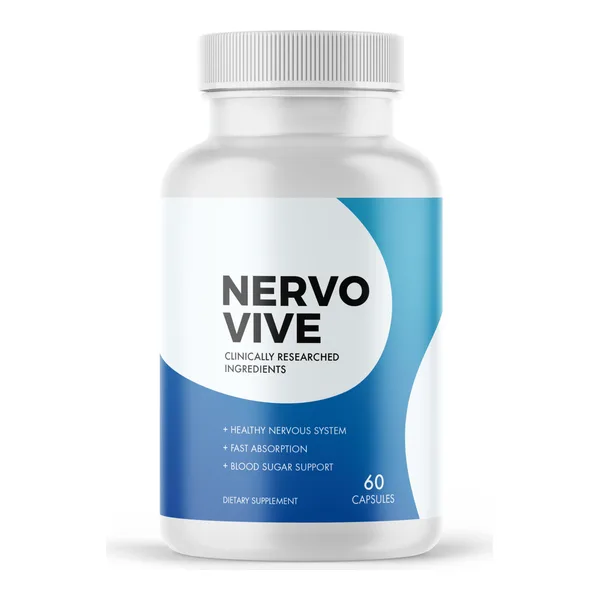
The front of the bottle promises a "healthy nervous system", "fast absorption" and "blood sugar support". The sales page frames the product around nerve discomfort and blood sugar, and its bonus e-books cover blood sugar and healthy aging. The affiliate page goes further and describes the target buyer as people over 65 dealing with neuropathy, many with type 2 diabetes. That is a group with real medical needs, so we held this product to a careful standard.
The formula next to the research
Here is the full label, with what we could find on PubMed for each ingredient. The sales page calls the formula a "proprietary blend", but to its credit the label prints every amount.
| Ingredient | NervoVive per day | What human studies used | How it compares |
|---|---|---|---|
| Passion flower herb powder | 290 mg | 500 mg single dose before surgery [1]; one cup of tea nightly [2] | Lower than the capsule trial; studied for anxiety and sleep, not nerves |
| Marshmallow root powder | 220 mg | No nerve study found; research is on irritated mucous membranes [4] | Cannot be compared |
| Corydalis lutea 4:1 extract | 200 mg | Human data exist only for a different species, Corydalis yanhusuo [5] | Species on the label has no human research we could find |
| Prickly pear 20:1 extract | 100 mg | Mostly cladode (pad) or fruit as food, studied for blood glucose [8] | Plant part not stated; no nerve outcome studied |
| California poppy seed | 90 mg | Aerial parts, in a three-part combination product for anxiety [10] | Seed differs from the studied plant parts |
Other ingredients listed on the label are magnesium stearate, gelatin and rice flour. Because the capsules contain gelatin, they are not vegetarian.
Passionflower: the best studied herb here, for a different purpose
Passionflower is a traditional calming herb, and it has the most human data in this formula. In 60 surgery patients, a single 500 mg dose taken 90 minutes before the operation lowered anxiety scores compared with placebo, without measurable sedation [1]. In 41 young adults, a week of passionflower tea improved one of six sleep diary measures, sleep quality, compared with a placebo tea [2]. A 2020 systematic review of nine trials, lasting from one day to 30 days, found that most reported less anxiety [3].
None of those studies measured tingling, burning, numbness or nerve function. Better sleep and less worry can make any discomfort easier to live with, and that may be the most realistic way to think about this ingredient.
Marshmallow root: a soothing herb for the throat and gut
Marshmallow root is a mucilage-rich herb traditionally used for irritated mucous membranes. The vendor's own reference list cites a lab study in which root extracts stimulated human epithelial cells in a dish [4]. We found no human study linking marshmallow root to nerves. It takes up the second largest share of the capsule.
Corydalis: the name on the label does not match the research
This was our most important finding. The vendor's reference page cites research on Corydalis yanhusuo, a plant used in Chinese herbal medicine for pain. In a small controlled human study, a single dose of yanhusuo combined with another herb, Angelica dahurica, lowered pain ratings during a cold water test [5]. That is a lab pain model in healthy volunteers and says little about long-term nerve discomfort.
The NervoVive label lists Corydalis lutea, yellow corydalis, a different species. The PubMed research we found on it is chemistry and cancer cell work in the lab [6]. We could not find a single human study of Corydalis lutea. Either the label names the wrong plant or the vendor's references describe a plant that is not in the bottle. Either way, a buyer cannot tell which corydalis they are getting.
Prickly pear: a glucose ingredient with mixed results
Prickly pear cactus is a food in Mexico and the Southwest. A 2019 systematic review of 20 human studies found that the pads (cladodes) and some combined products tended to lower glucose and insulin, while the fruit mostly did not. The authors judged many of the studies to be at high risk of bias and concluded there is not enough evidence to recommend the fruit for managing type 2 diabetes [8]. A 1990 report in people with type 2 diabetes was titled an acute glucose-lowering effect [9]. NervoVive does not say whether its 20:1 extract comes from the pad or the fruit, so we cannot tell which body of research applies.
California poppy seed: studied in other forms
California poppy is a mild calming herb and a different plant from the opium poppy. Its human evidence comes from a 264-person, three-month French trial of a combination product that also contained hawthorn and magnesium. Anxiety scores fell somewhat more on the product than on placebo [10]. The research behind its effects focuses on alkaloids in the aerial parts of the plant [11]. NervoVive uses 90 mg of seed, which is not what was studied. Curiously, the vendor's reference list also includes a case report about tea made from opium poppy seeds and the opioid dependence it caused [12]. That paper concerns a different plant and a safety problem, and it does not support any benefit of this ingredient.
What NervoVive leaves out
If you ask which supplement has the most clinical research in nerve discomfort, the answer is alpha-lipoic acid, and NervoVive does not contain it. In the SYDNEY 2 trial, 181 people with diabetic distal symmetric polyneuropathy took 600, 1,200 or 1,800 mg of alpha-lipoic acid or placebo for five weeks. The Total Symptom Score (stabbing pain, burning, prickling and numbness of the feet) fell by about half in each alpha-lipoic acid group compared with about a third on placebo, and 600 mg a day gave the best balance of benefit and side effects [13]. A meta-analysis of four trials with 1,258 patients found a 24% relative improvement in that score after three weeks of 600 mg given intravenously [14]. In the four-year NATHAN 1 trial of 600 mg a day by mouth, the main combined endpoint did not differ from placebo, though some secondary nerve exam scores favored the supplement [15].
Those trials describe a specific study population and do not mean alpha-lipoic acid is right for you. It can lower blood sugar, and it is a known trigger of insulin autoimmune syndrome, a rare cause of repeated low blood sugar that has been described in older men [16]. Our point is narrower: a formula marketed for nerves that skips the best studied nutrient for nerve symptoms is a weak start.
What the marketing says and what we could verify
The NervoVive affiliate page explains the product this way: modern sugar supposedly crystallizes inside the body into microscopic shards that settle around a thin "foramen muscle" through which all nerves pass, and the formula is said to dissolve those crystals, inspired by something called a Da Vinci "Nerve Decompression Method". The video page headline links using sugar to relief from years of nerve pain.
We searched PubMed for each part of that story. We found no muscle called the "foramen muscle"; the vendor's own reference list cites an anatomy chapter on the foramen magnum, an opening in the skull that is not a muscle. We found no published evidence that sugar forms crystal shards around nerves, and nothing describing a Da Vinci nerve method. High blood sugar over years does harm nerves, which is why glucose control matters so much for people with diabetes, but that is a medical process managed with a care team. We could not verify the mechanism, so it plays no part in our score.
We also noticed smaller inconsistencies. The sales page calls the formula a proprietary blend, yet the label lists every dose. The desktop and mobile versions of the page show different titles for the second bonus guide, and one of the two descriptions has nothing to do with its title.
Price, packages and refund policy
One bottle lasts 30 days. Prices on the official site when we checked:
- 6 bottles: $49 each ($294 total), two digital guides included. About $1.63 a day.
- 3 bottles: $59 each ($177 total).
- 1 bottle: $69.
The shipping policy lists free delivery within the United States and a $15.95 fee for Canada, the UK, Ireland, Australia and New Zealand. Orders are one-time payments, with no autoship according to the FAQ.
The refund policy gives you 60 days from delivery. To get your money back you must email support, then mail back every bottle, opened or not, with the packing slip, and the return postage is yours to pay. The same refund page advises using the product for at least three months, which is longer than the refund window. Plan for that before you buy a large supply.
NervoVive packages on the official site
6 bottles, 180-day supply
$49/bottle
$294 total · Free US shipping
Lowest price per bottle
Includes 2 digital guides
Check the 6-bottle priceButtons open the seller's NervoVive website, where you choose your supply and complete the order. Prices as listed on the seller's site on October 23, 2026; the price shown at checkout is final.Orders are covered by a 60-day refund policy from the seller (see their terms). We may earn a commission.
Safety and interactions
Most of these herbs were well tolerated in the short trials above, but the combination raises several points worth raising with your doctor or pharmacist, especially for men over 50 who often take several medications:
- Sedatives and sleep medicine. Passionflower and California poppy are both traditional calming herbs [3] [11]. Combining them with benzodiazepines, sleep aids, opioid pain relievers, gabapentin, pregabalin or alcohol could add to drowsiness.
- Blood sugar. Prickly pear products have lowered glucose in some studies [8] [9]. If you use insulin, a sulfonylurea or other glucose-lowering drugs, check your numbers more closely and talk to your doctor before starting.
- Liver. Corydalis has been linked to drug-induced liver injury in published case reports, including a man whose liver tests returned to normal after he stopped a corydalis sleep aid [7]. Anyone with liver disease, heavy alcohol use or medications that strain the liver should be cautious.
- Metformin users. Long-term metformin use is linked with low vitamin B12, and neuropathy was more common in metformin users with low B12 in a large study [17]. If you take metformin and have tingling feet, ask your doctor about a B12 test before reaching for an herbal blend.
The label itself advises consulting a physician if you take medication or have a medical condition. Results vary from person to person. Stop the product and seek care if you notice yellowing skin or eyes, dark urine, unusual drowsiness or low blood sugar symptoms, and see a doctor promptly for any new or worsening numbness, weakness, foot sores or balance problems.
What we liked and what gave us pause
Liked
- Every ingredient amount appears on the label
- Passionflower has modest placebo-controlled data for anxiety and sleep
- Free US shipping and no subscription
- The label carries a sensible warning to consult a physician
Gave us pause
- No ingredient tested on nerve symptoms in humans
- Corydalis species on the label differs from the vendor's cited research
- Sugar crystal mechanism we could not trace to any study
- Refund requires returning all bottles at your own cost
- Marketed to people with diabetes while containing a glucose-lowering herb and a liver-risk herb
Frequently asked questions
Does NervoVive contain alpha-lipoic acid or B vitamins?
No. The label lists only passion flower, marshmallow root, corydalis, prickly pear and California poppy seed.
Can NervoVive replace my diabetes or nerve medication?
No. It is a dietary supplement. Do not stop or change any prescription without talking to your doctor, and keep up with your glucose monitoring and foot exams.
How long before I notice anything?
Results vary, and there is no published study of NervoVive itself to give a timeline. The passionflower studies looked at effects over hours to a few weeks, and they measured anxiety and sleep.
Where can I buy NervoVive?
The vendor sells it through its official website, with orders processed by Digistore24. Listings elsewhere may not be covered by the refund policy.
Want to look at the official page yourself? The link below opens the NervoVive website, where you can see the full label and choose a package.
Visit the official NervoVive websiteHow we reviewed NervoVive
We read the official sales page, the Supplement Facts label, the refund and shipping policies, the vendor's reference list and its affiliate page. We searched PubMed for human trials of each ingredient on nerve symptoms, then widened the search to whatever each ingredient has been studied for, and compared the amounts used with the label. We did not test the product on people, and nobody at Stark Verve is a medical professional. The vendor does not allow reuse of its images, so we describe the label in words; you can view it on the official site. Read our editorial policy to learn how we choose and update reviews. Stark Verve earns a commission if you buy through our links; that never changes what we write about the evidence.
References
- Movafegh A, et al. Preoperative oral Passiflora incarnata reduces anxiety in ambulatory surgery patients: a double-blind, placebo-controlled study. Anesth Analg. 2008;106(6):1728-32. PMID 18499602
- Ngan A, Conduit R. A double-blind, placebo-controlled investigation of the effects of Passiflora incarnata (passionflower) herbal tea on subjective sleep quality. Phytother Res. 2011;25(8):1153-9. PMID 21294203
- Janda K, et al. Passiflora incarnata in neuropsychiatric disorders: a systematic review. Nutrients. 2020;12(12):3894. PMID 33352740
- Deters A, et al. Aqueous extracts and polysaccharides from marshmallow roots (Althea officinalis L.): cellular internalisation and stimulation of cell physiology of human epithelial cells in vitro. J Ethnopharmacol. 2010;127(1):62-9. PMID 19799989
- Yuan CS, et al. Effects of Corydalis yanhusuo and Angelicae dahuricae on cold pressor-induced pain in humans: a controlled trial. J Clin Pharmacol. 2004;44(11):1323-7. PMID 15496650
- Petruczynik A, et al. Determination of selected isoquinoline alkaloids from Mahonia aquifolia, Meconopsis cambrica, Corydalis lutea, Dicentra spectabilis, Fumaria officinalis and Macleaya cordata extracts by HPLC-DAD and comparison of their cytotoxic activity. Toxins (Basel). 2019;11(10):575. PMID 31581717
- Engman S, et al. Corydalis and drug-induced liver injury: a series of 2 cases. ACG Case Rep J. 2023;10(12):e01230. PMID 38130480
- Gouws CA, et al. Effects of the consumption of prickly pear cacti (Opuntia spp.) and its products on blood glucose levels and insulin: a systematic review. Medicina (Kaunas). 2019;55(5):138. PMID 31096667
- Frati AC, et al. Acute hypoglycemic effect of Opuntia streptacantha Lemaire in NIDDM. Diabetes Care. 1990;13(4):455-6. PMID 2318110
- Hanus M, Lafon J, Mathieu M. Double-blind, randomised, placebo-controlled study to evaluate the efficacy and safety of a fixed combination containing two plant extracts (Crataegus oxyacantha and Eschscholtzia californica) and magnesium in mild-to-moderate anxiety disorders. Curr Med Res Opin. 2004;20(1):63-71. PMID 14741074
- Fedurco M, et al. Modulatory effects of Eschscholzia californica alkaloids on recombinant GABAA receptors. Biochem Res Int. 2015;2015:617620. PMID 26509084
- Haber I, Pergolizzi J Jr, LeQuang JA. Poppy seed tea: a short review and case study. Pain Ther. 2019;8(1):151-5. PMID 30719627
- Ziegler D, et al. Oral treatment with alpha-lipoic acid improves symptomatic diabetic polyneuropathy: the SYDNEY 2 trial. Diabetes Care. 2006;29(11):2365-70. PMID 17065669
- Ziegler D, et al. Treatment of symptomatic diabetic polyneuropathy with the antioxidant alpha-lipoic acid: a meta-analysis. Diabet Med. 2004;21(2):114-21. PMID 14984445
- Ziegler D, et al. Efficacy and safety of antioxidant treatment with alpha-lipoic acid over 4 years in diabetic polyneuropathy: the NATHAN 1 trial. Diabetes Care. 2011;34(9):2054-60. PMID 21775755
- Vallianou NG, et al. Alpha-lipoic acid as a trigger of insulin autoimmune syndrome: current evidence, a case-based approach, diagnostic pitfalls, and practical management. Metabol Open. 2026;31:100491. PMID 42662728
- Aroda VR, et al. Long-term metformin use and vitamin B12 deficiency in the Diabetes Prevention Program Outcomes Study. J Clin Endocrinol Metab. 2016;101(4):1754-61. PMID 26900641