
Review · Brain health
MemoVolt review: ten ingredients, no label, and a familiar formula
MemoVolt is a once-a-day tablet marketed for memory, recall and mental clarity. We searched the research on each ingredient, went looking for the label, and found the exact same ingredient list already on sale under another name.
Our verdict: 1.4 / 5
| Ingredient evidence | 1.5 | Only saffron and fucoxanthin have human memory trials, and the longer fucoxanthin trial found no difference from placebo |
|---|---|---|
| Dosing vs. research | 1 | No doses published, so no ingredient can be matched to a trial amount |
| Label transparency | 1 | No Supplement Facts panel anywhere on the site; tablet or capsule is not consistent |
| Value and refund terms | 2 | $49 to $79 per bottle, two-bottle minimum; the 3-bottle price is $30 above the same formula sold as Phytomem One; refunds require returning every item |
Worth considering if you want a saffron-containing blend, you do not take prescription medication, and you are fine with not knowing how much of each ingredient a tablet holds.
Probably skip it if you want a label you can read before you buy, you take any daily medication (see Safety for berberine), or you were drawn in by the idea that a pill clears plastic out of the brain. If the formula appeals to you anyway, the identical ingredient list sold as Phytomem One is cheaper at the 3-bottle level.
Before anything else: slower recall of a name or a word is common after 50. Memory changes that are new, that are getting worse, or that people close to you have noticed deserve a visit to your doctor, because a number of treatable causes, from sleep problems to medication side effects to low B12, can be behind them.
Smallest order $158, from $49 per bottle, 60-day refund policy from the seller
See the current MemoVolt packages, shipping and refund termsOpens the seller's page. It may start with a long video or letter; the packages and refund terms are usually further down. We may earn a commission.
Came here for MemoVolt? The highest-rated memory and focus label we checked is Synaptigen, 2.4 out of 5.
What MemoVolt is
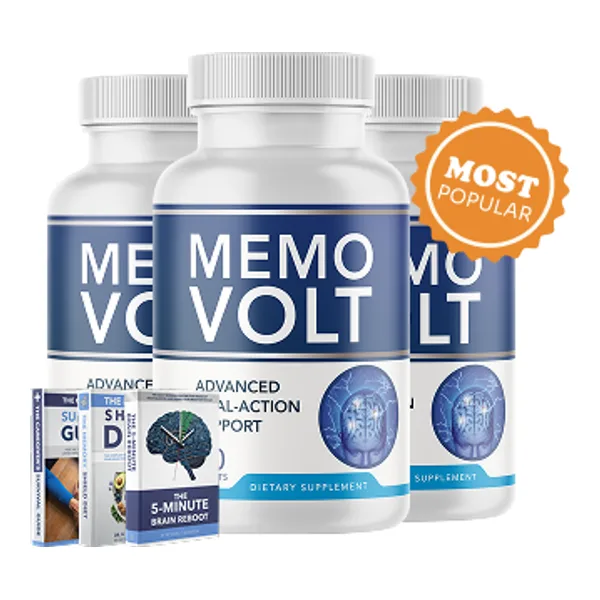
MemoVolt is a dietary supplement sold through ClickBank at getmemovolt.com. The site does not name the company that makes it. The bottle pictured on the order page reads "Advanced Dual-Action Support, 30 tablets," and the site FAQ says to take one a day with food. The same FAQ then calls the daily serving "one capsule." It is a small detail, and not the only mismatch.
The FAQ also says the charge will appear under BuyGoods, a different payment company, yet the order buttons lead to ClickBank's own checkout.
The product is sold in 2, 3 and 6-bottle packages as a one-time payment. There is no single-bottle option. Three free e-books come with every package, one of them a guide for caregivers.
Same ingredients as Phytomem One
We have also reviewed Phytomem One. MemoVolt lists the same ten ingredients, sorted into the same three groups, with the same claim about microplastics, the same 60-day refund policy, the same three e-book bonuses and the same 30-tablet bottle size. Neither site publishes doses, so we cannot prove the tablets are identical inside, but on everything the two sellers disclose, they are the same formula under two names.
The prices are where they differ. Both charge $49 a bottle for six and $79 a bottle for two. For three bottles, Phytomem One asked $59 each ($177) when we checked, while MemoVolt asks $69 each ($207). If you want this formula, there is no disclosed reason to pay $30 more for it.
One more detail from MemoVolt's affiliate page: the "product image pack" it offers to promoters contains files named after a different product, Balmorex, a topical joint cream we have also reviewed. It suggests shared marketing templates and says nothing about what is in the bottle.
No label, so no doses
We could not find a Supplement Facts panel on the main sales page, the three alternate presentation pages, the order form, or the affiliate resources page. The ingredients appear only as marketing text. We do not know how much saffron, berberine or anything else is in a tablet, what extracts were used, or whether they were standardized. For that reason we score label transparency 1 out of 5, and we cannot compare any dose with the research. We will update this review if a full label appears.
The formula next to the research
For each ingredient we looked on PubMed for the closest human study. The second column is what MemoVolt discloses; the last column is what those studies actually measured, which is often not memory.
| Ingredient | MemoVolt per day | Closest human study | What it measured |
|---|---|---|---|
| Saffron extract | Not disclosed | Five randomized trials, 325 people [2] | Cognitive test scores, mostly in people with a memory diagnosis |
| Fucoxanthin | Not disclosed | 4.4 to 8.8 mg/day inside a microalgae extract [4] [5] | Memory and attention tests in adults 55 to 75 |
| Fucoidan | Not disclosed | None found on memory | Nothing to compare |
| Oleuropein (olive leaf) | Not disclosed | 12 small trials of olive polyphenols [6] | Mainly heart and metabolic markers |
| Berberine | Not disclosed | Usually 900 to 1,500 mg/day [9] | Blood sugar and lipids in type 2 diabetes |
| Ceylon cinnamon | Not disclosed | 250 or 500 mg/day of extract for 4 months [11] | Blood sugar in type 2 diabetes |
| Corosolic acid (banaba) | Not disclosed | 10 mg, single dose [13] | Blood sugar after a glucose drink |
| Kudzu flower | Not disclosed | 200 or 300 mg/day for 12 weeks [14] | Body weight and belly fat |
| Morosil (Moro orange) | Not disclosed | Six months of a standardized extract [7] | Body weight and fat |
| Xylitol | Not disclosed | None on memory | Used as a sweetener |
Two of the ten ingredients have been tested on memory in people. The other eight were studied, when they were studied at all, for blood sugar or body weight. That fits the sales page's second idea, that the brain struggles to fuel itself, but it means the memory case rests on two ingredients whose amounts we cannot see.
Saffron: the strongest piece, with an asterisk
A 2020 systematic review from researchers at the US National Institute on Aging found five randomized trials of oral saffron and cognition, with 325 people in total [2]. Four of the five enrolled people already diagnosed with mild cognitive impairment or Alzheimer's disease; only one enrolled cognitively normal adults. Saffron did better than placebo on cognitive scales in those trials and was well tolerated, but the authors described the studies as having a potentially high risk of bias and called for larger, better trials. A broader 2021 review of 19 saffron meta-analyses reached a similar place: encouraging signals across several outcomes, with methods that need to improve [3]. The sales page says MemoVolt uses the strain studied in Tehran. We have no way to check that without a label.
Fucoxanthin: one positive trial, one that missed its goal
MemoVolt lists fucoxanthin as "Japanese sea kelp." The memory research we found used a different source, an extract of the microalga Phaeodactylum tricornutum, from the same ingredient supplier in both cases. In a 12-week Texas trial, 43 adults around age 64 who felt their memory was slipping took 1,100 mg of the extract (8.8 mg of fucoxanthin) or placebo; the extract group showed better results or trends on several memory and attention tests, though most changes were over time rather than between groups [4].
A longer Irish trial gave 66 adults aged 55 to 75 with age-associated memory changes half that amount (4.4 mg of fucoxanthin) for 24 weeks. On its main memory measure, and on the other cognitive tests, there was no difference between the extract and placebo at 12 or 24 weeks. Improvements showed up only when the extract group was compared with its own starting point [5]. Two small trials pointing in different directions is not much to build on, and neither tested kelp.
Olive leaf and fucoidan: little to go on
A 2024 review of 12 randomized trials of oleuropein and hydroxytyrosol, the main olive polyphenols, found mixed results, mostly on weight, cholesterol and blood sugar, with a few signals for joints, bone and cognition, and doses that varied widely [6]. We could not trace the sales page's "up to 40%" brain oxidative stress figure to a human study. For fucoidan, we found no human trial on memory or focus.
The blood sugar group: berberine, cinnamon, banaba and kudzu
These four take up a large share of the formula. Berberine has a real evidence base: a 2024 meta-analysis of 50 trials with 4,150 people with type 2 diabetes found that it lowered fasting and after-meal blood sugar and some blood fats, at a typical 900 to 1,500 mg a day [9]. Ceylon cinnamon extract lowered blood sugar markers in a four-month trial of 210 adults with type 2 diabetes [11]. Corosolic acid and kudzu flower have one small study each, on post-meal blood sugar and on belly fat [13] [14].
None of those studies measured memory. The link the sales page draws, that better blood sugar handling means better brain fuel, is a hypothesis. The cinnamon study the seller cites for brain insulin sensitivity was done in mice [12]. And berberine at the doses that work for blood sugar would not fit in one tablet next to nine other ingredients, so we suspect the amount here is far lower.
Morosil and xylitol
The sales page calls Morosil, a standardized Moro blood orange extract, its "hero ingredient." In a six-month trial in overweight adults it produced more weight and waist loss than placebo [7]. That is the study the seller lists twice on its own references page. It did not test memory, and we found no evidence for the claim that Morosil raises the absorption of every other ingredient. Xylitol is a sugar alcohol sweetener with no memory research we could find.
The microplastics story, checked
The sales page and the affiliate emails build on a real study. In 2025, researchers in New Mexico measured micro and nanoplastics in liver, kidney and brain tissue from people who had died, and found more plastic in brain samples than in the other organs, mostly as tiny shard-like fragments of polyethylene. Brain samples from 2024 held more than those from 2016. A subgroup with a documented dementia diagnosis had even higher amounts [1]. The authors did not show that plastic causes memory loss, and they wrote that routes of exposure, clearance and health effects still need to be understood.
The marketing goes much further. The affiliate emails say that when fragments were "flushed out," memory came back. We found no study showing that any supplement, or any MemoVolt ingredient, removes plastic from the human brain, and no study of the MemoVolt formula at all. The seller's references page lists eleven links, one of them twice: review articles, a cell study, mouse studies and the Moro orange weight trial. None is a human memory trial, and none is about microplastics.
Price, packages and refund policy
One bottle is a 30-day supply. Prices on the seller's site when we checked:
- 6 bottles: $49 each ($294 total), free US shipping, three e-books. About $1.63 a day.
- 3 bottles: $69 each ($207 total), free US shipping, three e-books.
- 2 bottles: $79 each ($158 total), plus a shipping fee the shipping policy lists as $9.95.
The order page also offers $3.99 shipping insurance as an add-on. The refund policy gives you 60 days from delivery, but read the details: you must send back all the items you received, at your own cost, and shipping fees are not refunded. That is a tighter policy than the "just contact us" wording on the sales page suggests. Both memory trials above ran 12 to 24 weeks, which is longer than the refund window.
MemoVolt packages on the seller's site
6 bottles, 180-day supply
$49/bottle
$294 total · Free US shipping
Lowest price per bottle
Includes 3 digital guides
Check the 6-bottle price3 bottles, 90-day supply
$69/bottle
$207 total · Free US shipping
Includes 3 digital guides
Check the 3-bottle price2 bottles, 60-day supply
$79/bottle
$158 total · +$9.95 US shipping
Includes 3 digital guides
Check the 2-bottle priceButtons open the seller's MemoVolt website, where you choose your supply and complete the order. Prices as listed on the seller's site on October 23, 2026; the price shown at checkout is final.Orders are covered by a 60-day refund policy from the seller (see their terms). We may earn a commission.
Safety
The individual ingredients were generally well tolerated in the trials above; saffron's common side effects in the research include nausea, dry mouth, poor appetite and headache [3]. Three points deserve attention for men over 50:
- Berberine and medications. In healthy men, two weeks of berberine (300 mg three times a day) reduced the activity of liver enzymes CYP2D6, CYP2C9 and CYP3A4, which process many common drugs, and raised blood levels of a test drug by about 40% [10]. Berberine also adds to the effect of glucose-lowering medication [9], as cinnamon and banaba may. If you take diabetes medication, blood thinners, heart or blood pressure drugs, statins or antidepressants, talk to your doctor or pharmacist first.
- Moro orange extract and the liver. Liver markers stayed normal in the six-month weight trial [7], but there is one published case of acute liver failure in a woman who had started Morosil a month earlier [8]. A single case does not prove cause, but stop and call your doctor if you notice yellowing skin or eyes, dark urine or unusual tiredness.
- Xylitol. A 2024 Cleveland Clinic study linked higher blood xylitol to more heart attacks and strokes and found that a xylitol drink made platelets more reactive in healthy volunteers [15]. The amount in one tablet is probably small, but it is not disclosed.
Talk to your doctor before starting MemoVolt if you take any prescription medication, have liver, kidney or heart conditions, or are scheduled for surgery. A supplement should never replace an evaluation for memory changes that are new or worsening.
What we liked and what gave us pause
Liked
- Saffron, which has the most human memory research on the list
- One-time payment, no subscription
- Free US shipping on 3 and 6 bottles
Gave us pause
- No Supplement Facts label and no doses
- Same ingredient list as Phytomem One, at a higher 3-bottle price
- Eight of ten ingredients studied for blood sugar or weight, not memory
- Microplastic removal claim with no supporting study
- Berberine's effect on drug-processing enzymes
- Refund requires returning everything, and shipping is not refunded
Frequently asked questions
Is MemoVolt the same product as Phytomem One?
The two sites list the same ten ingredients, the same groupings, the same bonuses and the same refund terms. Neither publishes doses, so we cannot confirm the tablets are identical, but nothing disclosed sets them apart except the 3-bottle price.
Does MemoVolt remove microplastics from the brain?
We found no human study showing that MemoVolt or any of its ingredients does that.
How many tablets do I take?
One a day with food, according to the site. Each bottle holds 30.
How long before I notice anything?
Results vary from person to person. The memory trials of saffron and fucoxanthin ran 12 weeks or longer, which is beyond the 60-day refund window.
Can MemoVolt replace my medication?
No. It is a dietary supplement. Do not stop or change any prescription without talking to your doctor.
Want to read the seller's presentation yourself? The link below opens the MemoVolt website, where you can see the full sales page and the current prices.
Visit the MemoVolt websiteHow we reviewed MemoVolt
We read the MemoVolt sales page, its alternate presentation pages, the order form, the refund and shipping policies, the seller's references page and the affiliate terms. We looked for a Supplement Facts label and did not find one. We compared the ingredient list and prices with the Phytomem One site, searched PubMed for human trials of each ingredient, and opened every study we cite. We did not test the product on people, and nobody at Stark Verve is a medical professional. Read our editorial policy to learn how we choose and update reviews. Stark Verve earns a commission if you buy through our links; that never changes what we write about the evidence.
References
- Nihart AJ, et al. Bioaccumulation of microplastics in decedent human brains. Nat Med. 2025;31(4):1114-1119. PMID 39901044
- Avgerinos KI, et al. Effects of saffron (Crocus sativus L.) on cognitive function. A systematic review of RCTs. Neurol Sci. 2020;41(10):2747-2754. PMID 32445136
- Lu C, et al. Saffron (Crocus sativus L.) and health outcomes: a meta-research review of meta-analyses and an evidence mapping study. Phytomedicine. 2021;91:153699. PMID 34419735
- Yoo C, et al. Effects of supplementation with a microalgae extract from Phaeodactylum tricornutum containing fucoxanthin on cognition and markers of health in older individuals with perceptions of cognitive decline. Nutrients. 2024;16(17):2999. PMID 39275314
- Goodbody E, et al. Promising benefits of six-month Phaeodactylum tricornutum microalgae supplementation on cognitive function and inflammation in healthy older adults with age-associated memory impairment. Front Aging. 2025;6:1540115. PMID 40370669
- Frumuzachi O, et al. Systemic health effects of oleuropein and hydroxytyrosol supplementation: a systematic review of randomized controlled trials. Antioxidants (Basel). 2024;13(9):1040. PMID 39334699
- Briskey D, et al. Effectiveness of "Moro" blood orange Citrus sinensis Osbeck (Rutaceae) standardized extract on weight loss in overweight but otherwise healthy men and women: a randomized double-blind placebo-controlled study. Nutrients. 2022;14(3):427. PMID 35276783
- Fernandes DP, et al. Acute liver failure secondary to anthocyanidin use: a case report. Transplant Proc. 2023;55(6):1454-1456. PMID 37183065
- Wang J, et al. Effects of administering berberine alone or in combination on type 2 diabetes mellitus: a systematic review and meta-analysis. Front Pharmacol. 2024;15:1455534. PMID 39640489
- Guo Y, et al. Repeated administration of berberine inhibits cytochromes P450 in humans. Eur J Clin Pharmacol. 2012;68(2):213-7. PMID 21870106
- Ranasinghe P, et al. Efficacy and safety of Cinnamomum zeylanicum (Ceylon cinnamon) for diabetes mellitus: a randomized, double blind, placebo-controlled clinical trial. Diabetes Metab Syndr. 2025;19(12):103357. PMID 41412108
- Sartorius T, et al. Cinnamon extract improves insulin sensitivity in the brain and lowers liver fat in mouse models of obesity. PLoS One. 2014;9(3):e92358. PMID 24643026
- Fukushima M, et al. Effect of corosolic acid on postchallenge plasma glucose levels. Diabetes Res Clin Pract. 2006;73(2):174-7. PMID 16549220
- Kamiya T, et al. Consumption of Pueraria flower extract reduces body mass index via a decrease in the visceral fat area in obese humans. Biosci Biotechnol Biochem. 2012;76(8):1511-7. PMID 22878195
- Witkowski M, et al. Xylitol is prothrombotic and associated with cardiovascular risk. Eur Heart J. 2024;45(27):2439-2452. PMID 38842092