
Review · Memory and focus
MemoDefend review: a memory formula with a blood pressure label
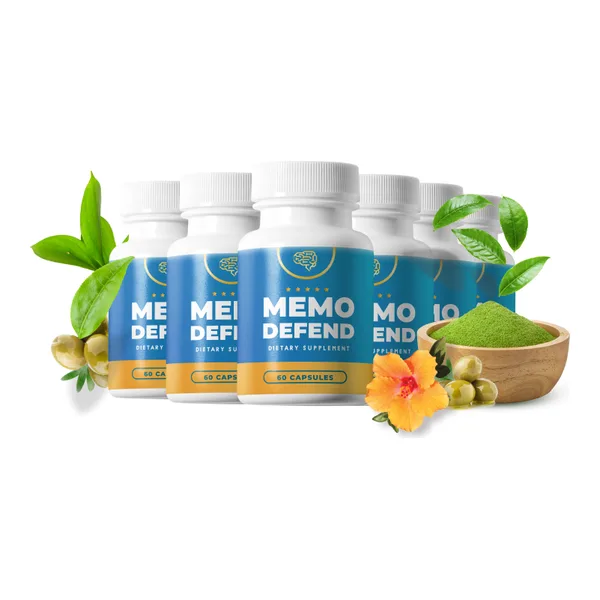
MemoDefend is sold as a way to support memory, recall and a clear mind. When we read the label, most of what is in the capsule turned out to be herbs that researchers study for blood pressure, the heart and the urinary tract. Here is what that means for a man over 50 who is thinking about it.
Our verdict: 2 / 5
| Ingredient evidence | 1.5 | Only the B vitamins have memory trials in older adults, and pooled results are mostly neutral; the herbs have no human memory trials we could find |
|---|---|---|
| Dosing vs. research | 1.5 | Folic acid, B12 and B6 sit well below trial amounts; the eight herbs share one undisclosed blend |
| Label transparency | 2 | Label is posted, vitamins are dosed, but 1,240 mg a day of herbs is a proprietary blend; the sales page leaves out uva ursi |
| Value and refund terms | 3 | $49 to $69 a bottle with free US shipping; 60-day refund that requires returning the bottles at your own cost |
Worth considering if you mainly want a modest daily top-up of B vitamins and vitamin C in a single capsule, you are not on heart or blood pressure medication, and you are comfortable with a 60-day return window.
Probably skip it if you are looking for an ingredient list built around memory research, you take blood pressure, heart or blood-thinning medication, or you want to know how much of each herb you are swallowing.
Before anything else: forgetfulness that is new, getting worse or worrying the people around you deserves a visit to your doctor. Several common and treatable causes, including low vitamin B12, thyroid problems, poor sleep and medication side effects, can affect memory.
Smallest order $69, from $49 per bottle, 60-day refund policy from the seller
See the current MemoDefend packages, shipping and refund termsOpens the seller's page. It may start with a long video or letter; the packages and refund terms are usually further down. We may earn a commission.
Came here for MemoDefend? The highest-rated memory and focus label we checked is Synaptigen, 2.4 out of 5.
What MemoDefend is
MemoDefend is a capsule supplement sold on its own website, thememodefend.com, with checkout handled by the BuyGoods retail platform. The label names the distributor as Memo Defend of Englewood, Colorado, and the refund page gives a return address in Aurora, Colorado. Each bottle holds 60 capsules, and the label directions are one capsule twice a day, so a bottle lasts a month.
The sales material is a video with a long text version. The text version, narrated by a 53-year-old who says he is not a doctor, offers five everyday memory habits, then introduces the formula. It names hawthorn, garlic, olive, hibiscus, buchu, juniper, green tea, vitamin C and niacin.
What the label actually says
The full Supplement Facts panel is not on the sales page. It sits at the bottom of the site's references page. We read it there and transcribed it. Per capsule, it lists:
- Vitamin C (ascorbic acid) 60 mg
- Niacin 2.5 mg
- Vitamin B6 (as pyridoxal-5-phosphate) 5 mg
- Folate (folic acid) 100 mcg DFE
- Vitamin B12 (as cyanocobalamin) 100 mcg
- A 620 mg proprietary blend of hawthorn leaf and flower, garlic bulb, olive leaf, hibiscus flower, buchu leaf, uva ursi leaf, juniper berry and green tea leaf
At the labeled two capsules a day, that doubles to 1,240 mg of the herbal blend plus the vitamin amounts below. Two details stood out. First, uva ursi (bearberry leaf) is on the label but missing from the sales page list. Second, the label's warning tells people with "cardiovascular disorders or hypotension (low blood pressure)" not to use it and mentions prescription medication "for high blood pressure", and the small product code printed above the panel begins with "BP". That wording, together with an herb list that leans heavily on hawthorn, hibiscus, garlic, olive leaf, juniper, buchu and uva ursi, reads much more like a blood pressure or water-balance formula than a memory one. The company does not explain this, and we cannot confirm where the label came from. We simply report what is printed on it.
The vendor's terms say site content may not be copied without permission, so we do not reproduce the label image here. You can view it at the bottom of the references page on the official site.
The formula next to the research
For each ingredient we looked for human trials on memory or thinking in older adults and compared the trial amount with a daily serving of MemoDefend (two capsules).
| Ingredient | MemoDefend per day | Amount in trials | How it compares |
|---|---|---|---|
| Folic acid | 200 mcg DFE (about 120 mcg folic acid) | 800 mcg/day [1] [2] | Roughly one seventh |
| Vitamin B12 | 200 mcg | 500 mcg/day [2] | About 40% |
| Vitamin B6 | 10 mg | 20 mg/day [2] | Half |
| Vitamin C | 120 mg | No clear supplement trial on memory [6] | Cannot be compared |
| Green tea leaf | Share of 1,240 mg blend, not disclosed | 2 g/day of powder with 220 mg catechins [7] | Unknown; that trial found no memory effect |
| Garlic | Not disclosed | Animal studies only [8] | No human memory data found |
| Hawthorn, hibiscus, olive leaf, buchu, uva ursi, juniper | Not disclosed | Human trials we found concern the heart, blood pressure or urinary use [10] [9] | Not studied for memory in healthy older men |
The B vitamins: the only memory evidence, at lower doses
B6, B12 and folic acid help the body clear homocysteine, an amino acid that tends to rise with age. This is the one part of the MemoDefend label with real memory research behind it, and the results are mixed.
In the Dutch FACIT trial, 818 men and women aged 50 to 70 with raised homocysteine took 800 mcg of folic acid or placebo daily for three years. Memory and processing speed scores held up somewhat better in the folic acid group [1]. In the Oxford VITACOG trial, 271 people over 70 with mild cognitive impairment took 800 mcg folic acid, 500 mcg B12 and 20 mg B6, or placebo, for two years. Brain shrinkage on MRI was slower with the vitamins [2], and memory and thinking scores held steadier mainly in those who started with higher homocysteine [3].
The larger picture is less encouraging. A pooled analysis of 11 trials with about 22,000 participants found that B vitamins lowered homocysteine by roughly a quarter but had no significant effect on memory, other thinking skills or overall cognitive aging [4]. A 2019 review of 31 placebo-controlled trials came to a similar conclusion, noting a possible modest benefit only in people with high homocysteine [5].
So the most favorable trials used several times more folic acid and B12 than MemoDefend provides, and mainly helped people with high homocysteine. If you suspect low B12, which is common after 50, a blood test will tell you more than any capsule.
Vitamin C and niacin: everyday amounts
The 120 mg of vitamin C a day is a little above the daily value. A systematic review linked higher blood vitamin C with better thinking but found the trials too limited to show that supplements help memory [6]. The 5 mg of niacin is a small dietary amount.
Green tea and garlic: interesting in the lab, thin in people
Green tea is the herb with the most direct human test. In a 12-month Japanese trial, 33 nursing home residents with impaired thinking took 2 grams of green tea powder a day or placebo. Their memory test scores did not differ from placebo, although one oxidative stress marker was lower [7]. We do not know how much green tea is in MemoDefend, but it shares 1,240 mg with seven other herbs, so it is almost certainly less than 2 grams.
For garlic, the main summary we found pooled 13 studies in mice and rats, and its authors called for better-designed animal work [8]. We found no human memory trial of garlic.
Hawthorn, hibiscus and the rest: studied for something else
Hawthorn leaf and flower extract has been tested in people with chronic heart failure. A Cochrane review of 14 trials found better exercise tolerance and fewer symptoms such as shortness of breath when hawthorn was added to standard care [10]. Hibiscus tea has been tested for blood pressure, and a meta-analysis of five trials with 390 people found systolic pressure about 7.6 mmHg lower than in control groups [9]. Buchu, juniper and uva ursi are traditional urinary and water-balance herbs; bearberry leaf (uva ursi) is used for urinary complaints [11].
None of this is memory research. It does, however, matter for safety, which we cover below.
What the marketing claims vs. what we could verify
- The video's headline story describes the narrator's mother regaining her memory after severe memory loss. That is an anecdote. We found no published study of MemoDefend, and nothing in the formula has trial evidence for that kind of effect.
- "Research-proven" memory support. The site's references page lists 20 sources. Most are animal studies, observational studies, a book chapter or science news releases, several focus on disease rather than everyday memory, and none tests MemoDefend or its doses. The strongest human evidence for any listed ingredient, the B vitamin trials above, used much higher amounts.
- "100% effective" ingredients. We could not find anything that supports this, and no supplement can honestly promise it.
- An "FDA approved" facility. The FDA does not approve dietary supplements or the facilities that make them. Manufacturers must register and follow good manufacturing practice rules, which the sales page's mention of a GMP certified facility may refer to.
Price, packages and refund policy
One bottle is a 30-day supply. Prices on the official site when we checked:
- 6 bottles: $49 each ($294 total), free US shipping. About $1.63 a day.
- 3 bottles: $59 each ($177 total), free US shipping.
- 1 bottle: $69, free US shipping.
Every order is a one-time payment with no subscription, according to the site. The site's order setup also includes follow-up offers of extra bottles at a lower per-bottle price after the first purchase, so it is worth deciding in advance how much you actually want to buy.
The sales page promises a 60-day money-back guarantee "no question asked". The separate refund policy adds conditions: the 60 days run from the shipping date, you must mail back all the bottles to the Aurora, Colorado address, and you pay return postage. That is stricter than many products in this category. Since the B vitamin trials ran two to three years, 60 days is too short to judge memory effects.
MemoDefend packages on the official site
6 bottles, 180-day supply
$49/bottle
$294 total · Free US shipping
Lowest price per bottle
Check the 6-bottle priceButtons open the seller's MemoDefend website, where you choose your supply and complete the order. Prices as listed on the seller's site on October 23, 2026; the price shown at checkout is final.Orders are covered by a 60-day refund policy from the seller (see their terms). We may earn a commission.
Safety
The vitamin amounts are modest. Most of the caution belongs to the herbal blend, especially for men on heart or blood pressure medication.
- Blood pressure medication. Hibiscus lowered blood pressure in trials [9], and the label itself warns people with low blood pressure or on blood pressure medication to check with a physician. Adding it to prescription treatment could push pressure lower than your doctor intends.
- Beta-blockers. In healthy volunteers, drinking green tea for two weeks cut blood levels of the beta-blocker nadolol by about 85% [14]. The green tea dose in MemoDefend is unknown, but if you take nadolol or a similar drug, ask your doctor.
- Heart medication. Hawthorn has been studied mainly as an add-on for heart failure [10]. A small study in healthy people found no change in digoxin levels with hawthorn [13], but anyone with a heart condition should not add a hawthorn product without medical advice.
- Blood thinners. Garlic has antiplatelet effects. A 12-week pilot trial of aged garlic extract in closely monitored warfarin patients found no increase in bleeding [12], but that was a specific garlic product under medical supervision.
- Uva ursi. Its main compound, arbutin, is converted to hydroquinone in the body. A safety assessment concluded it is acceptable at recommended doses for urinary complaints [11]. Those doses are normally taken as a short course, and we found no data on daily use for months combined with other herbs.
- Green tea extracts and the liver. A US Pharmacopeia review found rare cases of liver injury linked to concentrated green tea extracts, more often when taken on an empty stomach [15]. Taking capsules with food is a sensible precaution.
Talk to your doctor before starting MemoDefend if you take any prescription medication, and especially blood pressure, heart, diuretic or blood-thinning drugs. Stop and seek care if you notice dizziness, lightheadedness or unusual bruising. And if memory or concentration changes are new or worsening, get them checked rather than self-treating.
What we liked and what gave us pause
Liked
- The Supplement Facts label is published on the official site
- Vitamin doses are stated
- Free US shipping and no subscription
Gave us pause
- Most of the herbs are studied for blood pressure, heart or urinary use, not memory
- B vitamins well below the doses in the positive trials
- Eight herbs hidden in one blend; uva ursi missing from the sales page
- Label warnings and code suggest a repurposed blood pressure label
- 60-day refund from shipping, with bottles returned at your cost
Frequently asked questions
Where can I buy MemoDefend?
The sales page says it is sold only on its official website. Listings on other sites may not be genuine or covered by the refund policy.
How long before I notice anything?
Results vary, and the evidence for this formula is thin. The B vitamin trials that showed any effect ran for two to three years, far longer than the 60-day refund window.
Is MemoDefend the same as another product you reviewed?
We compared its label with every product in our review library and found no identical formula. Its herb list is unusual for a memory product and closer to blood pressure blends.
Can it replace treatment from my doctor?
No. MemoDefend is a dietary supplement. Do not stop or change any prescription without talking to your doctor.
Want to read the label and the offer yourself? The link below opens the MemoDefend website, where you can watch their presentation, find the label on the references page and choose a package.
Visit the MemoDefend websiteHow we reviewed MemoDefend
We read the official sales page, its text version, the references, refund, shipping and affiliate pages, and the Supplement Facts label posted on the site. We searched PubMed for human trials of each ingredient on memory and thinking in older adults, compared the amounts used with the label, and checked interaction research for the actual ingredients. We did not test the product on people, and nobody at Stark Verve is a medical professional. Read our editorial policy to learn how we choose and update reviews. Stark Verve earns a commission if you buy through our links; that never changes what we write about the evidence.
References
- Durga J, et al. Effect of 3-year folic acid supplementation on cognitive function in older adults in the FACIT trial: a randomised, double blind, controlled trial. Lancet. 2007;369(9557):208-16. PMID 17240287
- Smith AD, et al. Homocysteine-lowering by B vitamins slows the rate of accelerated brain atrophy in mild cognitive impairment: a randomized controlled trial. PLoS One. 2010;5(9):e12244. PMID 20838622
- de Jager CA, et al. Cognitive and clinical outcomes of homocysteine-lowering B-vitamin treatment in mild cognitive impairment: a randomized controlled trial. Int J Geriatr Psychiatry. 2012;27(6):592-600. PMID 21780182
- Clarke R, et al. Effects of homocysteine lowering with B vitamins on cognitive aging: meta-analysis of 11 trials with cognitive data on 22,000 individuals. Am J Clin Nutr. 2014;100(2):657-66. PMID 24965307
- Ford AH, Almeida OP. Effect of vitamin B supplementation on cognitive function in the elderly: a systematic review and meta-analysis. Drugs Aging. 2019;36(5):419-34. PMID 30949983
- Travica N, et al. Vitamin C status and cognitive function: a systematic review. Nutrients. 2017;9(9):960. PMID 28867798
- Ide K, et al. Effects of green tea consumption on cognitive dysfunction in an elderly population: a randomized placebo-controlled study. Nutr J. 2016;15(1):49. PMID 27142448
- Luo JF, et al. The effect and underlying mechanisms of garlic extract against cognitive impairment and Alzheimer's disease: a systematic review and meta-analysis of experimental animal studies. J Ethnopharmacol. 2021;280:114423. PMID 34273446
- Serban C, et al. Effect of sour tea (Hibiscus sabdariffa L.) on arterial hypertension: a systematic review and meta-analysis of randomized controlled trials. J Hypertens. 2015;33(6):1119-27. PMID 25875025
- Pittler MH, Guo R, Ernst E. Hawthorn extract for treating chronic heart failure. Cochrane Database Syst Rev. 2008;(1):CD005312. PMID 18254076
- de Arriba SG, Naser B, Nolte KU. Risk assessment of free hydroquinone derived from Arctostaphylos Uva-ursi folium herbal preparations. Int J Toxicol. 2013;32(6):442-53. PMID 24296864
- Macan H, et al. Aged garlic extract may be safe for patients on warfarin therapy. J Nutr. 2006;136(3 Suppl):793S-795S. PMID 16484565
- Tankanow R, et al. Interaction study between digoxin and a preparation of hawthorn (Crataegus oxyacantha). J Clin Pharmacol. 2003;43(6):637-42. PMID 12817526
- Misaka S, et al. Green tea ingestion greatly reduces plasma concentrations of nadolol in healthy subjects. Clin Pharmacol Ther. 2014;95(4):432-8. PMID 24419562
- Sarma DN, et al. Safety of green tea extracts: a systematic review by the US Pharmacopeia. Drug Saf. 2008;31(6):469-84. PMID 18484782