Review · Weight management
Ikaria Lean Belly Juice review: a ceramide story and a hidden label
Ikaria Lean Belly Juice is a flavored morning powder sold for metabolism, energy and weight management. We set the marketing aside and read the Supplement Facts panel, then checked each ingredient that could matter against human research.
Our verdict: 2.1 / 5
| Ingredient evidence | 2 | Fucoxanthin has a few small positive trials; green tea, resveratrol, ginseng, African mango and probiotics show little or no reliable weight effect in pooled research |
|---|---|---|
| Dosing vs. research | 1 | Nine actives share one gram and eleven fruits share another, so trial amounts of pectin, ginseng and similar ingredients cannot fit |
| Label transparency | 1.5 | A panel is published with extract standardizations, but no single ingredient amount is disclosed apart from the probiotic subtotal |
| Value and refund terms | 4 | $39 to $69 per bottle, one-time payments; 180-day refund, with bottles returned at your own postage |
Worth considering if you want a decaffeinated fruit and green tea drink to pair with changes you are already making to meals, activity and sleep, and you are comfortable paying for convenience with a long refund window behind you.
Probably skip it if you want to know how much of each ingredient you are taking, or if the idea of clearing "foreign" ceramides is what caught your attention. The label does not tell you the first, and the research does not support the second.
Before anything else: unexplained weight change, new tiredness or a growing waistline in your fifties and sixties are worth a checkup. If you take prescription medication, ask your doctor or pharmacist before adding this or any herbal powder.
Smallest order $69, from $39 per bottle, 180-day refund policy from the seller
See the current Ikaria Lean Belly Juice packages, shipping and refund termsOpens the seller's page. It may start with a long video or letter; the packages and refund terms are usually further down. We may earn a commission.
Came here for Ikaria Lean Belly Juice? The highest-rated weight label we checked is LeanBiome, 2.8 out of 5.
What Ikaria Lean Belly Juice is
It is a powder. One 3.2 gram scoop goes into water or another drink each morning, and each container holds 30 scoops. It is sold through ClickBank on the seller's website in 1, 3 and 6-container packages, all as one-time payments. The site and label do not name a manufacturing company, so we do not name one here.
The name refers to Ikaria, the Greek island known for long-lived residents, but the sales pitch rests on ceramides, which it says flood the bloodstream with fat and slow the metabolism. The vendor describes its audience as half men, half women, aged 35 and up. Nothing in the formula targets men over 50, so we read it with that reader in mind.
What is on the label
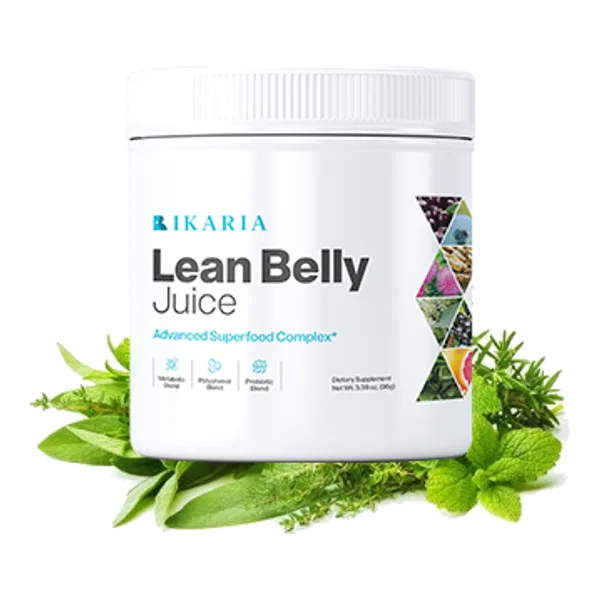
The vendor's terms do not permit reuse of its images, so we describe the panel in words. It lists three blends, each with a total weight and no amounts for what is inside:
- Metabolic Blend, 1,000 mg: dandelion root, turmeric root, citrus pectin, green tea leaf extract (98% polyphenols, 50% EGCG, under 1% caffeine), kelp extract from Laminaria japonica (10% fucoxanthin), milk thistle seed extract (80% silymarin), Panax ginseng root, black pepper extract (95% piperine) and Japanese knotweed root extract (98% resveratrol).
- Polyphenol Blend, 1,000 mg: beet root, hibiscus, strawberry, acai, African mango seed extract, black currant, blueberry, cranberry, grapefruit, pomegranate and raspberry.
- Digestive Blend, 325 mg: inulin from Jerusalem artichoke, oat fiber, and a nine-strain probiotic stated at 125 mg and 3 billion CFU.
Other ingredients are maltodextrin, natural flavors, citric acid and stevia. Blend ingredients are listed by weight, so dandelion root is the largest item in the metabolic blend and resveratrol the smallest. Nine ingredients in one gram average about 110 mg each. The stated standardizations help, but without the amount of each extract you still cannot work out a daily dose.
Where the label and the sales page part ways
- Piperine: the sales page names a trademarked piperine ingredient; the label lists a generic black pepper extract at 95% piperine.
- Alginate is described on the sales page as a fiber "found in fucoxanthin." Fucoxanthin is a carotenoid pigment and alginates are seaweed polysaccharides; a recent meta-analysis lists them as separate compound classes [3]. The label lists a fucoxanthin extract, not alginate.
- The vendor's reference page cites studies on ginkgo, berberine, capsaicin, horny goat weed, maca and ashwagandha. None of these appear on the label.
- Reused copy: the contact page lists a support address for a different supplement, and the page source contains a hidden FAQ entry naming yet another product.
None of this shows the powder is mislabeled, but it is a reason to trust the panel over the pitch.
If you read our Nagano Tonic review: the two share a ClickBank vendor naming pattern, identical prices and 180-day terms. The labels differ. Nagano Tonic spreads more than sixty ingredients over four blends with dosed vitamins; this one uses three blends of standardized extracts, overlapping only on green tea, ginseng, beet and probiotics.
The formula next to the research
For each ingredient with a plausible link to weight, we looked for human trials on PubMed and compared the amount studied with what one scoop could hold.
| Ingredient | Per scoop | Amount in trials | How it compares |
|---|---|---|---|
| Fucoxanthin (kelp extract, 10%) | Part of a 1 g blend | 2.4 mg a day with pomegranate seed oil [1]; 12 mg a day alone [2] | Possible if the blend holds 24 to 120 mg of extract; not disclosed |
| Green tea extract | Part of a 1 g blend | Various preparations, 12 weeks or more [4] | Pooled effect near zero outside Japan |
| Resveratrol (98%) | Part of a 1 g blend | 23 trials, varied doses [5] | No significant weight change in the pooled data |
| Panax ginseng root | Part of a 1 g blend | 2 g to 6 g a day [14] [7] | At least double the whole blend |
| Citrus pectin | Part of a 1 g blend | 15 g with a single meal [10] | More than fifteen times the whole blend |
| Dandelion | Root powder, part of a 1 g blend | Fresh leaf extract, one day [11] | Different plant part and outcome |
| African mango seed | Part of a 1 g fruit blend | Three small, poorly reported trials [8] | Evidence judged unproven |
| Probiotics | 3 billion CFU, nine strains | Various strains, 8 to 12 weeks [12] | Plausible range, no reliable weight effect |
Fucoxanthin: the most interesting ingredient
Fucoxanthin, a brown seaweed pigment, is the one ingredient here with trials pointing in a positive direction. In a 16-week double-blind trial of 151 premenopausal women with obesity, a product combining brown seaweed extract (2.4 mg fucoxanthin) with pomegranate seed oil was followed by an average weight loss of about 5 kg (5.5 and 4.9 kg in its two subgroups), which the authors reported as statistically significant against placebo [1]. The oil was part of the product, so fucoxanthin cannot take sole credit. In a smaller trial of 28 adults with metabolic syndrome, 12 mg of fucoxanthin a day for 12 weeks was followed by a drop in average weight from 80.6 to 79.2 kg [2]. A 2025 meta-analysis of 11 seaweed trials found a small average reduction in BMI and body fat percentage with refined brown seaweed taken for at least 8 weeks [3].
At 10% fucoxanthin, the scoop would need 24 mg of kelp extract to match the lower trial dose and 120 mg for the higher one. Either could fit in the blend, but the label does not say. Neither trial enrolled men over 50.
Green tea and resveratrol: well studied, little to show for weight
The Cochrane review of green tea for weight loss pooled six trials run outside Japan (532 participants, 12 to 13 weeks) and found an average difference of 0.04 kg versus control [4]. A 2020 meta-analysis of 54 herbal trials likewise found no effect of green tea alone and recommended none of the herbs reviewed for weight loss [9].
For resveratrol, a 2026 meta-analysis of 23 randomized trials with 1,005 adults found no significant change in body weight, BMI or fat mass, and a small average reduction in waist circumference of about 1.9 cm [5]. Resveratrol is listed last in its blend, so the amount here is likely to be modest.
Ginseng, pectin and dandelion: right ingredients, wrong scale
In a placebo-controlled trial of 50 women with obesity, eight weeks of Korean red ginseng produced no weight difference versus placebo; only a quality-of-life score differed [6]. A 12-week trial in 68 overweight adults used 6 grams a day of red ginseng rootlets and found no change in insulin sensitivity [7]. That is six times the weight of the entire metabolic blend.
Pectin's satiety claim on the sales page traces to a study in nine adults with obesity who had 15 grams of pectin added to a single meal. It slowed stomach emptying and raised fullness ratings compared with another fiber [10]. Fifteen grams is nearly five full scoops of the entire powder. The dandelion study the vendor lists tested a fresh leaf extract taken three times in one day by 17 volunteers and measured urine output [11]. The label uses root powder, and a brief rise in urine output says nothing about body fat.
African mango and probiotics
A systematic review found three African mango trials, all positive but all poorly reported, and judged the effect unproven [8]. Here it shares a gram with ten fruits. For probiotics, a 2026 meta-analysis of 10 trials (633 adults with overweight) found no significant difference in body weight over 8 to 12 weeks, and a modest BMI effect that weakened when one study was removed [12]. The 3 billion CFU here is an ordinary amount for a probiotic product.
About the ceramide claim
The sales page describes ceramides as foreign compounds that push fat into the bloodstream and clog the liver, pancreas and heart, slowing the metabolism. A 2024 review in Physiological Reviews describes them differently: ceramides are lipids the body makes itself, and they build up when cells already have more fatty acids than they can use or store [13]. Excess ceramides are linked to metabolic problems, but calling them foreign gets the biology backwards.
The closest human evidence we found for any ingredient here is a 4-week pilot trial in 68 postmenopausal women with high cholesterol, where 2 grams a day of Korean red ginseng lowered some blood ceramide levels compared with placebo [14]. It did not measure weight, used twice the weight of the whole metabolic blend in ginseng alone, and did not include men. We found no trial of this formula, and nothing on PubMed showing that a drink like it lowers ceramides or that doing so changes body weight. The sales page FAQ also calls the product "proven" to support weight loss; we could not trace that to any publication.
Price, packages and refund policy
One container is a 30-day supply. Prices on the seller's site and the ClickBank order forms when we checked:
- 6 containers: $39 each ($234 total), free US shipping, three bonuses (two digital guides and access to online coaching). About $1.30 a day.
- 3 containers: $59 each ($177 total), free US shipping, same three bonuses.
- 1 container: $69 plus $9.95 shipping ($78.95 at checkout).
The refunds page gives 180 days from shipping. You email first with "Refund Request" in the subject, wait for confirmation, then mail back all containers, empty or not, at your own cost. Those are fair terms for this category. We would ignore the crossed-out "regular" prices and the limited-time banner.
Ikaria Lean Belly Juice packages on the seller's site
6 bottles, 180-day supply
$39/bottle
$234 total · Free US shipping
Lowest price per bottle
Includes 3 bonuses (2 digital guides and online coaching access)
Check the 6-bottle price3 bottles, 90-day supply
$59/bottle
$177 total · Free US shipping
Includes 3 bonuses (2 digital guides and online coaching access)
Check the 3-bottle priceButtons open the seller's Ikaria Lean Belly Juice website, where you choose your supply and complete the order. Prices as listed on the seller's site on October 23, 2026; the price shown at checkout is final.Orders are covered by a 180-day refund policy from the seller (see their terms). We may earn a commission.
Safety
Amounts are undisclosed, so these notes concern the ingredients themselves:
- Green tea extract: a United States Pharmacopeia expert review linked concentrated green tea extracts to rare liver injury, with case reports at EGCG intakes from 140 mg to about 1,000 mg a day, and recommended taking them with food [15]. This extract is 50% EGCG, so taking the drink with breakfast is sensible.
- Black pepper extract (piperine): in 20 patients taking the seizure medication phenytoin, a single 20 mg dose of piperine significantly raised blood levels of the drug [16]. Its absorption-boosting effect can extend to medications.
- Grapefruit: more than 85 drugs are known or predicted to interact with grapefruit, 43 of them seriously, including some statins and blood pressure medications commonly used by older adults [17]. The grapefruit powder here is one of eleven fruits in a gram and probably small, but if your prescription label warns against grapefruit, ask your pharmacist.
- Kelp: seaweed can contain iodine, and the label does not state iodine content. One case report described temporary thyroid overactivity in a 70-year-old woman after three months of kelp tablets [18]. If you have a thyroid condition or take thyroid medication, check with your doctor.
Stop using it and call your doctor if you notice dark urine, yellowing of the skin or eyes, or abdominal pain. Talk to your doctor before starting any weight management supplement, especially if you take blood thinners, diabetes or blood pressure medication, and seek care for weight change you cannot explain.
What we liked and what gave us pause
Liked
- A Supplement Facts panel is published, with standardization for each major extract
- Decaffeinated green tea extract, so no stimulant jolt
- Includes fucoxanthin, the ingredient with the most encouraging small trials
- 180-day refund policy and no subscription
Gave us pause
- No individual ingredient amounts anywhere on the label
- Pectin and ginseng trial doses are larger than the whole blend
- The ceramide story conflicts with published research
- Reference list and contact page borrowed from other products
Frequently asked questions
Is Ikaria Lean Belly Juice made for men over 50?
It is sold to adults of both sexes from their mid-thirties up. None of the trials we cite enrolled men over 50 specifically, and several enrolled only women.
How much weight will I lose?
We cannot give a number, and results vary. The pooled research on its best-studied ingredients shows average differences of about one kilogram or less versus placebo, at amounts we cannot confirm this scoop reaches. Food, activity, sleep, medications and medical conditions matter far more.
Where can I buy it?
Through the seller's website, with checkout run by ClickBank. The vendor does not authorize sales on Amazon, eBay or other retail sites, so listings there may not be covered by the refund policy.
Can it replace my doctor's advice or medication?
No. It is a dietary supplement. Do not stop or change a prescription without talking to your doctor.
Want to compare the label with our notes yourself? The link below opens the Ikaria Lean Belly Juice sales page, where the Supplement Facts panel and packages are shown.
See the Ikaria Lean Belly Juice websiteHow we reviewed Ikaria Lean Belly Juice
We read the sales page, the Supplement Facts panel, the refunds, contact and reference pages and the vendor's affiliate terms, and checked prices on the ClickBank order forms. We searched PubMed for human trials and systematic reviews of each ingredient with a plausible link to weight, and for research on ceramides, then compared the amounts studied with what the label allows. We did not test the product on people, and nobody at Stark Verve is a medical professional. Read our editorial policy to learn how we choose and update reviews. Stark Verve earns a commission if you buy through our links; that never changes what we write about the evidence.
References
- Abidov M, et al. The effects of Xanthigen in the weight management of obese premenopausal women with non-alcoholic fatty liver disease and normal liver fat. Diabetes Obes Metab. 2010;12(1):72-81. PMID 19840063
- López-Ramos A, et al. Effect of fucoxanthin on metabolic syndrome, insulin sensitivity, and insulin secretion. J Med Food. 2023;26(7):521-527. PMID 37405785
- Łagowska K, et al. Effects of dietary seaweed on obesity-related metabolic status: a systematic review and meta-analysis of randomized controlled trials. Nutr Rev. 2025;83(2):e116-e130. PMID 38749056
- Jurgens TM, et al. Green tea for weight loss and weight maintenance in overweight or obese adults. Cochrane Database Syst Rev. 2012;12:CD008650. PMID 23235664
- Setayesh A, et al. The effect of resveratrol supplementation on anthropometric indices, adiponectin and leptin levels in individuals with overweight and obesity: a graded, systematic review and meta-analysis of randomized controlled trials. Int J Obes (Lond). 2026;50(3):492-506. PMID 41455817
- Kwon DH, et al. Efficacy of Korean red ginseng by single nucleotide polymorphism in obese women: randomized, double-blind, placebo-controlled trial. J Ginseng Res. 2012;36(2):176-89. PMID 23717118
- Cho YH, et al. Effect of Korean red ginseng on insulin sensitivity in non-diabetic healthy overweight and obese adults. Asia Pac J Clin Nutr. 2013;22(3):365-71. PMID 23945406
- Onakpoya I, et al. The efficacy of Irvingia gabonensis supplementation in the management of overweight and obesity: a systematic review of randomized controlled trials. J Diet Suppl. 2013;10(1):29-38. PMID 23419021
- Maunder A, et al. Effectiveness of herbal medicines for weight loss: a systematic review and meta-analysis of randomized controlled trials. Diabetes Obes Metab. 2020;22(6):891-903. PMID 31984610
- Di Lorenzo C, et al. Pectin delays gastric emptying and increases satiety in obese subjects. Gastroenterology. 1988;95(5):1211-5. PMID 3169489
- Clare BA, Conroy RS, Spelman K. The diuretic effect in human subjects of an extract of Taraxacum officinale folium over a single day. J Altern Complement Med. 2009;15(8):929-34. PMID 19678785
- Ko J, et al. Effects of probiotics and synbiotics on body weight management in individuals with overweight or obesity: a systematic review and meta-analysis of randomized controlled trials. Phys Act Nutr. 2026;30(2):78-89. PMID 42438848
- Wilkerson JL, et al. Ceramides are fuel gauges on the drive to cardiometabolic disease. Physiol Rev. 2024;104(3):1061-1119. PMID 38300524
- Kwon YJ, et al. Effect of Korean red ginseng on plasma ceramide levels in postmenopausal women with hypercholesterolemia: a pilot randomized controlled trial. Metabolites. 2021;11(7):417. PMID 34202864
- Oketch-Rabah HA, et al. United States Pharmacopeia (USP) comprehensive review of the hepatotoxicity of green tea extracts. Toxicol Rep. 2020;7:386-402. PMID 32140423
- Pattanaik S, et al. Effect of piperine on the steady-state pharmacokinetics of phenytoin in patients with epilepsy. Phytother Res. 2006;20(8):683-6. PMID 16767797
- Bailey DG, Dresser G, Arnold JM. Grapefruit-medication interactions: forbidden fruit or avoidable consequences? CMAJ. 2013;185(4):309-16. PMID 23184849
- Gherbon A, et al. Transient hyperthyroidism following the ingestion of complementary medications containing kelp seaweed: a case report. Medicine (Baltimore). 2019;98(37):e17058. PMID 31517826