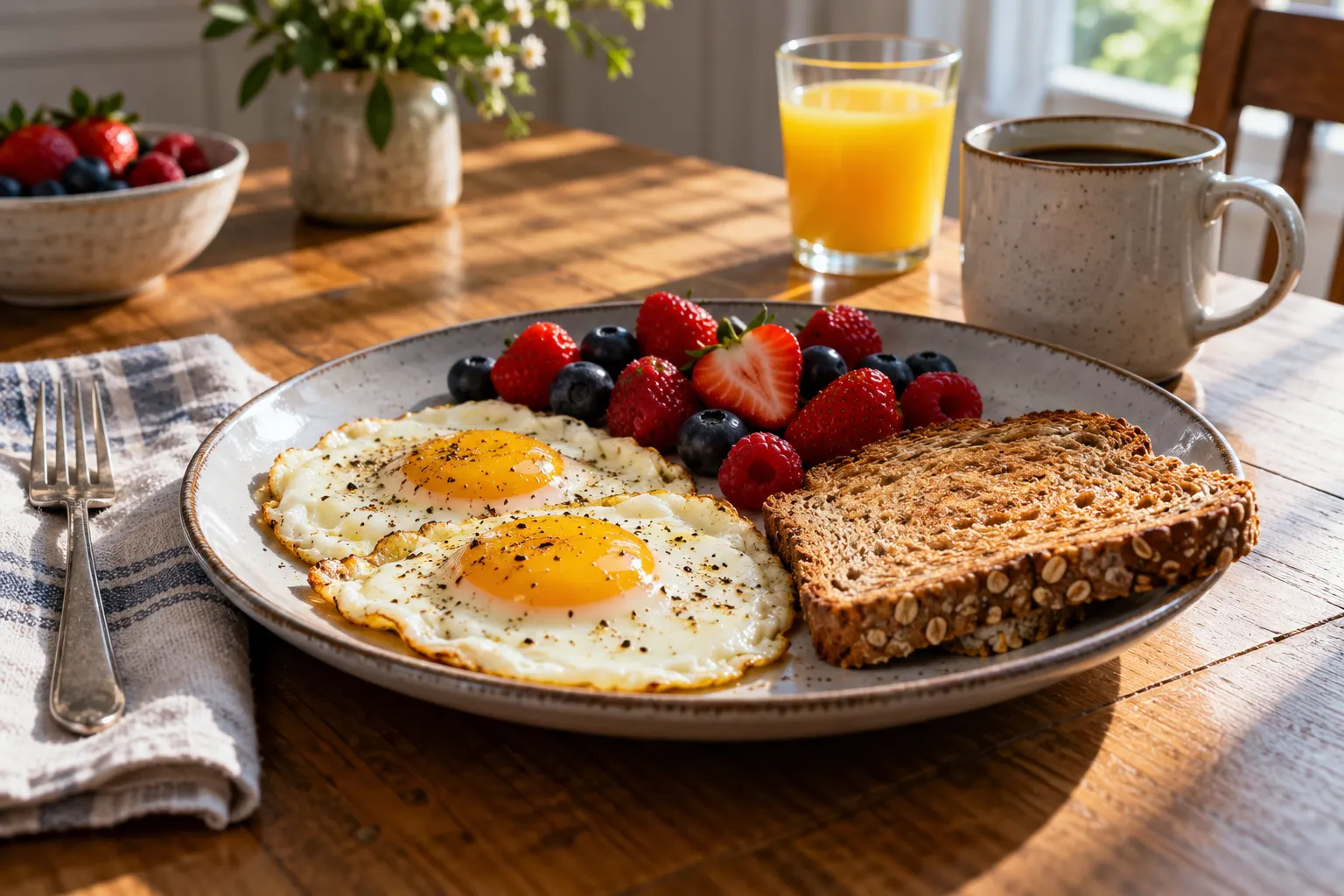
The Glucose Goddess hacks: what the research says about them
The Glucose Goddess approach, popularized in the Glucose Revolution book, focuses on changing how and when you eat to soften the rise in blood sugar after meals. Research gives some support to eating vegetables and protein before starch, choosing fiber rich foods, and taking a short walk after eating. Vinegar has limited trial evidence too. These habits may change short term glucose readings, but a small study or a smoother glucose curve does not prove lasting health benefits. They are optional habits, not a substitute for medical care or a prescribed plan.
Get medical help for warning signs: new or worsening symptoms deserve attention. A very high reading with vomiting, confusion, or trouble breathing, or a low reading with confusion or fainting, needs urgent care. These are not situations to handle with a meal hack (Umpierrez et al., PMID 38907161; American Diabetes Association standards, PMID 38078586).
What the Glucose Goddess method asks you to do
The “hacks” are practical meal rules: start with vegetables, eat protein and fat before starches, choose a savory breakfast, have sweet foods after a meal rather than alone, add vinegar to a meal, and move after eating. The common theme is to pay attention to the meal as a whole rather than treating one food as the entire story.
That idea is more useful than fearing every glucose rise. Blood sugar normally rises after food. A sensor graph is a measurement, not a diagnosis, and a brief peak does not by itself show that a person has a disease. If you are tracking with a continuous glucose monitor, use the data to ask sensible questions with your clinician, rather than chasing a perfectly flat line.
What research says about the main hacks
| Hack | What was studied | What the evidence can tell you |
|---|---|---|
| Vegetables and protein before starch | A small meal order trial in people with prediabetes | May reduce the glucose rise after that meal |
| A short walk after eating | A small study of older adults at risk for glucose intolerance | Post meal activity may affect daily glucose patterns |
| Fiber rich foods | A systematic review of diet studies | Whole grains and fiber have broader evidence than a single “hack” |
| Vinegar with a meal | A meta analysis of clinical trials | Possible short term effect, with limits and practical cautions |
Food order: a plausible, low effort experiment
In a randomized meal study, 15 people with prediabetes ate the same meal in different orders. Starting with vegetables, or with protein and vegetables, lowered the glucose rise compared with eating carbohydrates first. The study measured responses over a few hours, not long term outcomes, and involved only 15 people. It supports trying vegetables and protein first when it suits your meal. It does not establish a universal rule or show that everyone will see the same change (Shukla et al., PMID 30101510).
In practice, this can be as simple as starting dinner with salad or cooked vegetables, then eating the rest of the plate. There is no need to wait a fixed number of minutes between foods. The research tested a specific meal sequence under study conditions, not every combination of foods in daily life.
Walking after a meal
Movement is one of the more sensible habits to consider because it fits into ordinary life. In a controlled study, 10 inactive adults aged 60 or older at risk for impaired glucose tolerance completed different walking schedules. Three 15 minute bouts after meals improved 24 hour glucose control compared with a control day, and post dinner walking helped more with the after dinner reading than a single sustained walk earlier in the day. The small, short study does not tell us the best routine for every person, but it gives a reason to take a comfortable walk after a meal if that is safe for you (DiPietro et al., PMID 23761134).
You do not need to turn each meal into a workout. A relaxed walk, standing to tidy up, or another gentle activity may be more realistic than an ambitious plan you cannot maintain. If balance, pain, heart symptoms, or another condition makes walking difficult, ask your healthcare professional what movement is appropriate.
Fiber and carbohydrate quality
The more durable version of the “glucose hacks” conversation is to look at the quality of the carbohydrate. A large set of systematic reviews and meta analyses included 185 prospective studies and 58 clinical trials. Higher fiber intake and whole grain intake were associated with better outcomes across several measures; the authors rated the evidence for fiber as moderate, while evidence for glycemic index and glycemic load was less certain. The analysis was about overall dietary patterns, not a promise that a particular meal will flatten a glucose curve (Reynolds et al., PMID 30638909).
Try adding beans, lentils, vegetables, oats, or whole grain options where you enjoy them. A change you can keep doing usually matters more than a strict sequence you resent. For food ideas, see our guide to a prediabetes diet and our explanation of glucose versus fructose.
Vinegar: some signal, modest confidence
A systematic review and meta analysis of clinical trials found lower post meal glucose and insulin responses in the pooled vinegar groups. The trials differed and the result concerns short term responses. It does not establish that vinegar changes long term health or is necessary for a healthy meal (Shishehbor et al., PMID 28292654).
You can skip vinegar if you dislike it. Do not drink it undiluted, and ask a clinician before making it a routine if you have reflux, swallowing problems, or medication concerns. Research results from vinegar should not be stretched to apple cider vinegar supplements or a particular brand.
What about the glucose goddess supplements?
The core Glucose Goddess approach is mostly about food and movement, not supplements. No supplement is required to try those habits. If you are comparing blood sugar products, our scores are strict: they reflect the strength of ingredient research, whether label amounts match studies, label transparency, and value. GlucoBerry is the highest rated blood sugar label we reviewed, at 3.6 out of 5, but that score is not proof that it will improve your readings. Its ingredient evidence remains limited, and supplements can interact with medicines. Read our blood sugar supplements comparison and GlucoBerry review with your clinician if you are considering a product.
Warning signs that deserve medical care
Do not try to manage concerning readings with food hacks alone. New or worsening symptoms deserve medical care, especially unusual thirst, frequent urination, blurred vision, or unexplained weakness. Seek urgent care for a very high glucose reading accompanied by vomiting, confusion, or trouble breathing. A low reading with confusion or fainting also needs urgent help. The international consensus report on hyperglycemic crises describes these events as serious medical emergencies (Umpierrez et al., PMID 38907161); the American Diabetes Association standards also cover hypoglycemia and glycemic goals (PMID 38078586).
If you take insulin or another glucose lowering medicine, talk with your doctor before making major changes to meal timing, activity, or supplements. Do not stop, reduce, or shift a prescription on your own. For context on what a meal reading can and cannot show, see blood sugar after eating and A1C versus glucose. Results vary from person to person.
Frequently asked questions
Does the Glucose Goddess method work?
Some parts have evidence for changing short term post meal glucose, especially meal order and movement. The trials are small or brief, so they do not prove that the complete method produces lasting benefits for everyone.
Is the Glucose Goddess book backed by science?
The Glucose Revolution book’s individual ideas have varying levels of evidence. Food order and walking have been studied in small trials, fiber and whole grains have a broader research base, and vinegar evidence is less certain. The specific package of rules has not been established by the studies cited here as a complete long term program.
Do I need to eat vegetables before every meal?
No. One small study found a short term effect when vegetables or protein and vegetables came before carbohydrates. It is a reasonable option when it fits your meal, not a requirement.
Should I take glucose goddess supplements?
The central approach does not require a supplement. If you take medication, have a glucose condition, or are considering a product, review it with your doctor or pharmacist first.
Can I use a glucose monitor to test the hacks?
A monitor can show patterns, but one reading cannot diagnose a condition or prove that a hack improves health. Discuss repeated unusual readings with your healthcare professional instead of trying to force every line on the graph to stay flat.
Next step: For a practical list of everyday meal choices that fit these principles, continue with our guide to foods that help control blood sugar.
Where to go next
- Our GlucoBerry reviewThe label, the doses next to the research and the seller's terms. Scored 3.6 out of 5
- Every blood sugar guideAll our articles on the topic, grouped by question
- Every blood sugar labelCompared side by side, best score first
- All articlesQuestions men over 50 ask, answered with the research
This article is general information about health and lifestyle and is not medical advice. Talk to your doctor before making changes to your health routine, especially if you have a medical condition or take medication.