Review · Weight management
Java Burn review: what is actually in the dropper
Java Burn 2.0 is a flavorless liquid you squeeze into your morning coffee. We read its label, traced each ingredient to the human research on PubMed and looked closely at what changes when you add it to a cup that already holds caffeine.
Our verdict: 2 / 5
| Ingredient evidence | 2 | Each ingredient has small or low-quality weight data; the green tea Cochrane review found no clinically important effect |
|---|---|---|
| Dosing vs. research | 1.5 | The whole 550 mg blend is smaller than the studied dose of green coffee or carnitine alone; chromium is a tenth of trial doses |
| Label transparency | 2 | Four key ingredients hidden in a proprietary blend; label found only in the help center, not on the sales page |
| Value and refund terms | 2.5 | $49 to $79 per bottle, no single-bottle option, 60-day refund less shipping |
Worth considering if you already drink coffee every morning, you like the convenience of a liquid add-in, and you treat it as a small extra alongside the eating, activity and sleep habits that drive weight management.
Probably skip it if you want to know how much of each ingredient you are taking, you take a beta blocker, a statin or another daily heart medication, or you are expecting the sales page's metabolism story to show up on the scale. The research behind these ingredients is modest, and this formula appears to use less than the studies did.
Before anything else: unexplained weight change, new fatigue or a racing heart deserve a visit to your doctor. Those can have medical causes that no coffee additive addresses.
Smallest order $158, from $49 per bottle, 60-day refund policy from the seller
See the current Java Burn packages, shipping and refund termsOpens the seller's page. It may start with a long video or letter; the packages and refund terms are usually further down. We may earn a commission.
Came here for Java Burn? The highest-rated weight label we checked is LeanBiome, 2.8 out of 5.
What Java Burn is
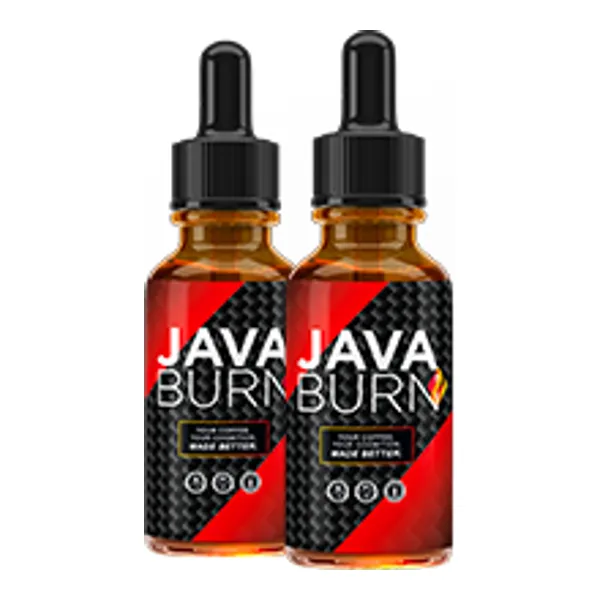
Java Burn is sold through ClickBank under its own brand name; neither the sales page nor the label we found names the company behind it. The current version, called Java Burn 2.0 in the company's help center, is a tincture. The directions are one dropperful (1 mL) stirred into coffee once a day, preferably in the morning. It is a one-time purchase with no auto-ship, sold in 2, 3 and 6-bottle packages.
The sales page frames it as a nutritional formula that works with coffee to support metabolism, energy and appetite control. It leans on the idea that coffee "primes" the body for fat use and that the added nutrients amplify that window. Its FAQ goes further and calls the formula scientifically proven and patent-pending. We return to those claims below.
If the ingredient list looks familiar, it should. Java Burn's roster (green tea, green coffee or chlorogenic acid, L-carnitine, chromium and L-theanine, taken with coffee) is close to the one in FitSpresso, which we reviewed separately. The main differences are the delivery format and the label: Java Burn publishes a combined blend weight, while FitSpresso's sales page published no doses at all.
The label, and what changed from the powder
The sales page shows ingredient icons but no Supplement Facts panel. We found the full label in Java Burn's own help center. Per 1 mL serving:
- Vitamin D (as cholecalciferol) 20 mcg
- Vitamin B6 (as pyridoxine hydrochloride) 1 mg
- Vitamin B12 (as methylcobalamin) 5 mcg
- Chromium (as chromium chloride) 20 mcg
- Proprietary blend, 550 mg: green tea leaf extract, green coffee bean extract, L-carnitine, L-theanine
- Other ingredients: water, flavor, stevia extract, xanthan gum, citric acid
The same help center still lists the original powder version, and that label was more open. It gave separate amounts: 300 mg green tea extract, 200 mg green coffee bean extract, 100 mg L-carnitine and 100 mg L-theanine, 700 mg in total. The liquid packs the same four ingredients into 550 mg and no longer says how much of each. So the switch to 2.0 reduced both the disclosed total and the transparency. The powder is still offered in pouches on javaburn.com at lower prices than the liquid.
Two small mismatches: the sales page calls the liquid tasteless and free of trace additives, while the label lists added flavor, stevia, xanthan gum and citric acid. None of those is a concern in itself, but they are additives.
The formula next to the research
Because the blend hides individual doses, we worked from what the label does allow: blend ingredients must be listed by weight, from most to least, which sets a ceiling on each one. Here is how those ceilings compare with the trials.
| Ingredient | Java Burn per day | Amount in research | How it compares |
|---|---|---|---|
| Green tea leaf extract | Undisclosed share of 550 mg; catechin and caffeine content not stated | Trials of 12 weeks or longer, varied catechin doses [1] | Cannot be compared; pooled effect outside Japan was close to zero |
| Green coffee bean extract | Undisclosed; at most about 275 mg by label order | At least 500 mg/day of extract [4] | About half or less of the studied amount |
| L-carnitine | Undisclosed; at most about 183 mg by label order (100 mg in the old powder) | Largest effect near 2,000 mg/day [7] | Under a tenth of that |
| Chromium | 20 mcg (as chloride) | 200 to 1,000 mcg/day as picolinate [8] | A tenth or less, in a different form |
| L-theanine | Undisclosed share of 550 mg | 97 to 100 mg with 40 to 50 mg caffeine [9] [10] | Plausible, but studied for attention, not weight |
Green tea extract: the coffee pairing may work against it
Green tea is the ingredient most often sold for metabolism, and it has a Cochrane review. Pooling six trials run outside Japan (532 overweight or obese adults, 12 to 13 weeks), the difference in weight versus control was 0.04 kg, which the authors judged too small to be clinically important. Trials in Japan showed larger effects, but they were too different from one another to pool [1].
An earlier meta-analysis of 11 studies found a modest pooled effect of catechins on weight, and one detail matters here. In people whose habitual caffeine intake was above 300 mg a day, the effect was about 0.27 kg, compared with 1.60 kg in people with low caffeine intake. That difference did not reach statistical significance, so it is a signal and not a finding [2]. Still, the heavy coffee drinker is exactly who Java Burn is designed for, and the research gives no reason to think coffee makes green tea work better.
Green coffee bean extract: a famous study that was withdrawn
Green coffee extract became a household name after a 2012 crossover trial in overweight adults. That trial was later retracted by the journal [5]. What remains is thin. A 2011 meta-analysis of three trials found a 2.47 kg average difference versus placebo, but rated all three at high risk of bias and called the evidence poor in quality [3]. A 2023 meta-analysis of three trials with 103 people found a 1.30 kg difference at 500 mg a day or more of extract [4]. Java Burn cannot reach that amount. Blend ingredients are listed by weight, and green tea comes before green coffee, so green coffee can be at most half of the 550 mg blend, about 275 mg.
One more effect worth knowing: across 10 trials with 563 adults, green coffee extract lowered systolic blood pressure by about 3 mmHg on average, with the larger drops in people who started higher [6]. That is relevant if you already take blood pressure medication.
L-carnitine: a real but small effect at much higher doses
Carnitine helps move fatty acids into the cell's energy machinery. A meta-analysis of 37 randomized trials (2,292 adults) found 1.21 kg more weight loss than control on average, with the biggest effect near 2,000 mg a day [7]. The old Java Burn powder listed 100 mg. The liquid does not say, but carnitine is third in a blend listed by weight, which caps it at about 183 mg, under a tenth of that amount.
Chromium: low dose, low-quality evidence
A Cochrane review of nine trials (622 overweight or obese adults) found a 1.1 kg difference with chromium picolinate over 12 to 16 weeks, rated low quality, and concluded there was no reliable evidence to guide decisions [8]. Those trials used 200 to 1,000 mcg. Java Burn has 20 mcg of chromium chloride, a different form at a tenth of the lowest dose studied.
L-theanine: for focus, and coffee already supplies the caffeine
L-theanine is an amino acid from tea. In two small crossover studies, roughly 100 mg of L-theanine taken with 40 to 50 mg of caffeine improved accuracy on attention-switching tasks compared with placebo [9] [10]. Those were single-dose lab sessions in young, healthy volunteers, and neither looked at body weight. A typical mug of coffee contains more caffeine than those studies used, so how the pairing behaves in a full cup is untested.
The vitamins
Vitamin D (20 mcg, or 800 IU), B6 and B12 appear at everyday multivitamin levels. They are reasonable additions, but none is an established weight-management ingredient and we do not score them as such.
What the marketing claims vs. what we could verify
- "Scientifically proven" to speed up metabolism. We searched PubMed for Java Burn by name and found no published trial of the product. The evidence that exists is for single ingredients, mostly at higher doses.
- A 2023 analysis of 170 years of data showing most Americans inherited a slow metabolism. The page gives no citation, and we could not find this study.
- Ingredient icons with numbered references. The sales page attaches reference numbers to each benefit (up to 47) but, in the version we downloaded, shows no list of the studies they point to.
- Zero side effects reported. We cannot verify adverse event reports, and the label itself asks people taking medication to consult a physician first.
- Made in an FDA approved facility. Java Burn's own help center is more careful and explains that the FDA does not review supplements for safety or effectiveness before they reach the market.
Price, packages and refund policy
One bottle is a 30-day supply. Prices on the sales page our link opens, when we checked:
- 6 bottles: $49 each ($294 total), free US shipping. About $1.63 a day.
- 3 bottles: $69 each ($207 total), plus shipping.
- 2 bottles: $79 each ($158 total), plus shipping.
There is no single-bottle option on this page, so the smallest commitment is $158. Orders carry a 60-day refund policy; the page says you can return even empty bottles, but shipping and handling are not refunded. Most of the ingredient trials above ran about 12 weeks, so a fair trial would take longer than the refund window. Count on that before you pick the six-bottle package.
Java Burn packages on the seller's site
6 bottles, 180-day supply
$49/bottle
$294 total · Free US shipping
Lowest price per bottle
Check the 6-bottle priceButtons open the seller's Java Burn website, where you choose your supply and complete the order. Prices as listed on the seller's site on October 23, 2026; the price shown at checkout is final.Orders are covered by a 60-day refund policy from the seller (see their terms). We may earn a commission.
Safety, caffeine and medications
Java Burn is designed to go into coffee, so think of it as coffee plus green tea plus a few extras. For men over 50, that combination raises a few practical questions.
- Total caffeine. A large systematic review found that up to 400 mg of caffeine a day is generally not linked to adverse effects in healthy adults, while calling for more research in people with existing health conditions [11]. Green tea extract can contain caffeine, and the label does not say how much, so your true daily total is unknown.
- Blood pressure. In trials, caffeine raised systolic blood pressure by about 4 mmHg; coffee raised it by about 1 mmHg [12]. Green coffee extract pushed in the other direction [6]. If your blood pressure is being managed, ask your doctor before adding anything to the mix.
- Green tea and heart medications. In 10 healthy volunteers, two weeks of daily green tea cut blood levels of the beta blocker nadolol by about 85% and weakened its effect on blood pressure [13]. A 2025 review of clinical studies found green tea lowered blood levels of several other drugs as well, including atorvastatin, rosuvastatin, lisinopril and digoxin, and raised sildenafil levels in one analysis [14]. Those studies used brewed tea or catechin preparations, not Java Burn, but they are reason enough to check with your doctor or pharmacist.
- Green tea extract and the liver. A safety review identified the liver as the concern with concentrated green tea extracts, mainly as large solid doses, and proposed an observed safe level of 704 mg of EGCG a day for tea taken as a beverage [15]. Java Burn's entire blend is 550 mg, so its EGCG content must fall below that figure, but stop and see a doctor if you notice dark urine, yellowing skin or unusual tiredness.
- Sleep. If you take it with an afternoon coffee, expect the caffeine to behave as it always does.
Results vary from person to person. Talk to your doctor before starting Java Burn, especially if you take prescription medication or have a heart, liver or kidney condition, and seek medical care for any new or worsening symptoms.
What we liked and what gave us pause
Liked
- Easy format for daily coffee drinkers
- Ingredients with at least some human weight or attention research
- One-time payment, no subscription
- Label advises a physician check for anyone on medication
Gave us pause
- Proprietary blend; the earlier powder disclosed every dose
- Blend too small to match green coffee or carnitine trial doses
- Chromium at a tenth of the lowest studied dose
- Green tea interactions with common heart medications
- No product trial behind the "proven" wording
- 60-day refund window, shorter than most of the trials
Frequently asked questions
Is Java Burn 2.0 the same as the original powder?
Same four blend ingredients and the same vitamins and chromium, but a different format and label. The powder listed 700 mg of actives with individual doses; the liquid lists a 550 mg blend without them.
Does it work with decaf?
The company says it works with any coffee. We found no research on Java Burn with or without caffeine. The caffeine in a regular cup is part of the sales story, so with decaf you would mostly be getting the blend on its own.
How long before I notice anything?
Results vary. The ingredient trials mostly ran 12 weeks or longer and measured differences of about a kilogram or less on average, alongside diet. Expect any change to be gradual and small.
Can it replace weight-management care from my doctor?
No. Java Burn is a dietary supplement. If your doctor has you on a plan or a medication, keep following it and mention Java Burn before you start.
Want to read the seller's page yourself? The link below opens the Java Burn sales page, where you can see the current packages and refund terms.
See Java Burn prices and termsHow we reviewed Java Burn
We read the sales page our link opens, Java Burn's help center (where the 2.0 and powder labels are published) and the vendor's affiliate terms. We searched PubMed for human trials and systematic reviews of each blend ingredient on body weight, plus caffeine safety and green tea drug interactions, and compared study doses with the label. We did not test the product on people, and nobody at Stark Verve is a medical professional. We do not reproduce the label image; the label is described in words. Read our editorial policy to learn how we choose and update reviews. Stark Verve earns a commission if you buy through our links; that never changes what we write about the evidence.
References
- Jurgens TM, et al. Green tea for weight loss and weight maintenance in overweight or obese adults. Cochrane Database Syst Rev. 2012;12:CD008650. PMID 23235664
- Hursel R, Viechtbauer W, Westerterp-Plantenga MS. The effects of green tea on weight loss and weight maintenance: a meta-analysis. Int J Obes (Lond). 2009;33(9):956-61. PMID 19597519
- Onakpoya I, Terry R, Ernst E. The use of green coffee extract as a weight loss supplement: a systematic review and meta-analysis of randomised clinical trials. Gastroenterol Res Pract. 2011;2011:382852. PMID 20871849
- Kanchanasurakit S, et al. Chlorogenic acid in green bean coffee on body weight: a systematic review and meta-analysis of randomized controlled trials. Syst Rev. 2023;12(1):163. PMID 37710316
- Randomized, double-blind, placebo-controlled, linear dose, crossover study to evaluate the efficacy and safety of a green coffee bean extract in overweight subjects [Retraction]. Diabetes Metab Syndr Obes. 2014;7:467. PMID 25340633
- Samavat S, et al. The effects of green coffee bean extract on blood pressure and heart rate: a systematic review and dose-response meta-analysis of randomized controlled trials. Diabetes Metab Syndr. 2024;18(9):103120. PMID 39368321
- Talenezhad N, et al. Effects of l-carnitine supplementation on weight loss and body composition: a systematic review and meta-analysis of 37 randomized controlled clinical trials with dose-response analysis. Clin Nutr ESPEN. 2020;37:9-23. PMID 32359762
- Tian H, et al. Chromium picolinate supplementation for overweight or obese adults. Cochrane Database Syst Rev. 2013;(11):CD010063. PMID 24293292
- Owen GN, et al. The combined effects of L-theanine and caffeine on cognitive performance and mood. Nutr Neurosci. 2008;11(4):193-8. PMID 18681988
- Giesbrecht T, et al. The combination of L-theanine and caffeine improves cognitive performance and increases subjective alertness. Nutr Neurosci. 2010;13(6):283-90. PMID 21040626
- Wikoff D, et al. Systematic review of the potential adverse effects of caffeine consumption in healthy adults, pregnant women, adolescents, and children. Food Chem Toxicol. 2017;109(Pt 1):585-648. PMID 28438661
- Noordzij M, et al. Blood pressure response to chronic intake of coffee and caffeine: a meta-analysis of randomized controlled trials. J Hypertens. 2005;23(5):921-8. PMID 15834273
- Misaka S, et al. Green tea ingestion greatly reduces plasma concentrations of nadolol in healthy subjects. Clin Pharmacol Ther. 2014;95(4):432-8. PMID 24419562
- Kyriacou NM, Gross AS, McLachlan AJ. Green tea catechins as perpetrators of drug pharmacokinetic interactions. Clin Pharmacol Ther. 2025;118(1):45-61. PMID 39748104
- Hu J, et al. The safety of green tea and green tea extract consumption in adults: results of a systematic review. Regul Toxicol Pharmacol. 2018;95:412-433. PMID 29580974