
Review · Circulation health
Cholibrium review: ten mushrooms, checked against the cholesterol research
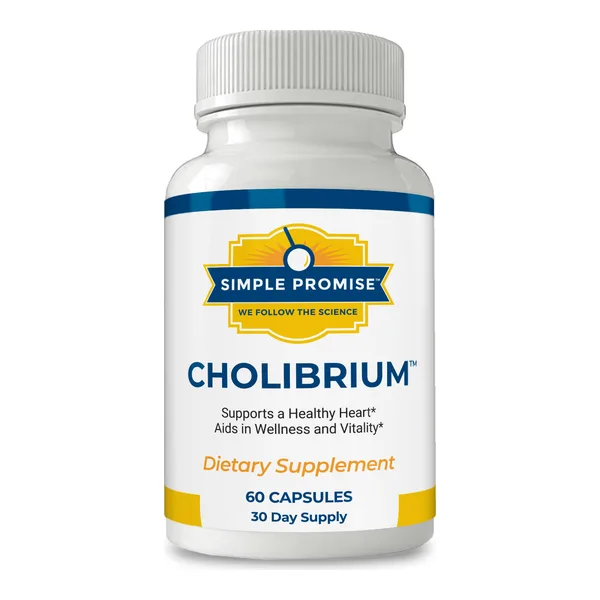
Cholibrium is a mushroom capsule from Simple Promise, sold to support healthy cholesterol levels already within the normal range. We put each ingredient next to the human trials. The idea behind it is interesting. The amounts in the bottle are small.
Our verdict: 2.4 / 5
| Ingredient evidence | 1.5 | The best-studied mushroom (reishi) did not move cholesterol in a Cochrane review; the rest rely on one food trial, animal work or observational data |
|---|---|---|
| Dosing vs. research | 1.5 | Reishi and cordyceps are a fifth to a quarter of trial amounts; six mushrooms share 266 mg; ergothioneine is never quantified |
| Label transparency | 2.5 | Four doses disclosed, six hidden in a proprietary blend; no extract ratios or active-compound content; the panel is not on the ClickBank sales page |
| Value and refund terms | 4 | $39 to $59 per month with free US shipping, no auto-billing and a 365-day refund policy |
Worth considering if your doctor is happy with your lipid panel, you already eat reasonably well, and you want to try a broad mushroom supplement with a full year to ask for your money back.
Probably skip it if you are looking for a measurable change in your cholesterol numbers, you take a statin, warfarin or another blood thinner and have not cleared it with your doctor, or you want to know exactly how much of each mushroom you are getting.
Before anything else: high cholesterol is a medical finding, and prescribed medication for it should never be stopped or swapped for a supplement without your doctor. Cholibrium is a dietary supplement for men whose numbers are already in a healthy range.
Smallest order $59, from $39 per bottle, 365-day refund policy from the seller
See the current Cholibrium packages, shipping and refund termsOpens the seller's page. It may start with a long video or letter; the packages and refund terms are usually further down. We may earn a commission.
What Cholibrium is
Cholibrium is a capsule supplement from Simple Promise, a company that lists an address in Camas, Washington. It is sold through ClickBank on the Cholibrium website, and the brand also lists it on its own Simple Promise store. The daily serving is two vegetable capsules, taken 20 to 30 minutes before a meal, and one bottle holds 30 servings.
The main sales page describes it as support for healthy heart function and for cholesterol levels already within a healthy range, built on ten mushroom extracts. A second page on the same site, a video presentation, goes much further. It builds its story around ergothioneine, a compound found in mushrooms, and a receptor in the body that it describes as a "lock" waiting to be filled. We look at that story in its own section below.
One thing to know up front: the ClickBank sales page does not show a Supplement Facts panel. We found the full panel on the brand's own Simple Promise store page. We describe it in words below because we do not have the vendor's written permission to reproduce its images.
What is on the label
Per two-capsule serving, the panel lists:
- Cordyceps sinensis powder (mycelium): 266 mg
- Reishi mushroom extract (fruiting body): 266 mg
- Shiitake mushroom extract (fruiting body): 266 mg
- Lion's mane (fruiting body): 266 mg
- Proprietary blend of maitake, turkey tail, chaga, royal sun agaricus, white button mushroom and black fungus extracts: 266 mg in total
That is about 1.33 grams of mushroom material a day. The panel gives no extract ratio, no beta-glucan content, no triterpene content and no ergothioneine content. For six of the ten mushrooms we only know the combined weight. If the blend were split evenly, each would be roughly 44 mg, but the label does not say how it is split.
The formula next to the research
For each ingredient with a plausible link to blood lipids, we looked for human trials and compared the amounts.
| Ingredient | Cholibrium per day | Amount in human research | How it compares |
|---|---|---|---|
| Reishi | 266 mg extract | 1.4 to 3 g/day [1] [2] | About a fifth to a tenth; lipid results were not significant |
| Shiitake | 266 mg extract | Shiitake food bars for 66 days [3] | Different form; trial amount not comparable to a capsule |
| Cordyceps | 266 mg mycelium powder | 999 mg/day of Cs-4 [5] | About a quarter; studied for exercise, not cholesterol |
| White button and other culinary mushrooms | Share of a 266 mg blend | 84 g/day of whole mushrooms [4] | A tiny fraction; no lipid effect beyond diet in that trial |
| Ergothioneine (mushroom compound) | Not stated | 8 to 16 g mushroom powder in a meal [9] | Cannot be compared; Cholibrium's whole serving is 1.33 g |
| Lion's mane, maitake, turkey tail, chaga, agaricus, black fungus | 266 mg each or less | No human cholesterol trial found | Cannot be compared |
Reishi: the most studied, and the most disappointing
Reishi (also called lingzhi) is the mushroom with the most human research on heart-related markers, and the sales page says it may support healthy HDL and triglyceride levels. The best summary we have is a Cochrane review of five trials with 398 participants. The three trials that could be pooled gave 1.4 to 3 grams a day for 12 to 16 weeks to adults with type 2 diabetes. Compared with placebo, reishi produced no meaningful change in total cholesterol, LDL cholesterol, triglycerides or blood pressure, and the reviewers concluded the evidence does not support its use for these risk factors [1].
A smaller crossover trial in Hong Kong gave 1.44 grams a day for 12 weeks to 26 adults with borderline blood pressure or cholesterol. Triglycerides fell and HDL rose with reishi in the first period, but carry-over effects between periods meant the researchers could not complete the analysis of those lipids [2]. Cholibrium provides 266 mg of reishi extract, about a fifth of the lowest amount tested. A concentrated extract could close part of that gap, but the label gives no ratio, so we cannot tell.
Shiitake: one trial, in food form
The sales page points to eritadenine, a shiitake compound studied in animals. In people, the trial we found gave shiitake bars or placebo bars to 68 adults with borderline high cholesterol, LDL or triglycerides for 66 days. Triglycerides fell by 10% in the shiitake group. The abstract reports a significant result for triglycerides only, not for total or LDL cholesterol, and 10% of participants who were sensitive to shiitake developed a skin rash [3]. That is a food study at an amount that is hard to compare with a 266 mg capsule extract.
Cordyceps: an energy ingredient more than a cholesterol one
The best human trial of cordyceps we found enrolled 20 healthy adults aged 50 to 75. Those taking 333 mg of a Cs-4 preparation three times a day for 12 weeks raised their metabolic threshold during cycling by about 10%, with no change in peak oxygen uptake [5]. The trial did not measure cholesterol. Cholibrium uses 266 mg of mycelium powder, roughly a quarter of that daily amount, and does not name the strain.
The culinary mushrooms: real food, small amounts
White button mushrooms are the most eaten mushroom in the US. A US trial fed 60 middle-aged and older adults a Mediterranean-style diet with or without 84 grams a day of white button and oyster mushrooms for 8 weeks. The diet lowered total cholesterol in both groups; adding mushrooms improved fasting glucose slightly and did not change the lipid results [4]. Cholibrium contains a share of a 266 mg blend, which is less than 1% of that amount by weight even before you account for the trial using fresh mushrooms. Large cohort studies do link regular mushroom eating with slightly lower all-cause mortality [11], but those are observational data about diets, not capsules.
For lion's mane, maitake, turkey tail, chaga, royal sun agaricus and black fungus we found no human trial on cholesterol. Lion's mane research in people is mostly about cognition and mood. The sales page itself describes lion's mane mainly as a brain ingredient.
About the ergothioneine "lock" story
The video page builds its case on ergothioneine, a compound people get almost entirely from food, with mushrooms as a rich source. Parts of this are grounded in real science. A German team showed in 2005 that a membrane protein called OCTN1 is a dedicated ergothioneine transporter, and that cells with it accumulate and hold on to the compound [7]. In a Swedish cohort of 3,236 adults followed for about 21 years, people with higher blood ergothioneine had a lower rate of coronary disease and death [6]. A 2026 review in the American Journal of Clinical Nutrition calls it a promising food compound and lists the many basic questions still unanswered [10].
Here is where the story stops lining up with the bottle. The cohort data show an association; they do not show that taking ergothioneine changes cholesterol. In the first trial of pure ergothioneine in healthy people, it was absorbed and retained well, and markers of oxidative damage and inflammation trended down, but most changes were not statistically significant [8]. And the Cholibrium label never says how much ergothioneine it contains. Mushrooms carry about 0.4 to 2 mg per gram of dry weight, and a pilot study that measured uptake used test meals of 8 and 16 grams of mushroom powder [9]. Cholibrium's entire daily serving is 1.33 grams, and processing into extracts may raise or lower the content. Without a number on the label, the central mechanism of the marketing cannot be checked against the product.
The video page also carries headlines about lowering cholesterol by a large number of points, a timeline of blood panel changes by month, and countdown-style warnings that prices will rise soon. We found no published study of Cholibrium itself, and we could not trace those numbers to any publication. The page also shows customer stories that mention stopping or avoiding prescribed cholesterol medication. Please do not take that as guidance. That decision belongs to you and your doctor. We also noticed that the reference list printed on the ClickBank sales page mostly points to sources on unrelated herbs such as cascara sagrada and fennel, which do not match the mushrooms in this formula.
Price, packages and refund policy
One bottle lasts 30 days. Prices on the sales page when we checked, all with free US shipping:
- 6 bottles: $39 each ($234 total), three digital guides included. About $1.30 a day.
- 3 bottles: $49 each ($147 total), three digital guides included.
- 1 bottle: $59.
The page states there is no auto-billing, so each order is a one-time charge, and every order is covered by a 365-day refund policy that the seller says applies to empty bottles. The bonus guides are recipe and food-label booklets. Prices on the brand's own Simple Promise store matched when we checked. If you want to see whether anything changes on a lipid panel, a 90-day supply lines up with the length of most trials above and with a typical gap between blood tests.
Cholibrium packages on the seller's site
6 bottles, 180-day supply
$39/bottle
$234 total · Free US shipping
Lowest price per bottle
Includes 3 digital recipe and label-reading guides
Check the 6-bottle price3 bottles, 90-day supply
$49/bottle
$147 total · Free US shipping
Includes 3 digital recipe and label-reading guides
Check the 3-bottle priceButtons open the seller's Cholibrium website, where you choose your supply and complete the order. Prices as listed on the seller's site on October 23, 2026; the price shown at checkout is final.Orders are covered by a 365-day refund policy from the seller (see their terms). We may earn a commission.
Safety, statins and blood thinners
Most of these mushrooms are foods, and the trials above reported few serious problems. In the reishi Cochrane review, people taking reishi for four months reported somewhat more side effects than those on placebo, none of them serious [1]. Still, a few points matter for men over 50, who are more likely to take heart medication:
- Blood thinners. A published case report describes a rise in INR, the clotting measure doctors track on warfarin, in a patient who added a maitake extract [13]. In lab tests on human blood, extracts of black fungus and reishi reduced platelet clumping, which is the same direction as aspirin [12]. That was a test-tube study, but it is a reason to check with your doctor if you take warfarin, a newer anticoagulant, clopidogrel or daily aspirin, and to stop before surgery if your surgeon asks.
- Statins. We did not find a published report of a direct interaction between these mushrooms and statins. The brand's own store page advises talking to your doctor before use if you take cholesterol-lowering drugs, blood pressure medication or blood thinners, and we agree. Keep taking your prescription as directed and let your doctor judge any change in your numbers.
- Kidneys. Chaga is very high in oxalate. A case report describes kidney damage in a woman taking several teaspoons of chaga powder a day for six months [14]. Cholibrium's chaga is a small share of the blend, but men with kidney disease or a history of kidney stones should ask their doctor first.
- Liver and skin. Reishi powder has been linked to a case of acute liver injury in a man who also drank alcohol [15], and shiitake can cause an itchy rash in sensitive people [3].
Results vary from person to person. Talk to your doctor before starting Cholibrium, especially if you take any prescription medication. New or worsening symptoms such as chest pain, shortness of breath, unusual swelling or fatigue deserve prompt medical care, not a supplement.
What we liked and what gave us pause
Liked
- The main sales page keeps to structure/function wording about cholesterol already in a normal range
- Built on mushrooms people have eaten for a long time
- The brand flags statin, blood pressure and blood thinner use
- 365-day refund policy, free shipping, no auto-billing
Gave us pause
- Reishi did not change cholesterol versus placebo in the best review
- Doses far below the human research; six mushrooms share 266 mg
- Ergothioneine, the heart of the video pitch, is never quantified
- Countdown pricing, customer stories about avoiding statins, and a reference list that does not match the formula
Frequently asked questions
Where can I buy Cholibrium?
Through the Cholibrium website, where ClickBank processes the order, or on the brand's own Simple Promise store. We did not find it in retail stores. Listings on other marketplaces may not be covered by the refund policy.
Can Cholibrium replace my statin?
No. It is a dietary supplement, and nothing in the research we reviewed supports using it in place of prescribed medication. Do not stop or change a prescription without talking to your doctor.
How long before I notice anything?
Results vary. The human trials of these mushrooms ran from 8 to 16 weeks, and cholesterol is something you measure with a blood test rather than feel. If you try it, ask your doctor to compare your next routine panel with your last one.
Is it a subscription?
The ClickBank sales page states there is no auto-billing. The brand's own store also offers subscription options, so check which one you choose if you buy there.
Want to read their full presentation yourself? The link below opens the Cholibrium sales page, where you can review the details and choose a package.
Visit the Cholibrium websiteHow we reviewed Cholibrium
We read both Cholibrium sales pages and the Supplement Facts panel on the brand's store, searched PubMed for human trials of each mushroom on blood lipids and related outcomes, and compared the amounts used in those trials with the label. We also looked for published reports of side effects and medication interactions for each ingredient. We did not test the product on people, and nobody at Stark Verve is a medical professional. Read our editorial policy to learn how we choose and update reviews. Stark Verve earns a commission if you buy through our links; that never changes what we write about the evidence.
References
- Klupp NL, et al. Ganoderma lucidum mushroom for the treatment of cardiovascular risk factors. Cochrane Database Syst Rev. 2015;(2):CD007259. PMID 25686270
- Chu TT, et al. Study of potential cardioprotective effects of Ganoderma lucidum (Lingzhi): results of a controlled human intervention trial. Br J Nutr. 2012;107(7):1017-27. PMID 21801467
- Spim SRV, et al. Effects of shiitake culinary-medicinal mushroom, Lentinus edodes, bars on lipid and antioxidant profiles in individuals with borderline high cholesterol: a double-blind randomized clinical trial. Int J Med Mushrooms. 2021;23(7):1-12. PMID 34375514
- Uffelman CN, et al. Consuming mushrooms when adopting a healthy Mediterranean-style dietary pattern does not influence short-term changes of most cardiometabolic disease risk factors in healthy middle-aged and older adults. J Nutr. 2024;154(2):574-82. PMID 38135005
- Chen S, et al. Effect of Cs-4 (Cordyceps sinensis) on exercise performance in healthy older subjects: a double-blind, placebo-controlled trial. J Altern Complement Med. 2010;16(5):585-90. PMID 20804368
- Smith E, et al. Ergothioneine is associated with reduced mortality and decreased risk of cardiovascular disease. Heart. 2020;106(9):691-7. PMID 31672783
- Gründemann D, et al. Discovery of the ergothioneine transporter. Proc Natl Acad Sci U S A. 2005;102(14):5256-61. PMID 15795384
- Cheah IK, et al. Administration of pure ergothioneine to healthy human subjects: uptake, metabolism, and effects on biomarkers of oxidative damage and inflammation. Antioxid Redox Signal. 2017;26(5):193-206. PMID 27488221
- Weigand-Heller AJ, Kris-Etherton PM, Beelman RB. The bioavailability of ergothioneine from mushrooms (Agaricus bisporus) and the acute effects on antioxidant capacity and biomarkers of inflammation. Prev Med. 2012;54 Suppl:S75-8. PMID 22230474
- Halliwell B. Ergothioneine as an emerging food-derived bioactive compound protecting against age-related diseases: issues needing more research. Am J Clin Nutr. 2026;124(4):101488. PMID 42632425
- Ba DM, et al. Prospective study of dietary mushroom intake and risk of mortality: results from continuous NHANES 2003-2014 and a meta-analysis. Nutr J. 2021;20(1):80. PMID 34548082
- Poniedziałek B, et al. The effect of mushroom extracts on human platelet and blood coagulation: in vitro screening of eight edible species. Nutrients. 2019;11(12):3040. PMID 31842490
- Hanselin MR, Vande Griend JP, Linnebur SA. INR elevation with maitake extract in combination with warfarin. Ann Pharmacother. 2010;44(1):223-4. PMID 20040699
- Kikuchi Y, et al. Chaga mushroom-induced oxalate nephropathy. Clin Nephrol. 2014;81(6):440-4. PMID 23149251
- Guedikian R, et al. Ganoderma lingzhi (reishi mushroom)-induced acute liver injury in the setting of alcohol use: a case report and review of the literature. Cureus. 2023;15(9):e45953. PMID 37885515